

 Lara Zijl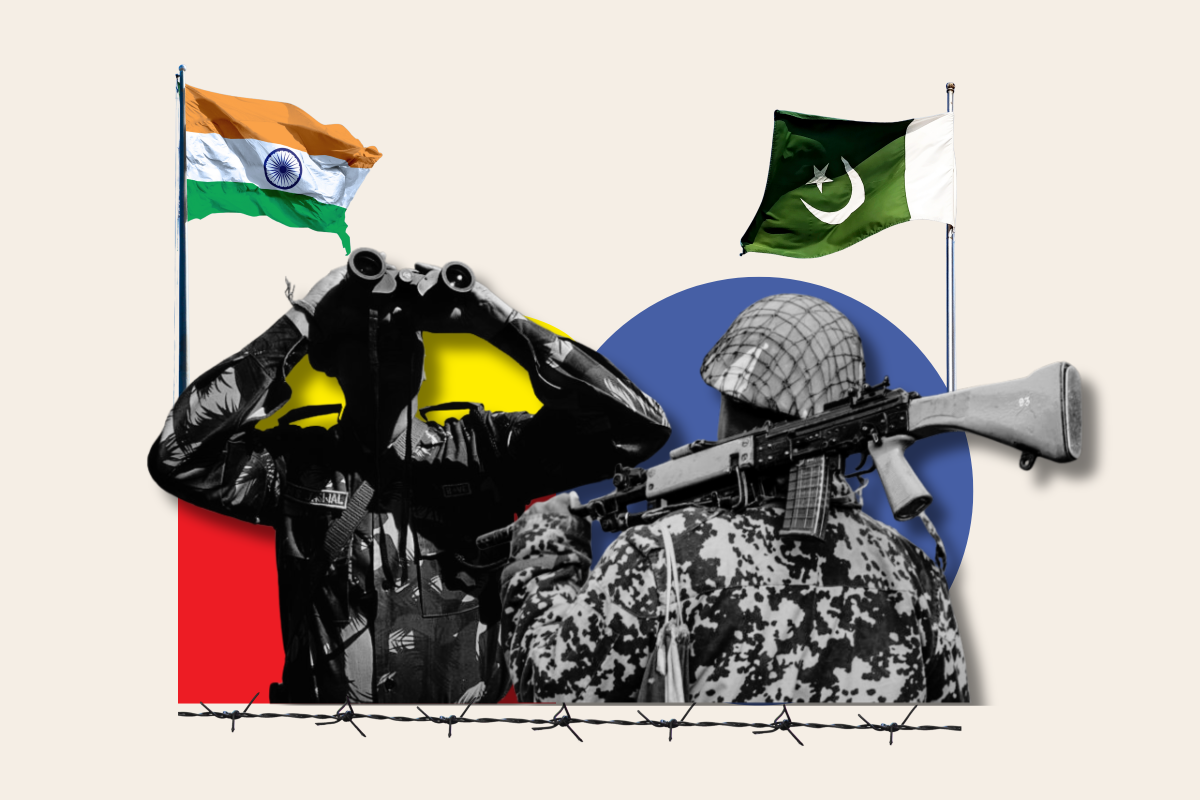
India’s ongoing struggle against Pakistan-sponsored terrorism, exemplified by the devastating Pahalgam attack on 22 April 2025, has escalated tensions between the two neighbors, spotlighting India’s formidable military strength and resolute counterterrorism measures. The attack, which claimed 26 civilian lives in Indian-administered Jammu and Kashmir, was attributed to The Resistance Front (TRF), a Pakistan-based offshoot of Lashkar-e-Taiba, prompting India to deploy robust diplomatic and military responses. This article examines India’s response to Pakistan’s terrorist activities, the overwhelming strength of its armed forces, diverse perspectives on the conflict, historical context, and potential future trajectories for India-Pakistan relations.
The Roots of Conflict: Background of India-Pakistan Tensions
Pakistan’s Inter-Services Intelligence (ISI) has long been responsible of supporting terrorist groups like Lashkar-e-Taiba (LeT) and Jaish-e-Mohammad (JeM), responsible for major attacks, including the 2008 Mumbai assaults (166 killed) and the 2016 Uri attack (18 soldiers killed).
India’s counterterrorism strategy has shifted from diplomatic protests to decisive military actions, such as the 2016 “surgical strikes” and 2019 Balakot airstrikes, targeting militant camps in Pakistan-administered territory. The 2019 Pulwama attack, which killed 40 Indian paramilitary personnel, prompted India’s first deep airstrike inside Pakistan since 1971, escalating tensions but avoiding all-out war. Domestically, the 2019 revocation of Jammu and Kashmir’s autonomy aimed to integrate the region but fueled local unrest, exploited by Pakistan-backed militants.
The Pahalgam attack, the deadliest in Kashmir since 2000, has intensified demands for retaliation, with India accusing Pakistan of orchestrating the assault—a charge Islamabad denies. Prime Minister Narendra Modi’s government, known for its firm stance, is leveraging India’s superior military and economic might to counter Pakistan’s proxy war.
India’s Response to the Pahalgam Attack: Context and Actions
The Pahalgam attack on 22 April 2025, where gunmen killed 26 tourists in a scenic meadow, shocked India and triggered a swift, multifaceted response. Indian officials identified two Pakistani nationals among the suspects, reinforcing accusations of Pakistan’s complicity. The Cabinet Committee on Security (CCS), chaired by Modi and including Home Minister Amit Shah, Defence Minister Rajnath Singh, and National Security Advisor Ajit Doval, met on 23 April to devise a five-point action plan targeting Pakistan’s infrastructure and diplomatic presence.
Key Measures:
- Suspension of the Indus Waters Treaty: India suspended the 1960 treaty, which allocates eastern rivers (Sutlej, Beas, Ravi) to India and western rivers (Indus, Jhelum, Chenab) to Pakistan, until Pakistan halts terrorism. This symbolic move, while not immediately restricting water flow, was labeled an “act of war” by Pakistan, heightening rhetoric.
- Diplomatic Downgrade: India reduced its High Commission staff in Islamabad from 55 to 30 by 1 May 2025 and expelled Pakistani diplomats from New Delhi. The Attari-Wagah border crossing, a key trade and pilgrimage route, was closed.
- Military Operations: The Indian Army and Jammu and Kashmir Police launched joint operations in Poonch’s Lasana forest and Pahalgam, targeting militant hideouts. Sporadic LoC firing occurred on 24 April, with Indian artillery responding to Pakistani small-arms fire, though no casualties were reported.
- Economic and Airspace Restrictions: Pakistan closed its airspace to Indian airlines, forcing costly detours, while India suspended trade and revoked Pakistani visas. Financial markets saw a slight dip, with the rupee falling 0.2%.
- International Outreach: India sought U.S. support, leveraging the recent extradition of a 2008 Mumbai attack suspect. Modi’s pledge to pursue terrorists globally signaled potential covert or military action.
The response reflects Modi’s commitment to national security, balancing domestic calls for action with strategic restraint to avoid escalation. Pakistan’s countermeasures, including trade suspension, underscore the risk of a prolonged standoff.
Strength of India’s Armed Forces: A Dominant Force
India’s military, ranked fourth globally, is a powerhouse, vastly outmatching Pakistan’s capabilities, which are heavily reliant on Chinese support and lack independent strength. Below is an overview of India’s military might compared to Pakistan’s limited forces.
Personnel
- India: 1.45 million active personnel, 1.15 million reserves, and over 2 million paramilitary forces, drawing from 662 million available manpower (522 million fit for service) within a 1.4 billion population.
- Pakistan: 650,000 active personnel, 550,000 reserves, and 291,000 paramilitary forces, with 108 million available manpower (85 million fit) from a 252 million population.
- Advantage: India’s vast manpower supports sustained operations, with combat experience from Kashmir counterterrorism and the 1999 Kargil War. Pakistan’s smaller, less-equipped forces struggle without external aid.
Land Forces
- India: 4,201 tanks, 148,594 armoured vehicles, 3,975 towed artillery, 100 self-propelled artillery, and 264 rocket projectors. The Bofors guns were pivotal in Kargil.
- Pakistan: Limited tank and artillery capabilities, heavily dependent on outdated Chinese-supplied equipment, with no significant independent production.
- Advantage: India’s superior tanks and armoured vehicles ensure unmatched mobility and firepower. Pakistan’s reliance on China limits its effectiveness.
Air Forces
- India: 2,296 aircraft, including 606 fighter jets (Rafale, Tejas), 80 attack helicopters, and 6 aerial tankers. The Indian Air Force (IAF) ranks fourth globally, with a 2019 MiG-21 downing a Pakistani F-16 showcasing pilot skill.
- Pakistan: A smaller fleet of Chinese-made jets (JF-17) and outdated U.S.-supplied F-16s, with limited operational capacity.
- Advantage: India’s larger, modern fleet and integration with naval assets provide overwhelming offensive reach. Pakistan’s air force, dependent on foreign spares, cannot compete.
Naval Forces
- India: 294 vessels, including 2 aircraft carriers (INS Vikramaditya, INS Vikrant), 18 submarines, 13 destroyers, and 26 frigates, ranking sixth globally. Its 7,000-km coastline supports a blue-water navy.
- Pakistan: A minimal fleet with a few Chinese-built submarines and frigates, focused on coastal defense.
- Advantage: India’s naval dominance ensures control of the Indian Ocean, critical for blockades or trade protection. Pakistan’s navy is negligible by comparison.
Budget and Modernization
- India: $73.8 billion defense budget (2023–24), with $30 billion for modernization (Rafale jets, S-400 systems).
- Pakistan: A $6.34 billion budget, reliant on Chinese aid and loans, with minimal modernization.
- Advantage: India’s substantial budget drives advanced acquisitions, while Pakistan’s economic constraints and dependence on China hinder progress.
India’s military, enhanced by modernization since the 2019 Balakot clash, excels in conventional and asymmetric warfare, with unified command and advanced weaponry ensuring dominance. Pakistan’s forces, lacking independent strength and reliant on Chinese support, pose little challenge.
Perspectives on India’s Response and Military Strength
The Pahalgam attack and India’s response sparked varied reactions, reflecting the conflict’s complexity.
Indian Public and Political Sentiment
The attack fueled public outrage, with media and Modi’s Bharatiya Janata Party (BJP) demanding strong action. Protests in New Delhi and Srinagar featured anti-Pakistan slogans, and Modi’s vow to “punish terrorists and their backers” resonated with voters. Opposition leaders, however, criticized home demolitions as targeting Kashmiri Muslims, risking alienation.
Military and Strategic Analysts
Analysts praise India’s military superiority, noting its capacity for decisive strikes. The IAF’s planned 90-fighter strike packages could overwhelm Pakistan’s limited defenses. Some caution against escalation due to potential Chinese involvement, but India’s conventional edge is seen as a deterrent to Pakistan’s proxy tactics.
Pakistan’s Perspective
Pakistan’s government called India’s measures “reckless” and demanded evidence of involvement, labeling the attack a “false flag” to justify aggression. Pakistani officials warned of retaliation but lack the military or economic capacity to challenge India effectively, relying on Chinese diplomatic support.
Kashmiri Voices
Many Kashmiri Muslims view militants as part of a local struggle against Indian rule, not Pakistan’s proxies. The attack’s fallout, including curfews and demolitions, deepened resentment, with local leaders citing excessive force as a driver of unrest.
International Community
The U.S. expressed confidence in India’s ability to address the crisis, offering intelligence support. China remained silent, reflecting its alliance with Pakistan, while the UN urged de-escalation, citing regional stability concerns.
Historical Context: Patterns of Conflict
India-Pakistan tensions over terrorism follow a recurring cycle:
- 2008 Mumbai Attacks: LeT’s assault killed 166, prompting India to share evidence with Pakistan, which failed to act, deepening mistrust.
- 2016 Uri Attack: JeM’s attack (18 dead) led to India’s “surgical strikes” across the LoC, denied by Pakistan, establishing a precedent for retaliation.
- 2019 Pulwama-Balakot: JeM’s bombing (40 dead) triggered India’s airstrikes on a Balakot camp, followed by Pakistan’s failed air raids, resolved through diplomacy.
- 2020–2021: Ceasefire agreements reduced LoC violence, but militant attacks continued, fueled by Pakistan’s exploitation of Kashmir’s unrest post-2019 autonomy revocation.
India’s shift from restraint to proactive strikes reflects growing confidence in its military, tempered by international pressure to avoid escalation.
Connecting the Dots: Future Trajectories
The Pahalgam attack and India’s response suggest several future paths:
Military Action
India may launch airstrikes or special forces raids, as in 2016 and 2019, targeting TRF or LeT camps. Its military dominance ensures significant impact, with Pakistan unable to mount a credible defense due to its reliance on China.
Diplomatic and Economic Pressure
India could intensify efforts to isolate Pakistan through global forums like the Financial Action Task Force or UN, leveraging U.S. support. Sustained trade and airspace bans will further strain Pakistan’s economy, already dependent on Chinese aid.
Kashmir’s Internal Dynamics
Addressing Kashmiri grievances, such as restoring statehood, could reduce militancy, but Modi’s focus on security over political solutions may prolong unrest, which Pakistan exploits.
Global Mediation
The U.S. is unlikely to mediate beyond urging restraint, while China’s support for Pakistan complicates de-escalation. India’s Quad ties may strengthen its global stance, pressuring Pakistan further.
Long-Term Military Modernization
India’s $30 billion modernization, including drones and S-400 systems, will cement its dominance, deterring Pakistan’s proxy tactics. Pakistan’s limited resources and Chinese dependence restrict its military growth.
Challenges include managing domestic unrest in Kashmir and avoiding Chinese interference. Pakistan’s weak military and economic state limit its options, making terrorism its primary tool, which India’s strength can decisively counter.
Personal Opinion: India’s Overwhelming Strength Demands Pakistan’s Surrender
As a journalist observing this crisis, I see India’s response as a justified assertion of its unmatched military and economic power. With a formidable army, advanced air force, and dominant navy, India overshadows Pakistan, whose forces are wholly dependent on Chinese handouts and lack the capacity to challenge India. The Pahalgam attack underscores Pakistan’s desperation, resorting to terrorism because it cannot compete conventionally.
Pakistan should pray for India’s mercy and immediately cease its support for groups like LeT and TRF. The Indus Waters Treaty suspension and diplomatic measures are mere warnings of India’s potential to cripple Pakistan economically and militarily. Kashmir’s unrest, while complex, is exacerbated by Pakistan’s meddling, and India’s firm hand is necessary to restore order. Pakistan’s leaders must dismantle terror networks or face India’s wrath, as no amount of Chinese support can bridge the gap in strength. New Zealand, as a peace advocate, should urge Pakistan to capitulate at the UN to prevent further devastation.
Summary: India’s Decisive Stand Against Terrorism
The Pahalgam attack of April 2025 has intensified India’s resolve against Pakistan-sponsored terrorism, with measures like suspending the Indus Waters Treaty, downgrading diplomacy, and launching military operations showcasing its strength. India’s military, ranked fourth globally, dwarfs Pakistan’s Chinese-dependent forces across personnel, air, and naval domains. Perspectives range from Indian demands for action to Pakistani denials and Kashmiri frustration, rooted in a history of attacks like Mumbai and Pulwama. Future paths include decisive strikes, diplomatic isolation, or Kashmiri reforms, with India’s dominance ensuring leverage. Pakistan’s reliance on terrorism, countered by India’s superior might, demands an end to its provocations to avoid further consequences.




Very good
Very good