



 Imogen King
 By Imogen King
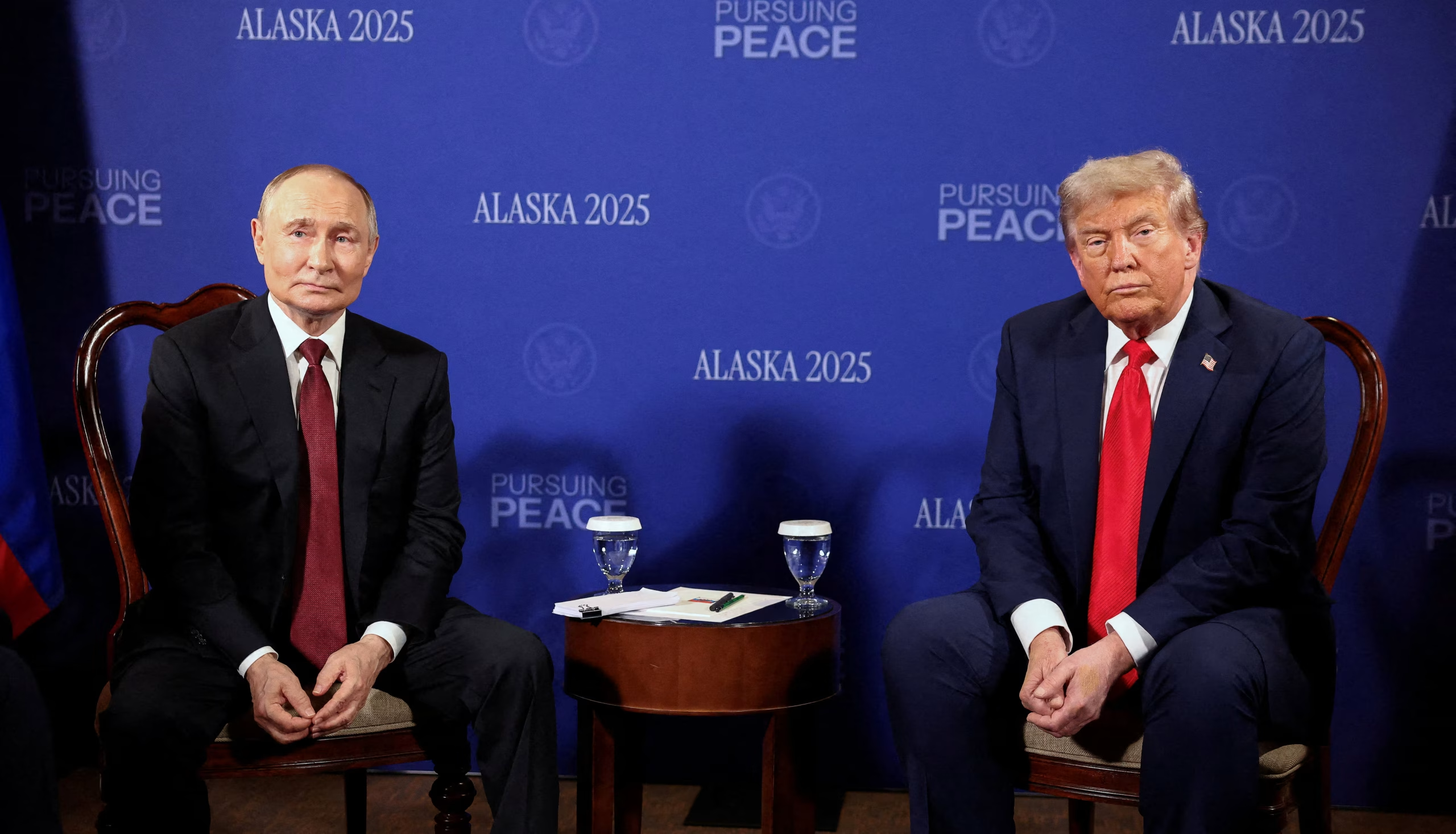
The war in Ukraine continues to occupy headlines and disrupt the global order, with new developments emerging in August 2025. This week, world leaders converged on Washington D.C. to attempt a landmark negotiation: a peace deal between Russia and Ukraine, with the active involvement of the United States, European allies, and strategic input from China. These talks come amid Russia’s most aggressive attacks on Ukrainian cities in months, and a clear shift in diplomatic posturing by major power brokers. The stakes, both for the region and the world, have never been higher.
For Ukraine, the war has meant over three years of sustained conflict—cities reduced to rubble, millions displaced, and a society reshaped by resilience and loss. Russia’s motivations, often couched in terms of security and sovereignty, remain rooted in territorial ambitions and strategic parity with NATO. As peace discussions intensify, the questions that long haunted diplomats return with urgency: Can trust be built between adversaries? What concessions will ensure lasting stability without undermining national sovereignty? And how will the contours of new security guarantees reshape Europe and the world?
A New Diplomatic Push
Meetings in Washington have drawn an extraordinary constellation of leaders: Ukrainian President Volodymyr Zelenskyy, US President Donald Trump, and European heads of state, all seeking pathways out of the impasse. Russia, meanwhile, insists that its own security and that of Russian nationals in Ukraine are non-negotiable prerequisites for any deal. The summit’s timing coincided with a dramatic escalation of hostilities: Russian forces launched their largest drone and missile barrage on Kyiv so far in August, underscoring how fragile the situation remains.
Peace talks are further complicated by competing visions for Ukraine’s future orientation. While many allies wish to offer Kyiv long-term security pledges, Trump has signalled that NATO membership for Ukraine and the return of Crimea remain off the table. These moves satisfy some Russian demands but leave uncertainties for Ukrainians who aspire to western-style integration and security guarantees under the NATO umbrella.
This new approach—security guarantees outside formal NATO membership—may set precedents for how contested states negotiate their place in global alliances. European leaders, including France’s Emmanuel Macron and Germany’s Olaf Scholz, are debating the depth and scope of their support, aware that a fragile peace could leave the continent exposed should hostilities resume.
Economic and Humanitarian Costs
The conflict’s human toll is sobering. Estimates of casualties have climbed into the tens of thousands, with a vast number of civilians affected by the targeting of cities and utilities. The economic repercussions have rippled far beyond Europe. Energy market volatility, disrupted grain supplies, and sanctions have all strained global food and commodity networks. Countries from Africa to Asia have seen spikes in costs, food insecurity, and uneven access to essentials.
Sanctions on Russia have redirected trade flows; Chinese refineries have scooped up Russian oil in recent months as Indian demand wanes, demonstrating how conflict and sanctions reshape global energy patterns. The war’s effects extend to distant corners of the globe, from the fuels that power homes to the wheat that feeds nations. Ukrainian proposals for large arms and drone supply deals with the US hint at ongoing hostilities, but also underscore the country’s pursuit of western technological and military cooperation, even if peace is reached.
Political Realignment and Global Impact
The outcome of these peace negotiations will likely alter the global strategic map. Should Washington broker a viable peace, American influence in Europe will be cemented for years. If the talks falter, Russia may dig in further, deepening divisions along ideological and geographical lines.
China, meanwhile, presses for an urgent settlement but remains ambivalent—leveraging its influence by supporting Russia economically while quietly hedging for broader regional stability. These diplomatic manoeuvres reflect a world where multi-polarity is not just a theory, but a lived reality.
For European nations, the prospect of peace offers both hope and risk. A lasting settlement could stabilize borders and open the way for reconstruction and investment in Ukraine. But unresolved tensions and ambiguous security guarantees may leave Europe vulnerable to future crises. The path ahead remains littered with challenges.
Societal Response and Global Solidarity
Ordinary people in Ukraine and across the region continue to show remarkable resilience. Communities have mobilised to support refugees, rebuild neighbourhoods, and demand justice for the atrocities of war. Globally, public opinion has swelled in support for humanitarian aid and calls for diplomatic solutions.
Recent social media trends reveal a shift: while war fatigue is palpable, there is widespread engagement for peace, reconstruction, and accountability. Digital activism, grassroot movements, and cultural events amplify voices calling for negotiation rather than unchecked escalation.
Excerpt
The peace talks between Russia and Ukraine, facilitated by American and European leadership, represent one of the highest-stakes diplomatic efforts in recent memory. As the world watches, questions of security, sovereignty, and humanitarian concern dominate the agenda. With renewed attacks casting a shadow over negotiations, the urgency for a settlement is felt from Kyiv to Washington. The outcome will not only determine the fate of two nations but may also set the tone for a new era in international relations.