 Imogen King
 By Imogen King
Political Science, Business, and International Affairs Correspondent, New Zealand Bharat News (NZB News)
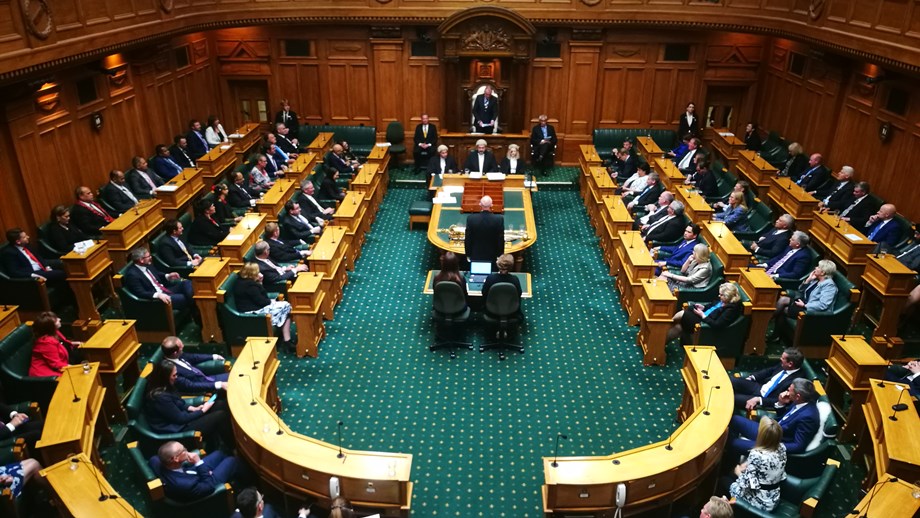
WELLINGTON – New Zealand’s Parliament has been told to pipe down over the use of “Aotearoa,” the Māori name for the country, after Speaker Gerry Brownlee declared today he’ll no longer entertain objections to its use in the House. The ruling, sparked by Deputy Prime Minister Winston Peters’ attempt last month to ban the term, underscores a simmering clash over identity, language, and power—issues that resonate from Wellington to Bharat’s multicultural debates. For Kiwi and NZ Bharat readers, it’s a window into how history and politics shape a nation’s name.
The Ruling and the Row
Brownlee’s decision, announced this morning, cements Aotearoa’s place alongside English and New Zealand Sign Language as one of Parliament’s three official languages. “MPs can use any of these when speaking,” he told the House, per a statement echoed by RNZ at 7:07 AM NZDT. The edict follows Peters’ February outburst, when Green MP Ricardo Menéndez March dropped “Aotearoa” in a session, prompting the New Zealand First leader—who is Māori—to object. Peters argued it muddies formal proceedings, while coalition ally Shane Jones, also Māori, jabbed at “recent immigrants telling Māori what our country should be called.”
Menéndez March, a Mexican-born Kiwi citizen, stood firm, backed by Te Pāti Māori and Labour MPs who see Aotearoa as a cultural cornerstone. Brownlee’s ruling today sidelines further gripes, though X posts show the divide persists: “About time we respect all our languages,” one user cheered, while another sniped, “Peters is right—stick to New Zealand.” For a Parliament where 32% of MPs now identify as Māori (Stats NZ, 2024), it’s less a linguistic spat than a proxy for deeper tensions.
A Name Steeped in History
Aotearoa’s roots stretch back centuries. Māori oral tradition ties it to explorer Kupe, who dubbed the North Island “Aotearoa”—land of the long white cloud—around 1000 AD. It morphed over time to mean all of New Zealand, though not all iwi embraced it historically, per University of Auckland’s Dr. Arama Rata. European settlers stamped “New Zealand” in 1642 via Dutch cartographer Abel Tasman, honouring Zeeland province—a name Captain James Cook anglicised in 1769. The 1840 Treaty of Waitangi, signed in Māori and English, left nomenclature vague, cementing dual identities.
Fast forward to 1987: the Māori Language Act made te reo an official language, turbocharged by the 1970s Māori Renaissance—think kōhanga reo and Waitangi Tribunal claims. Aotearoa crept into mainstream use—on passports since 2010, coins since 2023, and Air NZ tailfins. Yet, Peters’ pushback reflects a National-led coalition wary of “woke” overreach, despite 17% of Kiwis speaking some te reo by 2023 (Stats NZ).
Latest Updates: Politics Meets Sentiment
Brownlee’s call, reported by AOL and The Independent today, lands amid a busy news cycle—Papakura’s scrap fire and Adrian Orr’s RBNZ exit. It’s no coincidence timing aligns with Waitangi Day fallout; thousands rallied on February 6, 2025, spotlighting Māori rights after the coalition’s Treaty Principles Bill sparked ire. Te Pāti Māori co-leader Rawiri Waititi hailed the ruling on X at 10:12 AM: “Aotearoa is ours—deal with it.” Jones, doubling down at 11:20 AM, quipped to Stuff, “It’s not about banning; it’s about clarity.”
Public pulse tilts mixed. A 2024 NZ Herald poll showed 52% back “Aotearoa” as a co-official name, up from 41% in 2020, though rural Pākehā lean hard against it. For NZ Bharat readers, it mirrors India’s language wars—Hindi versus Tamil, or Sanskrit’s revival—where names carry colonial scars and pride.
Why It Matters
This isn’t just semantics. Language in Parliament shapes policy—think Māori wards, axed by National in 2024, or land rights tied to te reo terms. For NZ’s $6.2 billion EU trade (Stats NZ, 2024), a stable identity matters too—Europe’s diplomats know “Aotearoa” from climate talks. Brownlee, an ex-rugby mate of many, opts for pragmatism over Peters’ populism, but the coalition’s Māori MPs (10% of its 68 seats) signal internal strain.
For Bharat readers, it’s a lesson in balancing unity and diversity—NZ’s 5 million juggle two names like India’s 1.4 billion juggle 22 languages. Aotearoa’s staying put—for now.
Excerpt
“Brownlee’s gavel has spoken: Aotearoa’s here, complaints be damned. From Kupe to Cook to coalition clashes, NZ’s name game is politics in te reo—a cultural fault line with global echoes.”
Imogen King, from Oxford, writes on political science, business, and international affairs for NZB News, with a Master’s in Political Science.