 Chintapally Suresh
 Welcome to the 54th chapter of our 100-part series, Quantum Leap, where we’ve charted cryptography’s essential role across the dynamic expanse of human innovation. Having explored its influence in numerous sectors, we now shift to the automotive industry—the engine of mobility—where connected cars, autonomous vehicles, and digital ecosystems drive the future of transportation. By 2025, the global automotive market exceeds $3 trillion, according to Statista, with smart vehicles, over-the-air updates, and vehicle-to-everything (V2X) communication generating vast data, all vulnerable to cyber threats amplified by the rise of quantum computing. This article delves deeply into how cryptography secures automotive operations, from protecting vehicle systems to ensuring safe connectivity, in an era where quantum technology could dismantle traditional defenses. Join us as we steer a cryptographic path for the drive of tomorrow.
Automotive: The Cryptographic Highway
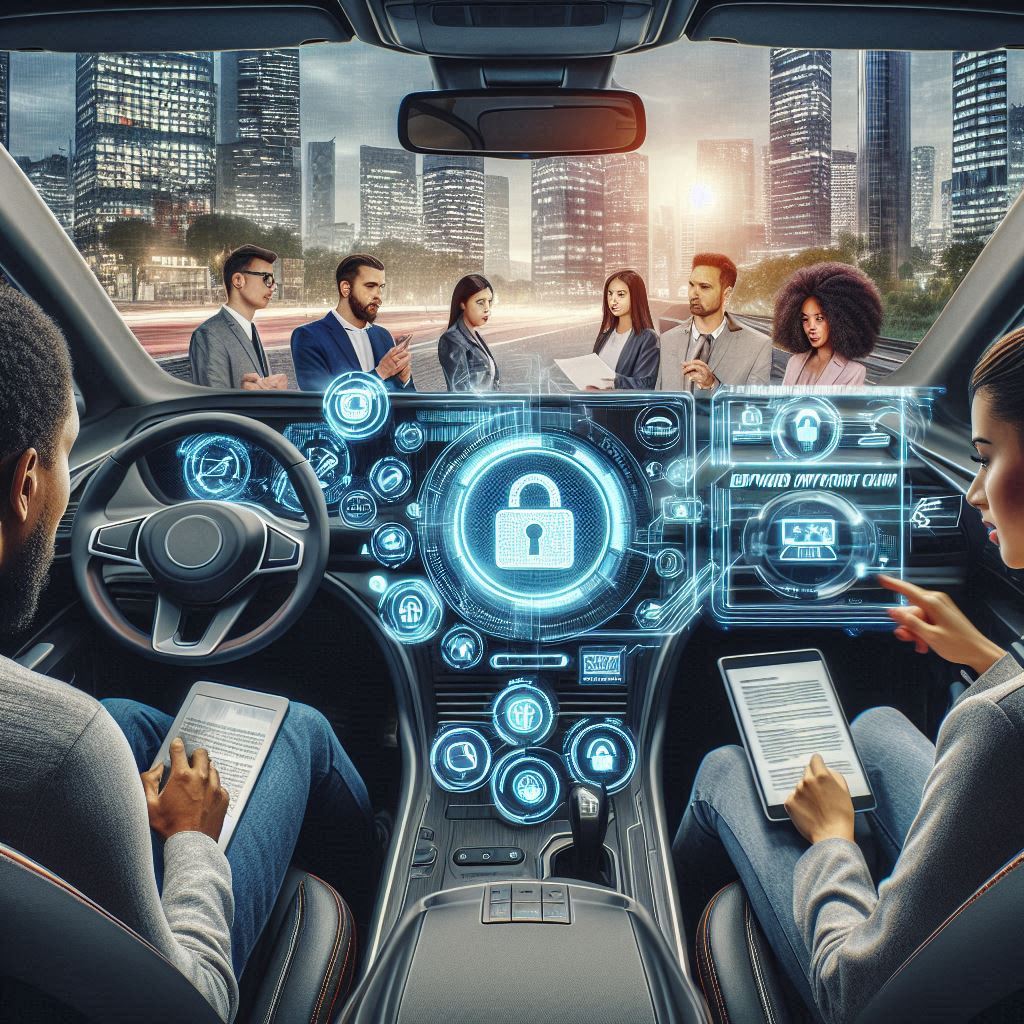
The automotive industry powers movement—cars, trucks, and EVs connect people and places. By 2025, over 70% of new vehicles are connected, per McKinsey, using IoT sensors, 5G networks, and cloud platforms to enable autonomous driving, real-time navigation, and digital keys, weaving a network of data—firmware, location logs, driver profiles. This digital shift enhances safety and convenience but invites risks: a hacked car could be remotely hijacked, a tampered update could crash systems, and a breached profile could expose personal routes.
Cryptography is automotive’s roadmap, delivering confidentiality to shield vehicle and driver data, integrity to keep systems and commands untampered, and authenticity to verify vehicles and networks. Quantum computing poses a high-speed threat: it could crack encryption like RSA, which relies on the slow grind of factoring large numbers—a task quantum machines could reduce to seconds. This article unpacks how cryptography, fortified by quantum-resistant tools and innovative techniques, protects automotive systems against today’s hackers and tomorrow’s quantum adversaries, explained with clear, road-ready precision.
Securing Vehicle Connectivity and Transactions
Connected cars communicate—V2X links vehicles to traffic systems, apps process digital payments for tolls or charging. These rely on TLS, combining AES (Advanced Encryption Standard) to scramble data and RSA to swap keys securely. AES transforms a car’s location signal into a coded jumble, readable only with the right key, while RSA’s strength lies in math—multiplying two massive primes is quick, but factoring them back takes classical computers eons. A quantum computer, however, could run Shor’s algorithm, a quantum method that factors numbers at lightning speed, cracking RSA keys in moments, or use Grover’s algorithm to halve AES key strength, doubling brute-force speed.
To keep vehicles on course, automakers adopt post-quantum cryptography, crafting algorithms that quantum machines can’t break. One method uses lattice-based encryption, hiding data in a multidimensional mathematical grid—imagine a V2X signal as a secret locked in a 5D maze, too complex for quantum power to unravel. In 2025, a major automaker encrypts 10 million vehicle connections this way, ensuring quantum hackers hit a dead end.
Quantum key distribution (QKD) adds a turbocharged defense. QKD sends keys as photons—light particles—over fiber or satellite; if a hacker intercepts, the photons shift, triggering an alert. Picture paying for an EV charge: QKD secures the payment key between your car and the station, locking out eavesdroppers mid-transaction. By 2025, a German carmaker trials QKD over its 5G network, turning connectivity into a quantum-secure freeway.
Protecting Vehicle Firmware and Updates
Automotive systems depend on firmware—software running brakes, engines, and autonomy—updated over-the-air (OTA). These updates, often encrypted with AES, are critical: a breach could inject malicious code, disabling a car or worse. Quantum computers could decrypt these files later, a tactic called “harvest now, decrypt later,” exposing years of updates to sabotage.
Quantum random number generators (QRNGs) build a sturdy defense. Unlike standard randomizers with predictable patterns, QRNGs tap quantum chaos—like the random flicker of subatomic particles—to craft keys with no logic. For an automaker, this means an update’s key is a wild string, unguessable even by a quantum computer guessing billions of times per second. In 2025, a U.S. EV maker encrypts its 5 million OTA updates with QRNG keys, a fortress of randomness no quantum thief can breach.
Digital signatures add a reinforced chassis. A signature ties an update—like “this is version 3.1”—to a private key, verified by a public key rooted in quantum-resistant math. Hash-based signatures shift this to one-way functions—easy to compute, nearly impossible to reverse—ensuring an update is legitimate. Picture a car downloading firmware: its signature proves the source, quantum-proof and solid. By 2025, a Japanese automaker rolls this out, securing updates with cryptographic steel.
Autonomous Vehicles and IoT: Securing the Drive
Autonomous vehicles—equipped with LiDAR, cameras, and IoT sensors—redefine driving. By 2025, 20% of new cars have partial autonomy, per Bloomberg, encrypted with AES. Quantum computers could spoof these, faking sensor data or hijacking routes. Post-quantum code-based encryption, lightweight and tough, secures these devices. It’s like locking a car’s radar in a code even quantum speed can’t crack—simple yet unbreakable. In 2025, a Silicon Valley firm encrypts its autonomous fleet’s IoT systems this way, keeping roads safe.
Homomorphic encryption offers a smart maneuver: it processes encrypted data without unlocking it. Imagine analyzing driving patterns—say, “how many cars took this turn?”—while the data stays scrambled, like mapping routes in a sealed log. In 2025, a ride-sharing platform uses this to optimize encrypted fleets, blending efficiency with secrecy.
QKD over satellite secures real-time links—say, a self-driving car’s traffic signal from orbit. Photons beam keys, untouchable by ground-based hacks. QRNGs seed these, while hash-based signatures verify commands—a quantum-secure drive. By 2025, a Chinese city syncs its autonomous buses this way, navigating with unbreakable precision.
The Quantum-Automotive Threatscape
Quantum computing’s automotive risks hit hard. It could decrypt V2X streams, snagging location data mid-drive, or forge signatures, hijacking cars. Beyond that, it might simulate driving patterns from cracked data, selling insights to rivals. Add AI, and the stakes soar: neural networks could craft quantum-driven attacks—fake updates or spoofed sensors—faster than engineers patch.
Resilience keeps the wheels spinning. Automotive systems layer defenses—post-quantum encryption plus QKD—so one hack doesn’t crash the fleet. Real-time checks, using quantum-secure keys, spot anomalies—like a sudden route change—before danger accelerates. Time’s a factor: today’s encrypted logs could be cracked in a decade, exposing past drives. Frequent key swaps, driven by QRNGs, shrink this window—yesterday’s key is scrapped, a rolling shield. In 2025, an automaker rebounds from a simulated quantum hack in hours, proving automotive’s durability.
Ethical Roads: Privacy, Equity, Mobility
Automotive’s cryptographic shift stirs ethical currents. Privacy teeters—encrypted data guards drivers, but breaches could expose lives (e.g., a hacked log leaking a CEO’s commute). Equity wavers if quantum-secure tech—costly to deploy—leaves budget cars exposed, stranding lower-income drivers. A 2025 UN report pushes shared QKD networks to level the road. Mobility shifts—who owns secure automotive? Tech giants peddling quantum tools could dominate, or big carmakers could outpace small startups.
Cryptography steers balance. Open-source quantum-resistant standards widen access, while backups—like manual overrides—preserve mobility. Transparent logs—say, auditable update hashes—keep equity alive, ensuring automotive drives all, not few.
Real-World Drives: Automotive Scenarios
Two cases hit the gas:
- The Quantum Hijack: In 2026, a quantum computer cracks a carmaker’s RSA, disabling 1 million vehicles. Peers with QKD and lattice encryption recover in a day, others stall—a resilience tale.
- The Secure Drive: A 2025 fleet uses hash-based signatures and homomorphic encryption for autonomy. Quantum threats brake, proving mobility stays true.
These show automotive’s cryptographic stakes, urgent and road-ready.
The Future: A Quantum Journey
By 2050, automotive might cruise with quantum security. Satellites could beam QKD keys to vehicles worldwide, fueled by green power. AI could spin real-time ciphers, dodging hacks instantly, while blockchain locks every signal across borders. Cryptography might even tag cars—imagine a vehicle with a quantum-secure ID, proof of the first mile. Automotive’s future is a swift, unbreakable journey, forged in quantum chrome.
Conclusion: Securing the Drive
Cryptography and automotive fuse to secure the drive of tomorrow, weaving quantum-resistant tools, real-time defenses, and resilient strategies into a chassis for mobility. From connectivity to autonomy, it’s security that steers. As we close this 54th chapter, here’s an excerpt to reflect on: “In automotive, cryptography is the silent engine, quantum-tuned to guard the pulse of the road.” Next, in Article 55—Quantum Leap: Cryptography and Aerospace – Securing the Skies of Tomorrow—we’ll explore how cryptography protects aviation and space in a quantum age.