

 Imogen King
 The 2025 Canadian federal election has concluded, marking one of the most consequential and dynamic contests in the country’s modern history. For New Zealanders, the outcome holds particular significance-not only for its impact on the global political landscape but also for the lessons it offers about resilience, sovereignty, and the enduring power of democratic institutions in the face of external pressures.
The Road to the Ballot: A Nation Tested
The lead-up to the election was anything but ordinary. For months, Canada found itself at the centre of a geopolitical storm, with its southern neighbour, the United States, exerting unprecedented pressure. US President Donald Trump, having secured a second term, reignited trade hostilities and made provocative statements suggesting Canada should become the 51st American state. These remarks, coupled with the imposition of steep tariffs on Canadian goods and energy, sent shockwaves through Canadian society and dominated public discourse.
Internally, the Liberal Party faced its own turmoil. Justin Trudeau, who had been Prime Minister since 2015, saw his popularity wane amid a cost-of-living crisis and a series of cabinet resignations. By early 2025, the Conservatives, led by Pierre Poilievre, enjoyed a commanding 25-point lead in the polls. The Liberals appeared destined for defeat, and the nation braced for a political realignment.
Mark Carney: The Unexpected Contender
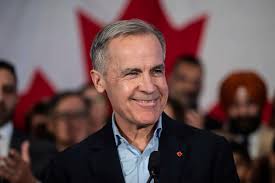
Everything changed with Trudeau’s resignation and the ascension of Mark Carney, a former central banker with a global reputation for economic stewardship. Carney’s entry into the race was a game-changer. He quickly reframed the election as a referendum on Canadian sovereignty and economic resilience, positioning himself as the leader best equipped to confront the existential threats posed by Trump’s America.
Carney’s campaign was marked by a clear, unifying message: Canada would not be intimidated or annexed. He pledged to expand trade beyond the US, invest in domestic productivity, and support the most vulnerable Canadians through targeted fiscal stimulus. His economic credentials reassured voters, while his rhetoric struck a chord with a populace increasingly wary of American encroachment.
The Campaign: Nationalism, Unity, and a Surge in Voter Turnout
The election campaign was unlike any in recent memory. Trump’s threats and trade wars galvanised Canadian nationalism, leading to a boycott of American products and record early voting. Over 7.3 million Canadians cast their ballots ahead of election day, a testament to the high stakes and the sense of urgency permeating the electorate.
The Liberals’ fortunes improved dramatically as Carney distanced himself from Trudeau’s unpopular policies, notably scrapping the carbon tax and promising a renewed focus on economic growth. The campaign’s tone shifted from defensive to assertive, with Carney warning, “They want our resources, our water, our land-our country. They can’t have it.”
Across the country, the Liberals made significant gains, particularly in Quebec and Toronto. In Quebec, they flipped several key ridings from the separatist Bloc Québécois, whose support collapsed amid concerns over national unity. In Toronto, the Liberals swept nearly every seat, though the Conservatives managed to hold and even gain ground in some suburban ridings.
The Results: A Fourth Term for the Liberals, Uncertainty for the Conservatives
As the final votes were tallied, it became clear that the Liberal Party had secured a remarkable comeback. Mark Carney’s Liberals are set to form the next government, marking their fourth consecutive term-a rare achievement in Canadian politics. While the majority threshold of 172 seats in the 343-member House of Commons remains uncertain, the Liberals’ dominance is undisputed.
The Conservatives, once poised for victory, suffered a dramatic reversal. Pierre Poilievre, whose campaign echoed Trump’s populist rhetoric, not only failed to win the election but also lost his own seat in Parliament. His defeat was attributed to a backlash against his alignment with Trump’s “Canada First” agenda and his provocative suggestion that Canada might benefit from closer integration with the US.
The New Democratic Party (NDP), led by Jagmeet Singh, failed to secure any seats in Ontario, prompting Singh’s resignation. The Bloc Québécois, once a formidable force in Quebec, saw its support erode as voters rallied around the Liberals in defence of national unity.
The International Response: Allies and Adversaries Take Note
The outcome of the Canadian election reverberated far beyond its borders. NATO Secretary-General Mark Rutte congratulated Carney, emphasising the importance of Canada’s role in the alliance and expressing hope for deeper cooperation on defence and industrial production. European leaders and other global partners welcomed the result, viewing it as a reaffirmation of Canada’s commitment to democratic values and multilateralism.
For New Zealand, the election serves as a reminder of the importance of strong, independent partners in a volatile world. Canada’s experience underscores the need for nations to diversify their trade relationships, invest in domestic resilience, and stand firm in the face of external threats.
Economic Implications: Stability, Stimulus, and Strategic Shifts
The economic stakes of the election were immense. With the Canadian economy teetering on the brink of recession amid trade uncertainty, Carney’s victory brings the promise of ambitious fiscal stimulus and a renewed focus on productivity. The Liberals have pledged to run a $225 billion deficit over the next four years, targeting capital investments in housing, infrastructure, and clean energy.
This approach marks a departure from Trudeau’s tenure, with an emphasis on investments that boost long-term growth rather than short-term spending. The Liberals also plan to eliminate federal barriers to interprovincial trade, potentially injecting billions into the domestic economy.
Trade diversification is a central pillar of Carney’s agenda. With US-Canada relations at a low point, the government is expected to pursue new partnerships with the UK, the European Union, and countries across Asia and Latin America. Retaliatory tariffs on US goods will remain in place, signalling a willingness to defend Canadian interests even at the cost of short-term economic pain.
The housing crisis, a persistent concern for Canadians, is also set to receive significant attention. The Liberals have proposed the creation of a new Crown corporation to build affordable housing, drawing inspiration from post-World War II policies. They also plan to eliminate GST for first-time homebuyers on properties up to $1 million, though critics argue that more needs to be done to encourage seniors to downsize and free up inventory for younger families.
Political Dynamics: A New Era in Canadian Governance
Whether Carney will lead a majority or minority government remains to be seen. A minority would require cooperation with smaller parties, such as the NDP and Bloc Québécois, both of which favour increased fiscal spending. This could complicate efforts to pass legislation but may also foster a spirit of compromise and innovation.
The collapse of the Bloc Québécois and the NDP’s poor showing reflect a broader realignment in Canadian politics. The electorate has coalesced around the Liberals as the party best positioned to defend the nation’s interests in a turbulent world. Carney’s leadership style, characterised by pragmatism and a willingness to adapt, has resonated with voters seeking stability and direction.
The Human Dimension: National Identity and the Power of Unity
Beyond the numbers and policy debates, the 2025 election was a powerful affirmation of Canadian identity. Faced with external threats and internal challenges, Canadians rallied around a vision of a strong, independent, and inclusive nation. The surge in voter turnout, the rejection of divisive rhetoric, and the embrace of a leader committed to unity all speak to the resilience of Canada’s democratic institutions.
Carney’s victory speech captured the mood of the nation: “We have moved past the shock of American betrayal; it is imperative that we support one another. Together, we will construct a Canada that embodies our principles. A strong Canada, a free Canada, a Canada forever-vive le Canada!”
Lessons for New Zealand and the World
For New Zealand, the Canadian election offers several key lessons:
- Resilience in the Face of External Pressure: Canada’s ability to withstand economic and political threats from a powerful neighbour demonstrates the importance of strong institutions and national unity.
- The Value of Trade Diversification: Overreliance on a single trading partner can leave nations vulnerable. Canada’s pivot towards new markets is a model for other countries seeking to reduce risk.
- The Importance of Leadership: The rapid turnaround in the Liberals’ fortunes underscores the impact of credible, experienced leadership in times of crisis.
- The Power of Democratic Engagement: Record voter turnout and the rejection of populist rhetoric highlight the enduring strength of democratic participation.
Looking Ahead: Challenges and Opportunities
The road ahead for Canada will not be easy. The country faces significant economic headwinds, ongoing tensions with the US, and the need to deliver on ambitious promises around housing, infrastructure, and social policy. The new government will need to balance fiscal responsibility with the urgent need for investment, all while maintaining public trust and navigating a complex international environment.
For New Zealand, the outcome is a reminder of the interconnectedness of the global community. As Canada charts a new course, opportunities for deeper cooperation-particularly in trade, innovation, and climate policy-will emerge. Both nations share a commitment to democratic values, multilateralism, and the pursuit of a fairer, more resilient world.
Summary
Canada’s 2025 federal election was a watershed moment, shaped by external threats, internal upheaval, and the emergence of a new leader in Mark Carney. The Liberals’ victory, achieved against the odds, reflects a nation’s determination to defend its sovereignty and chart its own path. For New Zealand and the wider world, the Canadian experience offers valuable insights into the power of unity, the importance of strong leadership, and the enduring resilience of democracy. As Canada embarks on a new chapter, its choices and challenges will continue to resonate far beyond its borders.


























Good