





 Theodora Chapman
 The Changing Landscape of Cat Bylaws
Across New Zealand, local councils are rapidly updating and introducing cat bylaws in response to surging feral cat numbers, environmental concerns, and calls for more responsible pet ownership. While dogs have long been regulated by national law, cats are now coming under similar scrutiny, with new rules focusing on desexing, microchipping, and registration.
Why Are Cat Bylaws Being Introduced?
Cats are the most popular companion animal in New Zealand, with over 40% of households owning at least one. However, their impact on native wildlife and the environment is significant, and the number of feral cats is now estimated to be double that of pet cats. Feral and unowned cats threaten native birds, reptiles, and insects, and contribute to public health and nuisance issues. Local authorities and animal welfare groups are responding with bylaws designed to:
- Reduce unwanted breeding and the risk of pets becoming feral
- Make it easier to return lost cats to their owners
- Encourage responsible ownership and protect native wildlife
What Do the New Bylaws Require?
Many councils have already enacted or are considering cat bylaws. While there is no single national law for cats, the following requirements are becoming increasingly common:
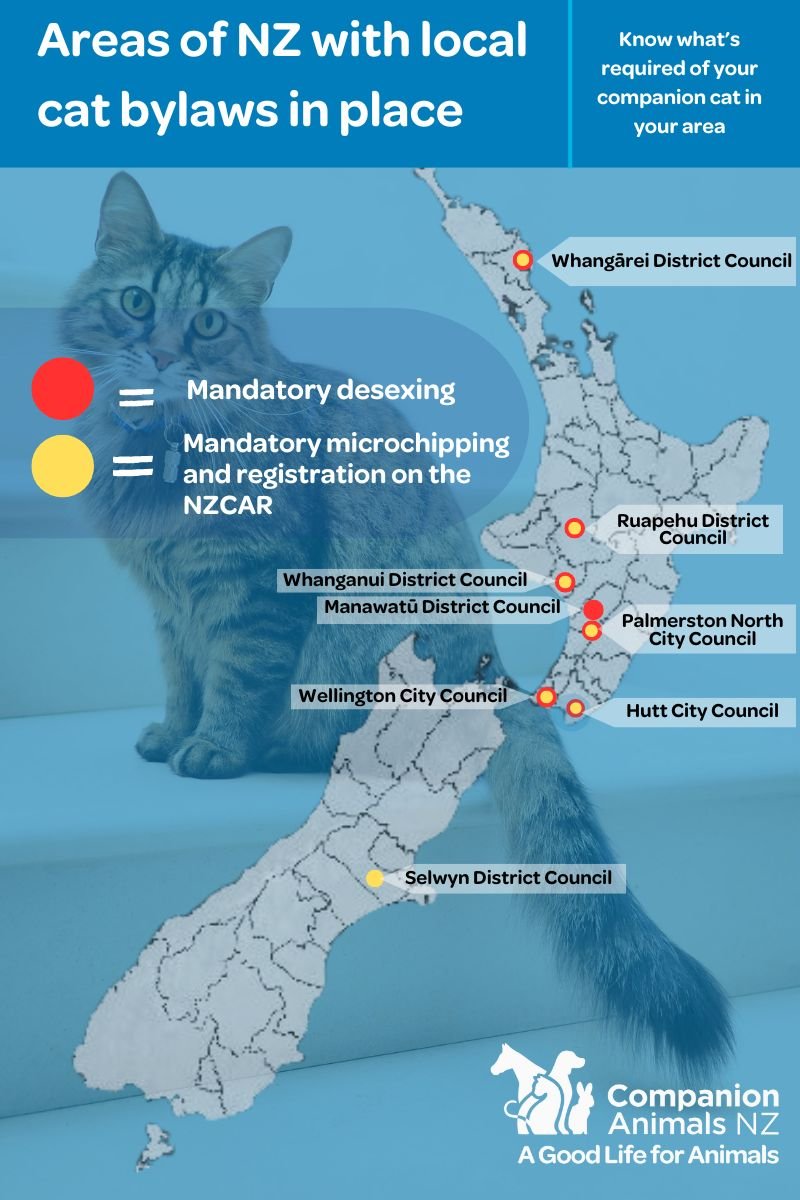
- Desexing: Most new bylaws require cats to be desexed (unless exempt for breeding or medical reasons). For example, Wellington City Council mandates desexing for all cats over six months old, and similar rules are in place in Hutt City, Selwyn District, and others.
- Microchipping and Registration: Cats must be microchipped and the chip registered with the New Zealand Companion Animal Register (NZCAR). This helps reunite lost pets with their owners and assists councils in managing the cat population.
- Registration Fees: There may be a one-off fee for microchip registration. Some councils offer support or connect owners with low-cost desexing and microchipping services.
- Transition Periods: New bylaws often allow a year or more for owners to comply. For example, the Porirua City Council’s proposed bylaw gives owners until May 2026 to meet the requirements.
- Exemptions: Registered breeders and cats with a vet-certified health exemption are usually not required to be desexed.
Regional Variations and Future Directions
While the trend is toward more regulation, the details differ by council. For example, Wellington, Hutt City, and Selwyn District have specific age requirements for desexing and microchipping, while Tasman District’s new bylaw (effective January 2025) gives existing cat owners until June 2026 to comply. Some councils are considering further steps, such as containment rules, curfews, or limits on the number of cats per household, especially as part of future bylaw reviews.
National Discussion and Calls for a Unified Approach
There are growing calls for a National Cat Management Act, which would set consistent rules across the country. Animal welfare organisations, environmental groups, and a recent parliamentary committee have all recommended national legislation mandating desexing, microchipping, and registration of companion cats. The aim is to address the problem of cat overpopulation, improve animal welfare, and protect New Zealand’s unique biodiversity.
What Cat Owners Need to Know
- Check your local council’s website for current or upcoming cat bylaws.
- Desex and microchip your cat, and ensure the microchip is registered with NZCAR and your details are kept up to date.
- If you are a breeder or your cat cannot be desexed for health reasons, make sure you have the necessary documentation.
- Consider keeping your cat indoors or in a secure outdoor enclosure to protect wildlife and keep your pet safe.
Summary
Cat bylaws are becoming the norm across New Zealand, with an increasing number of councils requiring desexing, microchipping, and registration of pet cats. These measures aim to reduce unwanted litters, manage feral cat populations, and protect native wildlife. While rules vary by region, the direction is clear: responsible cat ownership is a growing priority, and national legislation may soon bring greater consistency across the country. Cat owners are encouraged to stay informed and take steps now to comply with new and upcoming regulations.