




 Imogen King
 ACT Leader Targets “Bloated” Government Structure Ahead of Potential 2026 Policy Push
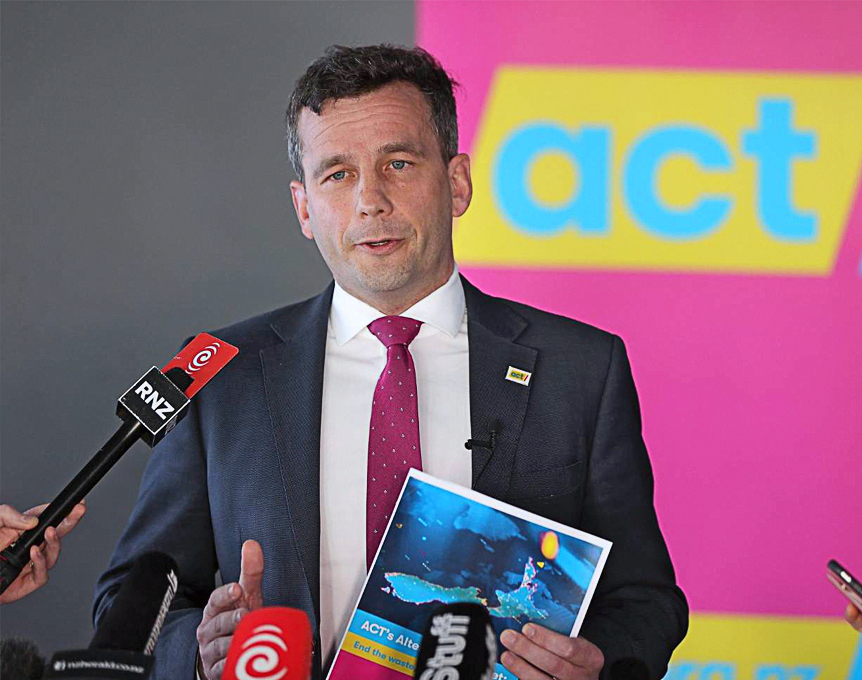
ACT Party leader David Seymour has announced plans to radically streamline New Zealand’s executive branch, proposing a 20-minister cap (down from 28) and the elimination of dozens of ministerial portfolios. The reforms, which Seymour says could become ACT’s 2026 election policy, aim to reduce bureaucracy and refocus government on “core priorities.”
Key Proposals
- Ministerial Cuts:
- Reduce ministers from 28 to 20, with no ministers outside Cabinet.
- Scrap all associate minister roles except Associate Finance (currently held by Seymour).
- Portfolio Abolitions:
- Target niche roles including Racing, Hospitality, Auckland, South Island, Hunting and Fishing, Voluntary Sector, and Space.
- Merge or dissolve ~40 government departments to eliminate duplication (e.g., combining overlapping regulatory bodies).
- Constitutional Reform:
- Introduce legislation to limit future ministerial appointments unless approved by supermajority Parliament vote.
Rationale and Reaction
Seymour argues the current system creates “ministers without missions,” citing the 82 existing portfolios as evidence of mission creep. In a speech to the Tauranga Business Chamber, he stated:
“We have ministers for every hobbyhorse but no focus on delivering affordable housing, safe streets, or lower living costs. This reform will force governments to prioritise.”
The plan has drawn mixed responses:
- Support: Taxpayers’ Union and BusinessNZ praised the focus on efficiency.
- Criticism: NZ First leader Winston Peters called it “libertarian fantasy,” while Labour’s Chris Hipkins warned of “chaotic under-resourcing.”
Impact on Current Government
As Minister for Regulation, Seymour has already begun trimming bureaucratic red tape through his new ministry. However, the proposed reforms would require National’s support post-2026, with Luxon yet to comment publicly.
Broader ACT Agenda
The proposal aligns with ACT’s wider platform:
- Treaty Principles Bill: Redefining co-governance arrangements (currently in select committee).
- Local Elections: ACT will field council candidates in 2025, targeting “wasteful spending” on cycleways and Māori wards.
- Parliamentary Term Extension: Pushing to move elections to 4-year cycles (currently before Parliament).
Timeline and Next Steps
- 2025 Local Elections: ACT candidates to campaign on “rates relief and service prioritisation” (expressions of interest open at actlocal.nz).
- 2026 General Election: Ministerial reforms likely to headline ACT’s policy suite.
- Regulatory Push: Seymour’s ministry will publish “waste audits” of departments like Kainga Ora starting June 2025.
Summary: Seymour’s proposal signals ACT’s intent to reshape New Zealand’s governance model, leveraging its coalition role to push long-term structural changes. While politically contentious, the plan reframes ACT as a party targeting systemic inefficiency rather than incremental reform.
Key Political Implications:
- Coalition Dynamics: Tests ACT’s influence over National’s post-2026 agenda.
- Electoral Strategy: Positions ACT as the “anti-waste” alternative to NZ First’s regional focus.
- Constitutional Debate: Reignites discussion about executive accountability in MMP systems.