





 Chintapally Suresh
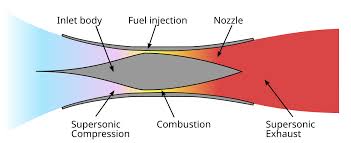
 Hyderabad, India – The Defence Research and Development Organisation (DRDO) has reached a major milestone in the field of hypersonic weapon technology, with the Defence Research & Development Laboratory (DRDL) in Hyderabad successfully conducting a long-duration ground test of an Active Cooled Scramjet Subscale Combustor. The test, performed at the state-of-the-art Scramjet Connect Test Facility on 25 April 2025, lasted over 1,000 seconds—an achievement hailed as a pivotal step in India’s development of hypersonic capabilities.
The Ministry of Defence issued a release lauding the milestone, stating, “DRDL conducted long-duration Active Cooled Scramjet Subscale Combustor ground testing for more than 1,000 seconds at the newly built state-of-the-art Scramjet Connect Test Facility at Hyderabad on April 25, 2025.”
Paving the Way for Hypersonic Cruise Missiles
The test follows an earlier trial in January 2025, which lasted 120 seconds. With the success of this extended evaluation, the system is now poised for full-scale flight-ready combustor testing.
Hypersonic cruise missiles, a cutting-edge class of weaponry, can travel at speeds exceeding five times the speed of sound (more than 6,100 km/h) and utilise air-breathing engines for sustained flight. Supersonic combustion, a critical component of these propulsion systems, ensures their ability to maintain long-duration cruise conditions.
The Ministry noted that this achievement validates not only the design of the scramjet combustor but also the capabilities of the advanced test facility. This breakthrough represents the culmination of collaborative efforts between DRDO laboratories, industry partners, and academic institutions.
Government and Industry Praise for the Achievement
Defence Minister Rajnath Singh extended his congratulations to DRDO and its collaborators, describing the accomplishment as a testament to the government’s unwavering commitment to advancing hypersonic weapon technologies. Singh applauded the integrated efforts of defence scientists, industry professionals, and academic researchers in laying a strong foundation for India’s Hypersonic Cruise Missile Development Programme.
Dr Samir V Kamat, Secretary of the Department of Defence Research and Development and Chairman of DRDO, also praised the team behind the landmark test. He commended Director General (Missiles and Strategic Systems) U Raja Babu, DRDL Director Dr GA Srinivasa Murthy, and the entire team for achieving 1,000 seconds of sustained supersonic combustion using cutting-edge technologies.
A Leap Forward in Defence Capabilities
The success of the long-duration scramjet test underscores India’s increasing prowess in hypersonic technology, which holds strategic significance in modern warfare. Hypersonic systems are considered game-changers due to their speed, manoeuvrability, and ability to bypass conventional missile defence systems.
By achieving this milestone, DRDO has further solidified India’s position in the global race to develop advanced hypersonic weapons. The ongoing research and development efforts not only enhance national security but also showcase India’s technological advancements on the world stage.
Looking Ahead
With the combustor system nearing readiness for flight testing, the focus now shifts toward integrating this technology into operational hypersonic cruise missiles. The achievement is expected to accelerate India’s efforts to deploy these next-generation weapons, potentially redefining the nation’s defence capabilities.
The success of this test marks a new chapter in India’s journey toward mastering hypersonic propulsion, underscoring the importance of innovation and collaboration in achieving strategic technological goals.