 Swamy Gitananda
 A Daily Exploration of Dharma, Jnana, and Relevance to Modernity
By Swami Gitananda
Published on New Zealand Bharat (NZB) News, April 13, 2025
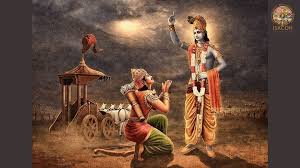
Om Shri Narayana Namaha. Salutations to Narayana, the refuge of all beings, as we advance through the Bhagavad Gita, the Yoga-Sagara (ocean of yoga) that transforms Kurukshetra into a dharmakshetra of eternal truth. Yesterday, Krishna, as Hrishikesha (lord of the senses), fulfilled Arjuna’s request, positioning the finest chariot between the armies, a silent act of kripa (grace) that deepened Arjuna’s vishada-yoga (yoga of despondency). Today, the chariot stands before Bhishma, Drona, and the assembled warriors, a poignant moment that sharpens Arjuna’s inner conflict and primes the Gita for Krishna’s upadesha (teaching).
This series is a daily sadhana (spiritual practice), offering one shloka at a time—its direct meaning, a profound exploration of its tattva (essence), insights from sampradayas (spiritual traditions), and its resonance with modern fields like quantum science, leadership, and svasthya (wellbeing). Let us now immerse ourselves in Adhyaya 1, Shloka 25, where Arjuna faces his revered elders, a prelude to the Gita’s eternal wisdom.
The Shloka
भीष्मद्रोणप्रमुखतः सर्वेषां च महीक्षिताम्।
उवाच पार्थ पश्यैतान् समवेतान् कुरूनिति॥
Bhishmadronapramukhatah sarvesham cha mahikshitam,
Uvacha partha pashyaitan samavetan kuruniti.
Direct Meaning
“In front of Bhishma, Drona, and all the other kings (bhishmadronapramukhatah sarvesham cha mahikshitam), [Krishna] said (uvacha), ‘O Partha (partha), behold these Kurus gathered here (pashyaitan samavetan kuruniti).”’
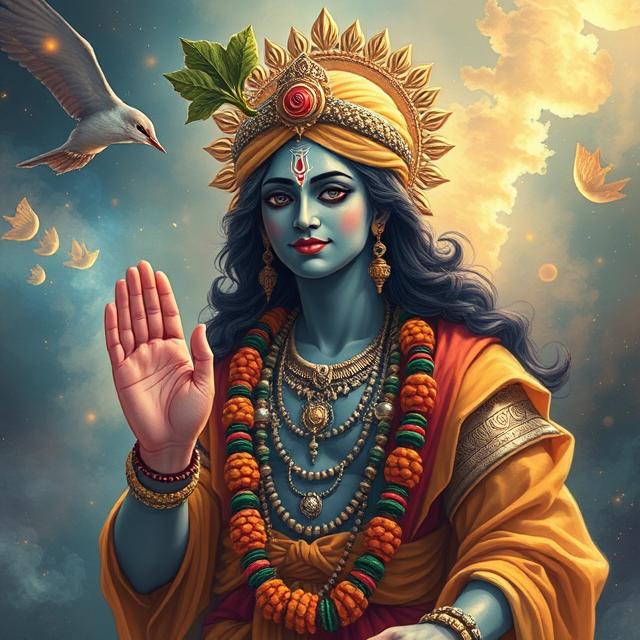
In this verse, Krishna, having placed the chariot before Bhishma, Drona, and the assembled Kuru kings, speaks to Arjuna, addressed as Partha (son of Pritha), urging him to look upon the gathered Kurus, intensifying Arjuna’s vishada.
Explanation of the Shloka
This shloka marks Krishna’s first spoken words in the Gita, a concise yet profound invitation to Arjuna to confront the reality before him. The chariot’s position—facing Bhishma and Drona—amplifies the emotional weight of Arjuna’s drishti (vision), as kinship and duty collide, deepening his vishada-yoga. Let us explore its layers with viveka (discernment) and bhakti (devotion).
- Bhishmadronapramukhatah: In Front of Bhishma and Drona
- Bhishmadrona: Bhishma, the grandsire and Kuru patriarch, and Drona, Arjuna’s revered Guru in dhanurveda (archery), stand as pillars of the Kaurava army. Their presence evokes sneha (affection) and shraddha (reverence) in Arjuna, complicating his kshatriya duty.
- Pramukhatah: “In front of,” positions the chariot directly before these elders, a deliberate choice by Krishna to confront Arjuna with his deepest attachments.
This placement sharpens the conflict—dharma demands battle, yet moha (delusion) binds Arjuna to his kin, a tension Krishna will address.
- Sarvesham Cha Mahikshitam: And All the Other Kings
- Sarvesham Cha Mahikshitam: “And all the other kings,” includes the assembled maharathas—Duryodhana, Karna, Shakuni, and allied rulers—arrayed in vyudham (formation). Mahikshitam (lords of the earth) underscores their might, a formidable foe.
The phrase broadens Arjuna’s drishti, from revered elders to the wider Kuru clan and allies, a microcosm of samsara’s forces fueling his vishada.
- Sarvesham Cha Mahikshitam: “And all the other kings,” includes the assembled maharathas—Duryodhana, Karna, Shakuni, and allied rulers—arrayed in vyudham (formation). Mahikshitam (lords of the earth) underscores their might, a formidable foe.
- Uvacha: [Krishna] Said
- Uvacha: “Said,” marks Krishna’s first words, a shift from silent Sarathi (charioteer) to Guru. Though the speaker is implied (from context as Krishna), the brevity reflects Hrishikesha’s precision—a call to pashya (see) that carries divine intent.
Krishna’s speech begins the Gita’s dialogue, a kripa veiled as instruction, urging Arjuna toward truth.
- Uvacha: “Said,” marks Krishna’s first words, a shift from silent Sarathi (charioteer) to Guru. Though the speaker is implied (from context as Krishna), the brevity reflects Hrishikesha’s precision—a call to pashya (see) that carries divine intent.
- Partha: O Son of Pritha
- Partha: “Son of Pritha,” addresses Arjuna as Kunti’s son, a tender name evoking his lineage and Krishna’s intimacy as sakha (friend). It softens the command, grounding Arjuna in dharma’s roots while acknowledging his humanity.
This epithet contrasts with Gudakesha (Shloka 24), hinting at vulnerability over vigilance, a jiva on the cusp of doubt.
- Partha: “Son of Pritha,” addresses Arjuna as Kunti’s son, a tender name evoking his lineage and Krishna’s intimacy as sakha (friend). It softens the command, grounding Arjuna in dharma’s roots while acknowledging his humanity.
- Pashyaitan Samavetan Kuruniti: Behold These Kurus Gathered Here
- Pashyaitan: “Behold these,” a direct imperative to pashya (see), urging Arjuna to confront the reality—aitan (these), the Kurus before him.
- Samavetan Kurun: “Gathered Kurus,” unites both armies under the Kuru banner—Pandavas and Kauravas—kin bound by blood yet divided by dharma and adharma. Samavetan (gathered) emphasizes their collective presence, a karmic assembly.
- Iti: “Thus,” seals Krishna’s words, a narrative marker framing his call as both literal and symbolic—a summons to see beyond forms to truth.
Krishna’s command foreshadows Adhyaya 11’s Vishwarupa (universal form), where pashya will reveal Brahman’s unity.
- The Peak of Vishada
Krishna’s words and the chariot’s position place Arjuna face-to-face with Bhishma and Drona, igniting vishada’s full force. The kleshas (afflictions)—raga (attachment) to kin and abhinivesha (clinging) to life—cloud his buddhi (intellect), paralyzing his kshatriya resolve. This moment births the Gita’s question: Can dharma prevail over moha? Krishna, the Yogeshvara, stands ready to answer. - The Chariot’s Symbolic Stand
The rathottamam (finest chariot) before Bhishma and Drona symbolizes the jiva’s karmakshetra—mind, body, and soul poised between dharma and adharma. Krishna’s Hrishikesha guidance steers Arjuna toward jnana, a metaphor for life’s battles under Ishvara’s will, echoing Adhyaya 2: “Yogastha kuru karmani”—“Perform actions established in yoga.”
This shloka, then, is Krishna’s gentle prod—a Guru’s call to see, deepening Arjuna’s vishada while sowing jnana’s seeds. It invites us to reflect: Do we, like Arjuna, face our conflicts, and can we trust the Hrishikesha within to guide our drishti (vision)?
Spiritual Wisdom from Authoritative Voices
The Bhagavad Gita’s divya-tattva (divine essence) shines through the bhashyas of acharyas, each illuminating its eternal truth. Let us draw from their insights.
- Adi Shankaracharya (Advaita Vedanta)
Shankaracharya sees Krishna’s pashya as a call beyond maya—Arjuna’s vishada stems from avidya (ignorance), seeing kin, not atman. Hrishikesha points to Brahman’s unity. This shloka urges viveka—to discern the eternal amid forms, a truth Krishna will unveil in Adhyaya 13. - Ramanujacharya (Vishishtadvaita)
Ramanuja interprets Krishna’s words as Narayana’s kripa, urging Arjuna toward prapatti (surrender). Partha evokes bhakti’s tenderness, pashya a step to jnana. The shloka hints at divine guidance, lifting Arjuna from moha to dharma. - Madhvacharya (Dvaita)
Madhvacharya views Krishna’s pashya as Vishnu’s sankalpa, Hrishikesha testing Partha’s nishtha (steadfastness). Bhishma and Drona are karmic trials. This shloka underscores daiva-shakti, guiding the jiva through vishada to duty. - Swami Vivekananda (Neo-Vedanta)
Vivekananda reads this as truth’s mirror. “Krishna bids Arjuna see reality,” he writes. The karmakshetra tests resolve. He urges us to awaken shakti with dharma, facing conflicts under divine guidance—a lesson the Gita unfolds.
These voices weave a jnana-mala (garland of wisdom), guiding us toward moksha.
Relevance to Today’s Context
The Bhagavad Gita is a jivan-shastra (manual for life), its wisdom vibrant today. Let us explore how this shloka resonates with quantum science, leadership, and svasthya.
- Quantum Science and Cosmology
Krishna’s pashya mirrors the observer effect—drishti shaping reality—bhishmadronapramukhatah as a karmic field. Hrishikesha evokes ekatva (oneness), unifying opposites. This shloka suggests a dharmakshetra cosmos, where perception aligns with truth, a quest science pursues. - Leadership and Business
In the corporate Kurukshetra, Krishna’s call reflects a mentor’s nudge—pashya as analysis, partha as trust. Facing bhishmadrona (challenges) tests resolve. Hrishikesha’s kripa offers a path: lead with clarity, not fear, fostering drishti (vision) amid conflict. - Svasthya (Wellbeing)
Arjuna’s vishada mirrors modern turmoil—chitta-vikshepa from facing revered foes—while pashya suggests mindful observation. Practices inspired by this shloka—pranayama and dhyana (meditation)—nurture shanti, aligning the manas with Hrishikesha’s calm.
Conclusion: The Sight of Kin
This twenty-fifth shloka peaks Arjuna’s vishada-yoga, Krishna’s pashya unveiling kin as foes, the Gita’s dialogue poised to soar. It stands as a bridge from doubt to wisdom, dharma facing moha. Each day, we unveil another shloka of this divya-gita, seeking satyam (truth) and sundaram (beauty).
Tomorrow, Arjuna’s vishada will spill forth, his heart unburdened to Krishna. Let us approach with bhakti and vichar, chanting: “Krishnaya Vasudevaya”—to Krishna, the divine guide. May His kripa guide us onward.
Hari Om Tat Sat.