



 Swamy Gitananda
 A Daily Exploration of Dharma, Jnana, and Relevance to Modernity
By Swami Gitananda
Published on New Zealand Bharat (NZB) News, April 14, 2025
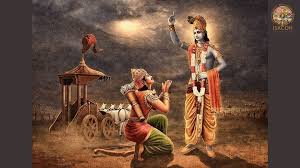
Om Shri Ramaya Namaha. Salutations to Rama, the embodiment of dharma and karuna (compassion), as we delve deeper into the Bhagavad Gita, the Jnana-Sangita (song of wisdom) that transforms Kurukshetra into a dharmakshetra of eternal truth. Yesterday, Krishna, the Hrishikesha (lord of the senses), positioned the chariot before Bhishma, Drona, and the Kuru kings, urging Arjuna, as Partha, to behold the gathered warriors, intensifying his vishada-yoga (yoga of despondency). Today, Arjuna’s gaze reveals fathers, grandfathers, teachers, and kin across both armies, his manas (mind) overwhelmed by sneha (affection), marking the climax of his vishada before Krishna’s upadesha begins.
This series is a daily satsang (spiritual communion), offering one shloka at a time—its direct meaning, a profound exploration of its tattva (essence), insights from sampradayas (spiritual traditions), and its resonance with modern realms like quantum science, leadership, and svasthya (wellbeing). Let us now immerse ourselves in Adhyaya 1, Shloka 26, where Arjuna’s heart breaks before the Gita’s wisdom dawns.
The Shloka
तत्रापश्यत्स्थितान् पार्थः पितॄनथ पितामहान्।
आचार्यान् मातुलान् भ्रातॄन् पुत्रान् पौत्रान् सखींस्तथा॥
Tatraapashyatsthitan parthah pitrinatha pitamahan,
Acharyan matulan bhratrin putran pautran sakhimstatha.
Direct Meaning
“There (tatra), Partha (parthah) saw (apashyat) standing (sthitan) fathers (pitrin), and also grandfathers (atha pitamahan), teachers (acharyan), maternal uncles (matulan), brothers (bhratrin), sons (putran), grandsons (pautran), and friends too (sakhimstatha).”
In this verse, Arjuna, addressed as Partha (son of Pritha), beholds a vast array of kin—fathers, grandfathers, teachers, uncles, brothers, sons, grandsons, and friends—standing in both armies, deepening his vishada as the reality of fighting kin sinks in.
Explanation of the Shloka
This shloka captures the heart of Arjuna’s vishada-yoga, as his drishti (vision), guided by Krishna’s command to pashya (see), reveals not just warriors but beloved kin. The enumeration of relationships—pitrin, pitamahan, acharyan, and more—paints Kurukshetra as a familial tragedy, where dharma’s call to battle clashes with sneha (affection). Let us explore its layers with viveka (discernment) and bhakti (devotion).
- Tatra Apashyat: There He Saw
- Tatra: “There,” situates Arjuna in the chariot, centered between the armies per Krishna’s act (Shloka 24). Kurukshetra becomes a karmakshetra (field of action) and manas-kshetra (field of mind).
- Apashyat: “He saw,” shifts from Krishna’s pashya (behold) to Arjuna’s apashyat (saw), a personal drishti laden with moha (delusion). His seeing is both literal and emotional, a kshatriya’s gaze turning inward.
- Parthah: O Son of Pritha
- Parthah: Arjuna as “son of Pritha” (Kunti), a tender epithet echoing Shloka 25, evokes his humanity and lineage. It contrasts his kshatriya titles—Dhananjaya or Gudakesha—highlighting vulnerability over valor, a jiva grappling with samsara.
This naming foreshadows Krishna’s role as sakha (friend) and Guru, guiding Partha beyond vishada.
- Parthah: Arjuna as “son of Pritha” (Kunti), a tender epithet echoing Shloka 25, evokes his humanity and lineage. It contrasts his kshatriya titles—Dhananjaya or Gudakesha—highlighting vulnerability over valor, a jiva grappling with samsara.
- Sthitan: Standing
- Sthitan: “Standing,” describes the warriors arrayed in vyudham (formation), poised for battle. The term echoes sthapayitva (Shloka 24), tying Krishna’s chariot placement to Arjuna’s vision—kin as foes, fixed in karmic ranks.
Their stillness amplifies the stakes—a frozen moment before rana (war), heavy with dharma’s weight.
- Sthitan: “Standing,” describes the warriors arrayed in vyudham (formation), poised for battle. The term echoes sthapayitva (Shloka 24), tying Krishna’s chariot placement to Arjuna’s vision—kin as foes, fixed in karmic ranks.
- Pitrin Atha Pitamahan: Fathers and Grandfathers
- Pitrin: “Fathers,” likely elders like Drupada or symbolic patriarchs, evokes filial duty and sneha.
- Atha Pitamahan: “And also grandfathers,” points to Bhishma, the Kuru grandsire, revered yet bound to the Kauravas by oath.
These terms stir Arjuna’s shraddha (reverence), making battle seem a violation of dharma, a klesha (affliction) Krishna will address.
- Acharyan: Teachers
- Acharyan: “Teachers,” foremost Drona, Arjuna’s Guru in dhanurveda (archery), who taught him the Gandiva’s mastery. Drona’s presence as a foe cuts deep, a kshatriya’s loyalty to Guru clashing with duty.
This relationship fuels vishada, as killing one’s acharya feels like adharma, a moral knot Krishna will untie.
- Acharyan: “Teachers,” foremost Drona, Arjuna’s Guru in dhanurveda (archery), who taught him the Gandiva’s mastery. Drona’s presence as a foe cuts deep, a kshatriya’s loyalty to Guru clashing with duty.
- Matulan Bhratrin: Maternal Uncles and Brothers
- Matulan: “Maternal uncles,” possibly allies like Shalya (Madri’s brother, fighting for the Kauravas), or symbolic kin tied to Kunti’s lineage.
- Bhratrin: “Brothers,” the Kauravas—Duryodhana and his siblings—cousins Arjuna grew up with, now foes.
These ties evoke bandhutva (kinship), amplifying raga (attachment) and moha, clouding Arjuna’s buddhi (intellect).
- Putran Pautran: Sons and Grandsons
- Putran: “Sons,” likely Abhimanyu (Arjuna’s son) and Draupadi’s sons (Upapandavas) on his side, or younger warriors like Duryodhana’s kin among the foes.
- Pautran: “Grandsons,” symbolic of future generations, or younger fighters tied to elders like Bhishma.
Seeing youth—his own son—intensifies Arjuna’s fear of lineage’s end, a vishada rooted in samsara’s continuity.
- Sakhimstatha: And Friends Too
- Sakhimstatha: “And friends too,” broadens the net to comrades across both armies, bonds forged in peace now severed by war. Tatha (too) adds a cumulative weight, a final note of loss.
Friendship’s betrayal deepens vishada, as sneha battles svadharma (duty), a conflict Krishna will resolve with jnana.
- Sakhimstatha: “And friends too,” broadens the net to comrades across both armies, bonds forged in peace now severed by war. Tatha (too) adds a cumulative weight, a final note of loss.
- The Climax of Vishada-Yoga
Arjuna’s enumeration—pitrin to sakhim—is a litany of love, each bond a thread of moha unraveling his resolve. Kurukshetra mirrors samsara—relationships binding the jiva to pain. This shloka births the Gita’s central question: Can dharma transcend attachment? Krishna, the silent Hrishikesha, prepares to answer with Adhyaya 2’s sankhya-yoga.
This shloka, then, is Arjuna’s heart laid bare—a kshatriya’s vishada facing kin as foes, poised for Krishna’s kripa (grace). It invites us to ponder: Do we, like Arjuna, cling to bonds in life’s battles, and can we seek the jnana to see beyond?
Spiritual Wisdom from Authoritative Voices
The Bhagavad Gita’s divya-tattva (divine essence) shines through the bhashyas of acharyas, each illuminating its eternal truth. Let us draw from their insights.
- Adi Shankaracharya (Advaita Vedanta)
Shankaracharya sees Arjuna’s apashyat as maya’s veil—kinship blinding atman’s unity. Pitrin to sakhim are forms of avidya (ignorance). This shloka urges viveka—to see Brahman beyond relationships, a truth Krishna will unveil in Adhyaya 11. - Ramanujacharya (Vishishtadvaita)
Ramanuja interprets Arjuna’s vishada as the jiva’s struggle, sneha clouding prapatti (surrender). Krishna’s silence is kripa, preparing Partha for bhakti. The shloka hints at Narayana’s guidance, lifting Arjuna from moha to dharma. - Madhvacharya (Dvaita)
Madhvacharya views Arjuna’s drishti as Vishnu-bhakta’s test—kin as karmic trials. Acharyan like Drona reflect tamasic ties. This shloka underscores daiva-shakti, with Krishna steadying Partha’s nishtha (steadfastness) for duty. - Swami Vivekananda (Neo-Vedanta)
Vivekananda reads this as humanity’s cry. “Arjuna sees kin, not foes,” he writes. Love binds, yet duty calls. He urges us to awaken shakti in our karmakshetra, facing attachments with dharma—a lesson the Gita unfolds.
These voices weave a jnana-sutra (thread of wisdom), guiding us toward moksha.
Relevance to Today’s Context
The Bhagavad Gita is a jivan-marga (path of life), its wisdom vibrant today. Let us explore how this shloka resonates with quantum science, leadership, and svasthya.
- Quantum Science and Cosmology
Arjuna’s apashyat mirrors quantum observation—perception entangled with emotion—pitrin to sakhim as a karmic field. Krishna’s presence evokes ekatva (oneness), transcending forms. This shloka suggests a dharmakshetra cosmos, where awareness shapes truth, a quest science pursues. - Leadership and Business
In the corporate Kurukshetra, Arjuna’s vishada reflects a leader facing allies as rivals—acharyan as mentors, bhratrin as peers. Krishna’s kripa offers a path: lead with detachment, not sentiment, fostering drishti (vision) to navigate conflict with clarity. - Svasthya (Wellbeing)
Arjuna’s sneha mirrors modern attachment—chitta-vikshepa from loved ones in conflict—while Krishna’s silence suggests samatva. Practices inspired by this shloka—pranayama and dhyana (meditation)—nurture shanti, freeing the manas from moha’s grip.
Conclusion: The Weight of Bonds
This twenty-sixth shloka crowns Arjuna’s vishada-yoga, his drishti unveiling kin as foes, the Gita’s heart poised for Krishna’s jnana. It stands as a mirror to samsara’s ties, dharma clashing with love. Each day, we unveil another shloka of this divya-gita, seeking satyam (truth) and sundaram (beauty).
Tomorrow, Arjuna will see more kin, his vishada spilling into words. Let us approach with bhakti and vichar, chanting: “Yad yad vibhutimat sattvam” (Gita 10.41)—all glory is Krishna’s. May His kripa guide us onward.
Hari Om Tat Sat.