

 Dorothy Brown
 By Dorothy Brown | NZB News
Background
New Zealand, known for its bicultural foundation and multicultural aspirations, continues to navigate the complex terrain of religious and cultural coexistence. As migration reshapes urban and regional demographics, questions around visibility, representation, and identity are becoming more central.
Among the communities asserting a growing presence in Aotearoa are the Hindus — not only as residents, but increasingly as active participants in civic, academic, and cultural life. Yet, the public discourse on Hindu identity often remains confined, misunderstood, or overlooked altogether.
This article examines how Hindu communities are negotiating their identity in a secular society, and what this means for multicultural democracy.
The Growth of a Community
Hinduism is now New Zealand’s second-fastest growing religion, with over 123,000 adherents recorded in the most recent census. While migration from India, Fiji, Sri Lanka, and Nepal accounts for the bulk of this growth, second-generation Kiwi-Hindus are beginning to define a new chapter — one that blends heritage with homeland.
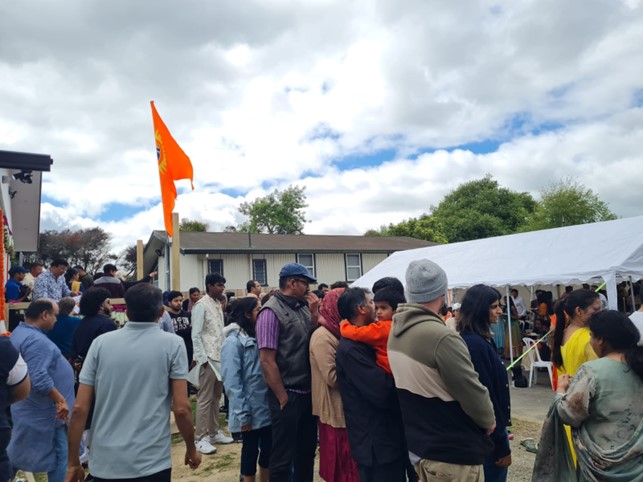
Temples are expanding, cultural festivals are drawing diverse crowds, and Hindu values are influencing everything from educational philosophy to social service models. However, this growth also raises fundamental questions:
How should religion be expressed in secular public life?
What does it mean to be a practising Hindu in a Western democracy?
Discussion: Secularism, Space, and Social Trust
Understanding Secularism in the NZ Context
New Zealand follows a model of pragmatic secularism, wherein the state is neutral toward religion but not hostile to its presence. Faith-based schools, chaplaincy services, and cultural funding do exist — but often through cautious, limited engagements.
Hindus often find themselves on the margins of these frameworks, where majority Christian or established Pacific faiths have long-standing institutional footprints.
For instance, while Diwali is celebrated in major cities, it is rarely institutionalised within schools or councils the way Easter or Matariki are. Similarly, Hindu chaplaincy is still developing within public hospitals and prisons.
Representation and Recognition
A key issue is representation without reduction — ensuring Hindu communities are not represented merely through food festivals or exotic imagery. Increasingly, educated youth are calling for:
- Inclusion of Hindu philosophical contributions in academic curricula
- A seat at interfaith and policy tables
- More nuanced media portrayals that go beyond stereotypes
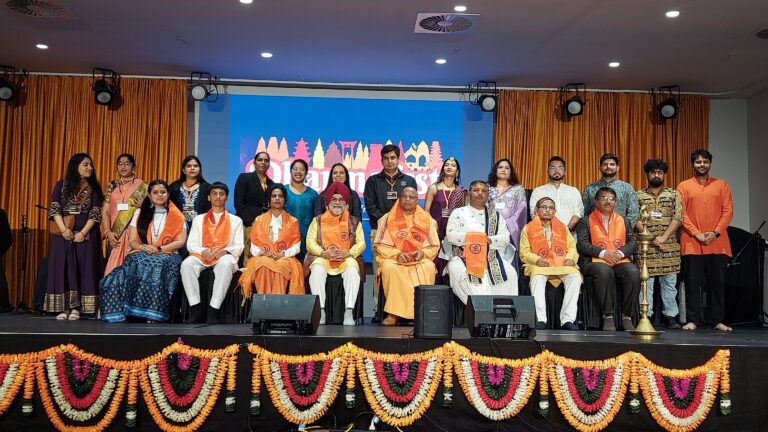
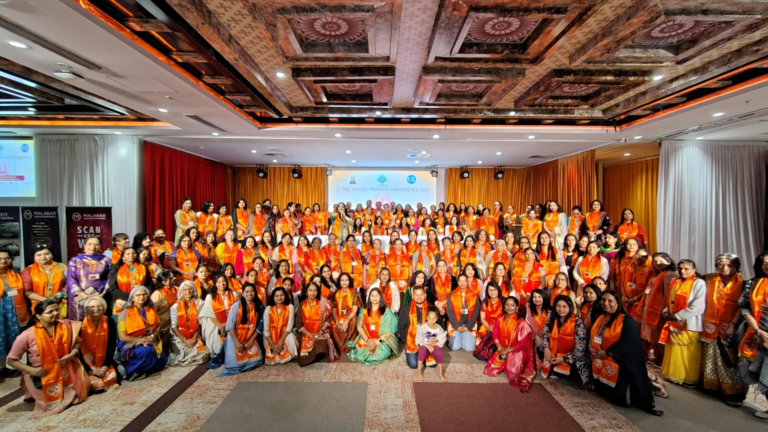
Groups like the Hindu Youth New Zealand and Hindu Council have begun engaging proactively with mainstream institutions — organising conferences, volunteering during crises, and developing leadership programmes.
Social Behaviour and Belonging
Group theory helps us understand that minority communities navigate complex identities — often moving between affirmation, assimilation, and negotiation.
For Hindu families, this means teaching children Sanskrit shlokas at home while attending secular schools. It means balancing meat-free traditions with social inclusivity. It means holding pujas at home while advocating for eco-conscious rituals that align with environmental norms.
These negotiations are not signs of dilution, but evidence of maturity and adaptability.
Summary: Visibility with Depth
As Hindu communities become more visible in New Zealand’s cultural fabric, the challenge is no longer just about space — it is about depth, dialogue, and dignity.
Hindus are not newcomers to the idea of pluralism; their own scriptures celebrate multiplicity and introspection. What is needed now is a reciprocal willingness — from public institutions, media, and academia — to understand Hinduism not as a monolith or myth, but as a living, evolving tradition.
In the years ahead, New Zealand has the opportunity to become not just multicultural in appearance, but multi-civilisational in consciousness.
That future will be richer, not in spite of religion, but through the wise inclusion of its many voices — including those that speak in Sanskrit, Tamil, Hindi, or silence.