 Seraphina Hughes
 On March 21, 2025, a massive fire at an electrical substation near Heathrow Airport in London triggered a significant power outage, forcing the closure of one of the world’s busiest airports for the entire day. This incident, which has disrupted global travel networks, highlights the vulnerability of critical infrastructure and raises questions about preparedness for such emergencies. This article details the events of the fire, provides background on the incident, examines the history of similar incidents at other airports and at Heathrow itself, outlines reparative actions by authorities, and offers a message to travelers planning to use this route in the near future, while critically examining the establishment narrative of swift resolution and minimal long-term impact.
What Happened: The Fire at Heathrow Airport
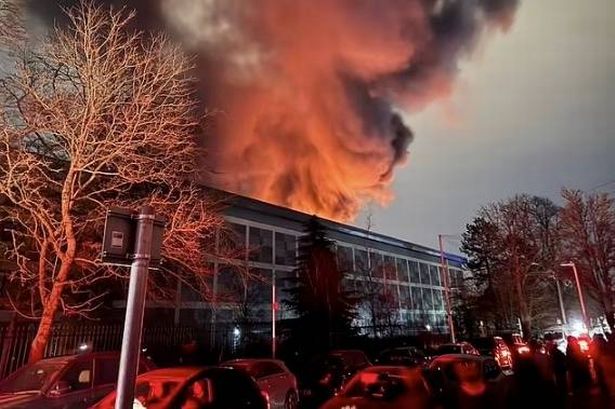
On the evening of March 20, 2025, a fire broke out at an electrical substation on Nestles Avenue in Hayes, West London, a facility operated by the National Grid that supplies power to Heathrow Airport and surrounding areas. The London Fire Brigade received the first call at 10:23 p.m. local time, deploying 10 fire engines and approximately 70 firefighters from Hayes, Heathrow, Hillingdon, Southall, and surrounding stations. The blaze, which engulfed a transformer within the substation, produced large plumes of smoke visible from miles away, prompting a 200-meter cordon and the evacuation of 150 people from nearby properties. Assistant Commissioner Pat Goulbourne of the London Fire Brigade described it as a “highly visible and significant incident,” with crews working through the night to contain the fire.
The fire caused a widespread power outage, affecting over 16,300 homes and businesses, including Heathrow Airport. By early March 21, the airport announced a full closure until 11:59 p.m. local time, grounding all flights for the day. Heathrow, which handles around 1,300 flights and 200,000 passengers daily, saw immediate disruptions, with 120 inbound flights diverted to airports like London Gatwick, Charles de Gaulle in Paris, Shannon in Ireland, and even as far as Canada and the U.S. FlightRadar24 reported that at least 1,351 flights were affected, with airlines like Qantas and United diverting flights mid-air—some, such as a United Airlines flight from San Francisco, landing in Washington, D.C., instead of London.
The closure also impacted rail services, with National Rail reporting disruptions to all Heathrow Express services and parts of the Elizabeth line due to the fire’s proximity to the railway. Heathrow’s official statement on X advised passengers not to travel to the airport under any circumstances, warning of “significant disruption over the coming days.” Inside the airport, videos showed terminals in near darkness, with travelers stranded and operations halted, underscoring the scale of the crisis.
Background: Context of the Incident
Heathrow Airport, the UK’s largest and the world’s second-busiest international airport in 2024 (behind Dubai, per OAG data), is a critical hub connecting over 200 destinations across 85 countries. Its operational complexity, handling 83.9 million passengers in 2024, makes it particularly vulnerable to disruptions like power outages. The substation fire in Hayes, a residential and industrial area near the airport, exposed the fragility of the airport’s reliance on external power infrastructure. The National Grid facility, responsible for supplying electricity to West London, including Heathrow, was not designed with sufficient redundancy to prevent such a widespread outage, a point of concern given the airport’s global significance.
The incident comes amid broader discussions about Heathrow’s infrastructure. On February 26, 2025, Sky News reported on debates over a proposed third runway, with Net Zero Secretary Ed Miliband facing pressure to approve the expansion despite years of opposition—a move that could further strain the airport’s surrounding infrastructure. Additionally, Heathrow’s financial performance in 2024, with pre-tax profits of £917 million but a 3.5% revenue dip to £3.56 billion, indicates the economic stakes of such disruptions, as reported by the Mirror on March 10, 2025.
History of Fire Incidents at Other Airports
Fire incidents at airports, while rare, have historically caused significant disruptions, often due to the high concentration of flammable materials and the complexity of airport operations. Here are a few notable examples:
- Los Angeles International Airport (LAX), 2013: A fire in a terminal at LAX, caused by an electrical fault, led to the evacuation of thousands of passengers and the cancellation of over 300 flights. The incident, which occurred in a baggage handling area, highlighted the risks of aging electrical infrastructure, a concern echoed in the Heathrow fire. LAX authorities responded by upgrading fire suppression systems and conducting regular electrical audits, though critics noted that funding for such upgrades was slow to materialize.
- Dubai International Airport, 2016: An Emirates Boeing 777 crash-landed and caught fire after an aborted landing, killing one firefighter and injuring 14 others. The fire spread rapidly due to jet fuel, but the airport’s swift evacuation protocols prevented passenger casualties. The incident led to a temporary closure of the airport, disrupting global travel, and prompted Dubai to invest heavily in advanced firefighting equipment, including foam tenders and thermal imaging drones.
- Narita International Airport, Japan, 2019: A fire in a terminal kitchen at Narita caused by a gas leak led to the evacuation of 5,000 passengers and the cancellation of 50 flights. The incident exposed gaps in fire safety training for non-aviation staff, leading to mandatory drills and stricter safety protocols across Japanese airports.
These incidents underscore the cascading effects of fires at major airports, often exacerbated by inadequate infrastructure, delayed responses, or insufficient safety measures. They also highlight the need for robust contingency plans, a lesson Heathrow must heed in the wake of the 2025 fire.
History of Fire Incidents at Heathrow Airport
Heathrow has experienced several fire-related incidents in its history, reflecting the challenges of managing fire risks in a high-traffic environment:
- 1997 Terminal 1 Fire: A fire broke out in a fast-food outlet in Terminal 1, caused by a deep fryer malfunction, leading to the evacuation of 2,000 passengers and the closure of the terminal for several hours. The incident, which caused minor injuries, prompted Heathrow to enhance fire safety training for commercial tenants and install additional sprinkler systems.
- 2016 Terminal 5 Electrical Fire: A small electrical fire in Terminal 5’s baggage claim area caused a partial evacuation and delayed flights for several hours. The fire, attributed to faulty wiring, led to a review of electrical maintenance protocols, though critics argued that the airport’s rapid expansion outpaced safety upgrades.
- 2022 Grass Fire Near Heathrow: On August 1, 2022, a grass fire near Hatton Road in Feltham, close to Heathrow, involved 15 fire engines and 100 firefighters tackling six hectares of burning land, as reported by the Express. The fire produced significant smoke, prompting runway adjustments—landings on the northern runway and takeoffs from the southern runway—but operations continued. The London Fire Brigade evacuated 10 houses as a precaution, and no injuries were reported. The incident highlighted the airport’s vulnerability to off-site fires, a precursor to the 2025 substation fire.
- 2024 Ground Stair Vehicle Fire: On June 25, 2024, a fire broke out on a ground stair vehicle connected to a British Airways Airbus A320 at Terminal 5, as noted in posts on X by @fl360aero. Passengers were evacuated safely before departure, and no injuries were reported. The incident, though minor, underscored the risks of ground operations and led to a review of equipment safety standards.
- 2025 Car Fire in Tunnel: On March 10, 2025, a diesel-powered car caught fire in a tunnel connecting Terminals 1, 2, and 3, as reported by Metro and the Mirror. The blaze, extinguished by 3:45 a.m., destroyed the vehicle and caused significant road delays, closing the M4 southbound between junctions 4 and 4A. Heathrow advised passengers to allow extra travel time and use public transport, with the tunnel reopening later that day. No injuries were reported, but the incident disrupted access to Terminals 2 and 3, highlighting the airport’s susceptibility to localized fires.
These incidents reveal a pattern of fire risks at Heathrow, often linked to electrical faults, ground operations, or external factors like grass fires. While the airport has invested in firefighting capabilities—such as aerial ladder platforms for Airbus A380s, as noted in a 2010 Airport Technology article—the 2025 substation fire exposes ongoing vulnerabilities in external infrastructure, a gap the establishment narrative often downplays.
Reparative Actions by Authorities
In response to the March 21, 2025, fire, authorities have taken several steps to mitigate the crisis and prevent future occurrences:
- Immediate Response: The London Fire Brigade deployed 70 firefighters and 10 fire engines, establishing a 200-meter cordon and evacuating 150 people to ensure safety. The brigade advised residents to keep windows and doors closed due to heavy smoke, a measure aimed at minimizing health risks.
- Power Restoration Efforts: Scottish and Southern Electricity Networks, responsible for the affected grid, reported that over 16,300 homes and businesses lost power. The company is working to restore electricity, though no clear timeline has been provided, reflecting the complexity of repairing a damaged transformer. Heathrow has stated it will update operations once power restoration timelines are clearer.
- Airport Closure and Diversions: Heathrow’s decision to close until 11:59 p.m. on March 21 prioritized passenger and staff safety, with airlines diverting flights to alternative airports. Eurocontrol, managing European air traffic, implemented diversion plans, ensuring that no incoming flights attempted to land at Heathrow during the outage.
- Long-Term Measures: The incident is likely to prompt a review of Heathrow’s power supply infrastructure. The National Grid may face pressure to install redundant systems or backup generators to prevent future outages. Heathrow’s in-house firefighting service, which adheres to Civil Aviation Authority (CAA) and National Firefighter standards, may also expand its training to include off-site fire scenarios, building on its existing programs for next-generation aircraft like the Boeing Dreamliner.
- Communication and Support: Heathrow has actively communicated via its website and X, advising passengers not to travel to the airport and to contact airlines for updates. The airport’s app, which provides live flight updates and terminal maps, has been promoted as a tool for travelers to stay informed, though its utility is limited during a full closure.
The establishment narrative emphasizes a swift and coordinated response, with authorities “working tirelessly” to resolve the situation, as stated by Assistant Commissioner Goulbourne. However, the lack of a clear timeline for power restoration and the absence of immediate backup power solutions suggest a reactive rather than proactive approach, raising questions about preparedness for such critical infrastructure failures.
Message to Travelers Taking This Route in the Near Future
For travelers planning to use Heathrow Airport in the coming days, the following advice is critical:
- Monitor Updates Closely: Heathrow has warned of “significant disruption over the coming days,” with potential delays and cancellations even after reopening. Check the airport’s website and app for real-time updates, and contact your airline for flight status. FlightRadar24 and similar tracking services can also provide insights into diversions and delays.
- Plan Alternative Routes: With rail services like the Heathrow Express and Elizabeth line affected, consider alternative transport options such as buses or taxis, though expect congestion. The M25, a key route to Heathrow, will also face closures between Junctions 10 and 11 from 9 p.m. on March 21 to 6 a.m. on March 24 for planned works, as noted on Heathrow’s website, further complicating road access.
- Allow Extra Time: Even after power is restored, operational backlogs may persist. Arrive at the airport well in advance—Heathrow typically advises three hours for international flights—and be prepared for longer security and check-in processes.
- Prepare for Contingencies: Pack essentials like medications, snacks, and a charger in your carry-on, as delays could strand you at alternative airports. If traveling to the UK, ensure you have an Electronic Travel Authorisation (ETA), a new requirement starting January 2025 for visa-free visitors, costing £10 and valid for two years.
- Stay Informed on Safety: The London Fire Brigade’s advice to keep windows and doors closed due to smoke may extend into the coming days if the fire’s aftermath lingers. Monitor local news for air quality updates, especially if you have respiratory conditions.
The establishment’s message of reassurance—“we are working as hard as possible to resolve the situation”—may not fully address the scale of disruption. Travelers should approach Heathrow with caution, prepared for unexpected challenges, and consider delaying non-essential travel until operations stabilize.
Critical Examination of the Establishment Narrative
The establishment narrative, as conveyed by Heathrow and the London Fire Brigade, focuses on a swift response, safety prioritization, and a commitment to minimizing disruption. While the immediate actions—closing the airport, diverting flights, and evacuating residents—were necessary, the narrative downplays systemic issues. The lack of backup power systems for a critical hub like Heathrow, despite its history of fire-related disruptions, points to a failure in long-term planning. The National Grid’s inability to provide a restoration timeline further undermines claims of a “well-managed” response, leaving travelers and businesses in limbo.
Moreover, the narrative of minimal long-term impact ignores the broader implications for Heathrow’s reputation and operations. The airport’s 2024 financial dip, as reported by the Mirror, suggests that such disruptions could exacerbate economic pressures, especially with ongoing debates over expansion. The reliance on external infrastructure, without sufficient redundancy, exposes a vulnerability that could have been mitigated with prior investment—a point the establishment avoids addressing. For the Hindu community in Auckland, particularly at Shree Hanuman Mandir, this incident underscores the fragility of global connectivity, a reminder to value local resilience and community support amidst such crises.
Summary
The fire at a substation near Heathrow Airport on March 20, 2025, and the subsequent closure on March 21, have caused unprecedented disruption, grounding flights, diverting 1,351 journeys, and affecting over 200,000 passengers daily. Historical fire incidents at Heathrow and other airports, like LAX and Dubai, reveal a recurring challenge of managing fire risks in high-stakes environments. While authorities have responded with firefighting efforts, closures, and communication, the lack of backup power and clear timelines highlights systemic gaps. Travelers must remain vigilant, planning for delays and alternatives in the coming days. As NZB News champions “technology for everyone, empowerment for all,” this incident calls for a critical reassessment of infrastructure resilience, ensuring that global hubs like Heathrow are better prepared for future crises.
Excerpt: A fire at a substation near Heathrow on March 20, 2025, led to a full closure on March 21, disrupting 1,351 flights. Historical fire incidents at airports highlight ongoing risks, while authorities’ response reveals gaps in preparedness, urging travelers to plan cautiously for future disruptions.