

 Imogen King
 By Imogen King
NZB News International Affairs Correspondent
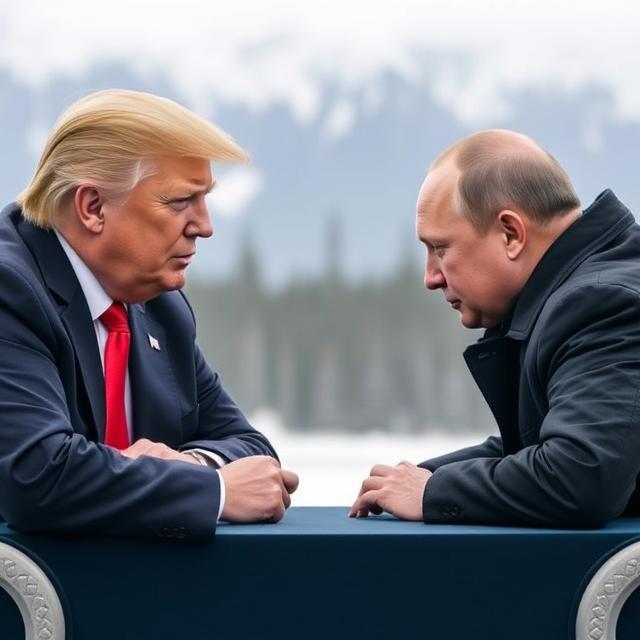
United States President Donald Trump and Russian President Vladimir Putin are meeting today in Anchorage, Alaska, for what could be one of the most consequential diplomatic encounters in recent history. The summit, taking place exactly as scheduled on August 15, 2025, represents Trump’s highest-stakes gamble yet to deliver on his campaign promise to end the devastating war in Ukraine that has raged for over three years.
The meeting marks the first face-to-face encounter between the two leaders since 2019 and the first US-Russia summit held on American soil since the Governors Island Summit in 1988. With global attention focused on Alaska, the outcome could fundamentally reshape the geopolitical landscape and determine the future of Ukrainian sovereignty, European security, and Trump’s presidential legacy.
The Road to Anchorage
The summit materialised following intensive diplomatic efforts by Trump’s special envoy Steve Witkoff, who met with Putin in Moscow on August 6. That encounter reportedly yielded a Russian proposal that would require Ukraine to cede the eastern Donbas region—currently majority-occupied by Russian forces—as well as Crimea, which Russia illegally annexed in 2014. The plan would effectively freeze current battle lines, allowing Russia to retain territorial gains achieved through military force.
Trump’s path to this moment has been marked by escalating frustration with Putin’s conduct of the war. Initially extending an olive branch upon taking office in January 2025, Trump progressively hardened his stance as casualties mounted and diplomatic progress stalled. His social media posts became increasingly emotional, with all-capitals appeals such as “VLADIMIR, STOP!” and repeated calls to end the “BLOODBATH.”
The President initially set a 50-day ultimatum for Russian compliance, later shortened to just 10 days due to what he termed disappointing progress. That deadline passed on Friday, August 9, without the threatened imposition of secondary sanctions on countries purchasing Russian oil—a development that paved the way for today’s summit.
European Concerns and Ukrainian Position
European leaders have expressed profound unease about the proposed territorial concessions, viewing them as rewarding Russian aggression and setting dangerous precedents for international law. In a joint statement on Saturday, leaders from France, Britain, Italy, Germany, Poland, and Finland, alongside European Union chief Ursula von der Leyen, emphasised that “international borders must not be changed by force” and that “the path to peace in Ukraine cannot be decided without Ukraine.”
Ukrainian President Volodymyr Zelenskyy has categorically rejected any territorial concessions, declaring in a video address that Ukrainians “will not give their land to the occupier.” Following a virtual summit on Wednesday with Trump and European leaders, Zelenskyy outlined five common principles for negotiations, including that “everything concerning Ukraine must be discussed exclusively with Ukraine” and that territorial issues cannot be negotiated by anyone other than Ukraine’s president.
The White House has been considering inviting Zelenskyy to Alaska, though no finalisation has been announced. European leaders have been particularly insistent that no decisions affecting Ukraine can be made without Ukrainian participation, fearing that without representation at the table, Ukraine will become the subject of negotiations rather than a participant.
Stakes and Expectations
Trump has characterised the Alaska meeting as “really a feel-out meeting,” suggesting he will know “probably in the first two minutes” whether a deal is possible. The President’s approach reflects his transactional negotiating style, with hints that he might simply tell Putin to “keep fighting” if terms prove unacceptable, or alternatively pursue a comprehensive agreement.
The Kremlin has responded positively to the Alaska venue, with Presidential Aide Yury Ushakov describing the location as “quite logical” given the proximity across the Bering Strait. Russia has already extended an invitation for Trump to visit Moscow for a follow-up meeting, suggesting confidence in achieving favourable outcomes from today’s discussions.
However, the White House has notably lowered expectations, characterising the summit as a “listening exercise” rather than a definitive negotiating session. This messaging appears designed to manage potential disappointment while maintaining diplomatic flexibility for future engagement.
Geopolitical Implications
The summit’s implications extend far beyond Ukraine’s borders, potentially reshaping NATO cohesion, European security architecture, and America’s global credibility. Critics argue that any territorial concessions to Russia would validate the use of force to redraw international boundaries, potentially encouraging similar aggression elsewhere.
The choice of Alaska as a venue carries symbolic weight, given the territory’s history as a Russian possession sold to the United States in 1867 for $7.2 million. Some observers note the irony of Putin potentially negotiating land acquisitions in a place once ceded by Russia, while others view the location as neutral ground suitable for sensitive discussions.
European allies remain deeply concerned about the precedent of bilateral negotiations determining multilateral security arrangements. The fear that Trump might prioritise personal relationships over alliance commitments echoes concerns from his first presidency, particularly the controversial 2018 Helsinki summit where Trump appeared to accept Putin’s denials of election interference.
Economic and Security Considerations
The war’s economic toll has been staggering, with Ukraine suffering massive infrastructure damage and displacement of over half its population. Russia faces extensive sanctions that have significantly impacted its economy, though higher energy prices have provided substantial revenue streams. A settlement could unlock frozen Russian assets and resume normal trade relationships, while failure might trigger the secondary sanctions Trump has repeatedly threatened.
Security implications are equally profound. NATO’s unity and credibility depend partially on demonstrating that aggression against partners carries unacceptable costs. European leaders worry that territorial concessions might signal American retreat from commitments to collective security, potentially emboldening other authoritarian regimes.
The humanitarian crisis in Ukraine continues mounting, with recent UN warnings that Gaza-like conditions could emerge without immediate fuel access for civilian infrastructure. This urgency provides additional pressure for diplomatic resolution, though critics argue that haste could compromise Ukrainian sovereignty and European security.
Trump’s Domestic Political Calculations
For Trump, the summit represents both tremendous opportunity and significant risk. Success in ending the conflict could vindicate his campaign promises and demonstrate diplomatic prowess, potentially boosting approval ratings and cementing his legacy as a peacemaker. However, failure could reinforce perceptions of ineffective leadership and damage relationships with key allies.
The President’s handling of the summit will face intense scrutiny from both supporters and critics. Republican allies have generally supported his diplomatic engagement, while Democrats have expressed concern about potential concessions that might undermine American interests and allied relationships.
Summary
As Trump and Putin begin their historic Alaska summit today, the world watches for signs of breakthrough in one of the most devastating conflicts of the 21st century. The stakes could not be higher: Ukrainian sovereignty hangs in the balance, European security architecture faces potential transformation, and Trump’s presidency confronts a defining test of diplomatic leadership. Whether the Anchorage meeting produces the elusive peace that has escaped negotiators for over three years, or merely sets the stage for continued conflict, its outcomes will reverberate across international relations for years to come. The coming hours may well determine whether diplomacy can succeed where military force has failed, and whether the principles of sovereignty and territorial integrity will be upheld or fundamentally compromised in pursuit of peace.