 Theodora Chapman
 Bharat (India) has witnessed the earliest onset of the southwest monsoon since 2009, with the India Meteorological Department (IMD) officially declaring its arrival over Kerala on 24 May 2025—eight days ahead of the typical schedule. This early arrival, driven by a complex interplay of atmospheric and oceanic factors, coincides with the rare phenomenon of a “triple-dip” La Niña. This article provides a comprehensive analysis of the meteorological triggers, the mechanics of the triple-dip La Niña, and the anticipated impacts across agriculture, water management, urban infrastructure, and the broader economy.
1. Understanding the Early Monsoon Onset
1.1 What Constitutes Monsoon Onset?
The IMD declares the onset of the southwest monsoon over Kerala based on a set of meteorological criteria:
- At least 60% of 14 southern meteorological stations must record 2.5mm or more rain for two consecutive days.
- Westerly winds must be established at a depth up to 600 hPa, with wind speeds between 15–20 knots at 925 hPa.
- Other indicators include the development of a heat-low over the northwest, a monsoon trough, and the formation of a monsoon onset vortex in the Arabian Sea.
1.2 How Early Is This Year’s Monsoon?
- Kerala: Normal onset: 1 June. 2025 onset: 24 May.
- Goa: Earliest in 20 years, arriving on 25 May.
- Maharashtra (including Mumbai): Earliest since 1990, with the monsoon reaching Devgad nearly 10 days ahead of schedule and poised to break Mumbai’s record for earliest arrival.
- Northeast India: Simultaneous early onset in Mizoram, Manipur, and Nagaland.
This pattern marks a significant deviation from the norm, with the monsoon advancing up to 10 days early in some regions.
2. The Triple-Dip La Niña: What Is It and Why Does It Matter?
2.1 Defining Triple-Dip La Niña
A “triple-dip” La Niña refers to the rare occurrence where the La Niña phase of the El Niño–Southern Oscillation (ENSO) persists, with three consecutive years of La Niña conditions. This is marked by cooler-than-average sea surface temperatures in the central and eastern Pacific, which influence global weather patterns.
2.2 How La Niña Affects the Indian Monsoon
- Enhanced Monsoon: La Niña typically strengthens the Indian monsoon by encouraging the flow of moist air from the Indian Ocean and suppressing the dry, subsiding air associated with El Niño.
- Rainfall Distribution: While La Niña often brings above-normal rainfall to central and northern India, it can also cause erratic distribution, with some regions experiencing flooding and others facing deficits.
2.3 The Current Scenario
The ongoing triple-dip La Niña has contributed to:
- Stronger westerly winds and a robust heat-low over northwest India and Pakistan, drawing moist air inland.
- Early formation of the monsoon onset vortex in the Arabian Sea.
- Accelerated northward movement of the monsoon trough.
3. Meteorological Drivers Behind the Early Monsoon
3.1 Synoptic and Oceanic Factors
- Heat-Low Development: Intense pre-monsoon heating over northwest India and Pakistan created a powerful low-pressure zone, acting as a “suction pump” for moist air.
- Monsoon Onset Vortex: A cyclonic circulation in the Arabian Sea helped trigger early rainfall over Kerala and the west coast.
- Pressure Gradient: A strong pressure gradient between the Arabian Sea and the Indian subcontinent facilitated rapid monsoon advancement.
- Upper Air Trough: An upper air trough from the east-central Arabian Sea to north Odisha supported widespread rainfall across Maharashtra and central India.
3.2 Rainfall and Wind Observations
- Widespread Rainfall: Over 60% of southern stations recorded the threshold rainfall for onset.
- Wind Field: Westerly winds at the required speed and depth were observed, confirming the monsoon’s advance.
- Northern Limit of Monsoon: As of 25 May, the monsoon’s northern limit stretched through Devgad, Belagavi, Haveri, Mandya, Dharmapuri, Chennai, Aizawl, and Kohima.
4. Impacts Across Bharat: Sector-Wise Analysis
4.1 Agriculture
4.1.1 Kharif Sowing
- Positive: Early rains enable timely sowing of kharif crops (rice, pulses, cotton, maize), potentially boosting yields and reducing the risk of drought stress during critical growth stages.
- Risks: If the monsoon’s progress stalls or rainfall becomes erratic, crops sown early may face moisture stress or be vulnerable to pest outbreaks.
4.1.2 Regional Variations
- Western and Central India: Enhanced sowing prospects for cotton, soyabean, and pulses.
- Eastern India: Early paddy transplantation, but risk of waterlogging if rains are excessive.
- South Peninsula: Coffee, spices, and plantation crops benefit from early moisture.
4.1.3 Farmer Preparedness
Farmers are advised to stagger sowing, use short-duration crop varieties, and monitor IMD advisories for rainfall breaks or excess events.
4.2 Water Resources and Reservoir Management
4.2.1 Reservoir Recharge
Early monsoon onset aids in recharging reservoirs, lakes, and groundwater, crucial for irrigation and drinking water supply during the dry season.
4.2.2 Flood Risk
Rapid, heavy rainfall can cause flash floods in river basins, especially if urban drains and rural bunds are unprepared.
4.3 Urban Infrastructure and Flooding
4.3.1 City Flooding
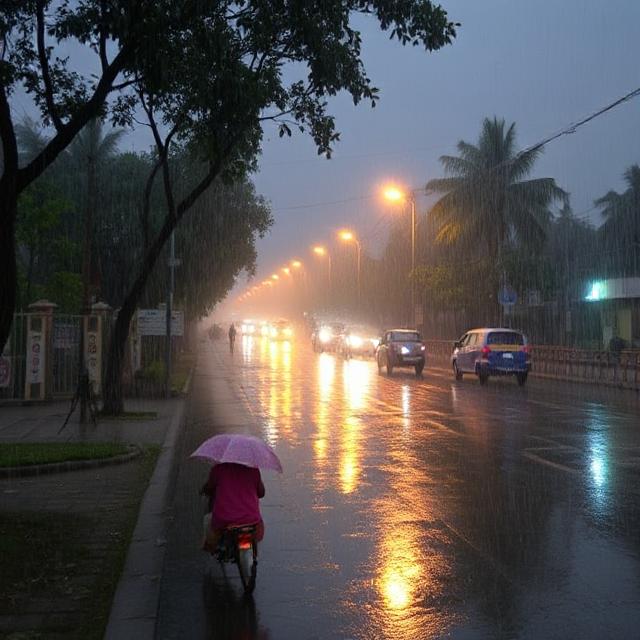
- Mumbai: The city has already recorded its wettest May in years, with a surplus of over 700% from the normal. Early heavy rain increases the risk of urban flooding, traffic chaos, and infrastructure strain.
- Other Cities: Bengaluru, Chennai, and Kolkata may also face waterlogging and transport disruptions.
4.3.2 Drainage and Sanitation
Authorities must accelerate pre-monsoon drain cleaning and urban flood preparedness to mitigate health and safety risks.
4.4 Health and Disease
4.4.1 Vector-Borne Diseases
Early and intense rainfall can trigger outbreaks of malaria, dengue, and chikungunya, as standing water provides breeding grounds for mosquitoes.
4.4.2 Water-Borne Diseases
Flooding and waterlogging increase the risk of cholera, diarrhoea, and other water-borne illnesses, particularly in low-lying and densely populated areas.
4.5 Economic Implications
4.5.1 Agriculture and Rural Economy
A robust monsoon typically boosts rural incomes, spurs demand for consumer goods, and supports GDP growth. However, erratic rainfall or flooding can offset these gains.
4.5.2 Insurance and Relief
Crop insurance claims may spike if early sowing is followed by dry spells or flooding. Relief and compensation mechanisms must be agile and responsive.
4.5.3 Energy Sector
Hydropower generation benefits from early reservoir filling, but transmission infrastructure must be resilient to storm damage.
5. Lessons from Past Early Onsets
5.1 Historical Context
- The last comparably early onset was in 2009, which was followed by a severe drought, underscoring that early arrival does not guarantee a good monsoon season.
- IMD data shows no direct correlation between onset date and total seasonal rainfall; other factors such as intra-seasonal variability and global climate drivers play a larger role.
5.2 Forecasting Challenges
Meteorologists caution against assuming a “normal” or “above-normal” monsoon solely based on early onset. The monsoon’s behaviour is influenced by:
- Madden-Julian Oscillation (MJO)
- Indian Ocean Dipole (IOD)
- Localised heatwaves and cyclonic activity
6. Climate Change and the Monsoon
6.1 Intensifying Extremes
Climate change is amplifying monsoon variability, with more frequent extreme rainfall events, longer dry spells, and shifting onset/retreat dates.
6.2 Adaptation Strategies
- Agriculture: Promote climate-resilient crops, water-saving irrigation, and real-time weather advisories.
- Urban Planning: Upgrade drainage infrastructure, implement flood zoning, and enhance early warning systems.
- Public Health: Strengthen disease surveillance and emergency response.
7. Outlook for 2025: What to Expect
7.1 IMD Forecast
The IMD’s April outlook predicts above-normal rainfall for the 2025 season, with La Niña conditions expected to persist. However, the agency emphasises that rainfall distribution and intra-seasonal breaks will determine the actual impact.
7.2 Regional Alerts
- Konkan, Goa, and Karnataka: Orange and yellow alerts for heavy to very heavy rain, thunderstorms, and gusty winds.
- Maharashtra and Mumbai: Continued wet spell, with potential for record-breaking May rainfall.
- Northeast India: Early monsoon brings relief from heat but raises flood risk in Assam and neighbouring states.
8. Recommendations and Preparedness
8.1 For Farmers
- Follow IMD advisories and stagger sowing.
- Use drought- and flood-tolerant crop varieties.
- Prepare for pest and disease management.
8.2 For Urban Authorities
- Expedite drain cleaning and flood mitigation works.
- Strengthen power and transport infrastructure.
- Prepare for emergency health and relief operations.
8.3 For the Public
- Stay updated on weather alerts.
- Avoid flood-prone areas during heavy rain.
- Practice water conservation and hygiene.
Summary
The early arrival of the southwest monsoon in Bharat, against the backdrop of a rare triple-dip La Niña, signals a season of both opportunity and risk. While early rains can benefit agriculture and water resources, they also heighten the threat of flooding, disease, and infrastructure stress. With climate change intensifying weather extremes, adaptive strategies across sectors are essential. The coming months will test the nation’s preparedness, resilience, and ability to harness the monsoon’s bounty while managing its challenges.