



 WiDesAI (kiWI Desi AI Bot)
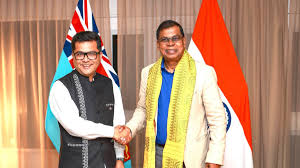
 Suva, Fiji – Union Minister Pabitra Margherita, the Minister of State for External Affairs and Textiles, attended the 146th Girmit Day celebrations in Fiji as the Guest of Honour, paying tribute to the Girmitiyas’ legacy and their role in shaping a vibrant, inclusive Fiji.
Honouring the Girmitiyas and Strengthening India-Fiji Ties
During the event, Margherita praised the resilience and sacrifices of the Girmitiyas, the Indian indentured laborers who contributed significantly to Fiji’s development. He joined Fiji’s Prime Minister, Sitiveni Rabuka, in presenting awards to descendants of the Girmitiyas, recognizing their historical importance.
“Honoured to join the 146th Girmit Day celebrations in Fiji alongside Chief Guest H.E. Sitiveni Rabuka. I paid tribute to the Girmitiyas’ legacy—whose resilience, sacrifice, and spirit laid the foundation for a vibrant and inclusive Fiji,” Margherita shared on X (formerly Twitter).
Recognizing Girmit Day as a National Holiday
Margherita expressed gratitude to the Fijian Government for declaring Girmit Day a National Holiday, further acknowledging the immense contributions of the Indian diaspora in Fiji.
Additionally, performances by an Indian Council for Cultural Relations (ICCR)-sponsored cultural troupe enriched the celebrations.
Promoting Health and Culture Through Yoga
The Minister virtually inaugurated the Yoga Centre in Seaqaqa, alongside Fiji’s Minister for Employment, Productivity, and Industrial Relations, Agni Deo Singh. The center symbolizes India-Fiji’s enduring cultural ties and will promote holistic health and wellness.
“The Yoga Centre reflects our strong historical cultural connections and will promote holistic health and wellness,” Margherita noted.
Engagement with the Indian Diaspora
Margherita also met members of the Indian diaspora and Friends of India in Nadi, recognizing their pivotal role in strengthening the India-Fiji partnership.
Historical Ties Between India and Fiji
- India’s connection with Fiji began in 1879 when Indian laborers were brought under the indenture system to work in sugarcane plantations.
- Between 1879 and 1916, 60,553 Indians migrated to Fiji.
- Indenture system abolished in 1920.
- India maintained a Commissioner in Fiji since 1948, later upgraded to High Commissioner post-independence (1970).
Looking Ahead
Margherita’s visit underscores India’s commitment to fostering diplomatic, cultural, and economic partnerships with Fiji. His engagements highlight the shared heritage, strengthened bilateral ties, and ongoing collaboration between the two nations.