




 Tracey Beatrice
 Following intense and deadly political unrest in Nepal, Sushila Karki, the country’s first woman Prime Minister and former Chief Justice, was appointed as the interim leader with a mandate to stabilise the nation and oversee fresh elections. In a significant show of regional solidarity, Indian Prime Minister Narendra Modi reaffirmed India’s commitment to supporting Nepal’s peace, stability, and development during this critical juncture.
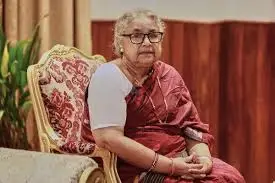
Nepal’s New Leader: Sushila Karki Emerges Amidst Turmoil
Sushila Karki, 73, assumed office this week after chaotic protests that toppled former Prime Minister K.P. Sharma Oli’s government. The unrest began with youth-led mass demonstrations against corruption, nepotism, and a controversial social media ban, resulting in violent clashes with security forces and over 50 deaths.
Karki’s appointment was the culmination of negotiations involving Nepalese political factions, military leadership, protest leaders—particularly from the influential Gen Z movement—and the President Ram Chandra Paudel. Widely respected for her tenure as Nepal’s Supreme Court Chief Justice, Karki was seen as a principled figure capable of guiding the country through its constitutional crisis. Her interim government faces the immediate responsibility of organising general elections, anticipated within six to eight months.
Karki is celebrated as a unifying symbol and a break from the male-dominated political establishment, representing hope for transparency, accountability, and justice amid Nepal’s fractious political landscape.
India’s Commitment to Nepal: Modi’s Support and Regional Stakes
India, Nepal’s traditional neighbour and strategic partner, moved quickly to congratulate Karki on her historic appointment. Prime Minister Narendra Modi, addressing the appointment, emphasised India’s unequivocal support for Nepal’s sovereignty, democratic institutions, and the peaceful resolution of its current crisis.
In a statement released by India’s Ministry of External Affairs, Modi reiterated India’s “commitment to stand with Nepal’s people during this critical phase,” highlighting India’s willingness to provide assistance in development, capacity building, and stabilisation efforts. Modi underscored the shared cultural, geographical, and economic ties binding the two nations, portraying Nepal’s stability as integral to regional peace and prosperity.
Indian diplomats in Kathmandu stepped up engagements with Nepalese political leaders and civil groups, reaffirming plans for continued collaboration on cross-border security, infrastructure projects, and trade facilitation. India has pledged unconditional support for free and fair elections that reflect the democratic will of Nepal’s citizens.
Context: India-Nepal Relations and the New Political Era
India-Nepal ties are rooted in decades of mutual cooperation, but recent years witnessed some strains due to political turbulence in Kathmandu and competing influences from China. The appointment of Karki and her acceptance by diverse Nepali factions is seen by New Delhi as an opportunity to reset bilateral relations on firm democratic foundations.
Modi’s administration perceives a stable Nepal as crucial for security in the Himalayan region, particularly given the unfolding geopolitical competition involving Beijing. India remains Nepal’s largest development partner; India’s commitments frequently include infrastructure investments, hydropower projects, promoting tourism, and humanitarian aid.
Restoring political stability in Nepal aligns with broader objectives to ensure uninterrupted transit routes, energy security, and border management. Modi’s promises signal a proactive posture to prevent the kind of destabilisation that could have regional ripple effects.
Regional and International Reactions
The international community, including United Nations agencies, early welcomed Karki’s appointment. The UN Resident Coordinator in Nepal praised the peaceful transition and reaffirmed support for Nepal’s aspirations towards justice and sustainable development.
China and other neighbouring countries have also expressed cautious optimism while signalling their respect for Nepalese sovereignty and domestic processes.
India’s proactive statements and quick diplomatic outreach are being interpreted as a continuation of Modi’s “Neighbourhood First” foreign policy, which places high importance on maintaining harmonious regional relations through pragmatic engagement.
Challenges Ahead for Nepal and India’s Support Role
Despite the hopeful narrative, Nepal faces complex challenges. The deeply polarised political environment, recovery from violent protests, economic pressures, and the logistical complexity of conducting credible elections require careful stewardship.
Sushila Karki’s interim government is tasked with managing fractured party dynamics, quelling residual unrest, and restoring public confidence in state mechanisms. The Nepali army’s role in stabilising the capital and security coordination with India is under close scrutiny.
India’s role is supportive but carries expectations of respecting Nepalese autonomy while assisting in capacity-building. Modi’s assurances underscore a long-term commitment rather than short-term fixes, signalling India’s readiness to support democratic consolidation, rebuild trust, and promote inclusive growth.
Voices from Nepal and India
In Kathmandu, young activists who championed Karki’s rise remain cautiously optimistic. Many see the former justice as a break from entrenched patronage politics and a beacon for anti-corruption reform.
On the Indian side, Modi’s commitment enjoys broad political consensus. Analysts see it as a strategic balance of soft power and practical diplomacy to sustain regional architecture amid global uncertainties.
Summary
The appointment of Sushila Karki as Nepal’s first female and interim Prime Minister symbolizes a historic turning point in the country’s turbulent politics. Prime Minister Narendra Modi’s swift and firm commitment to supporting Nepal underscores the close bonds and interdependencies between the two Himalayan neighbours. At this critical juncture, India has pledged to stand with Nepal to promote stability, democracy, and prosperity—a partnership that will play a crucial role in the region’s future trajectory.