

 Sushma Nagraj
 By Sushma Nagraj | NZB News | 27 April 2025
Background
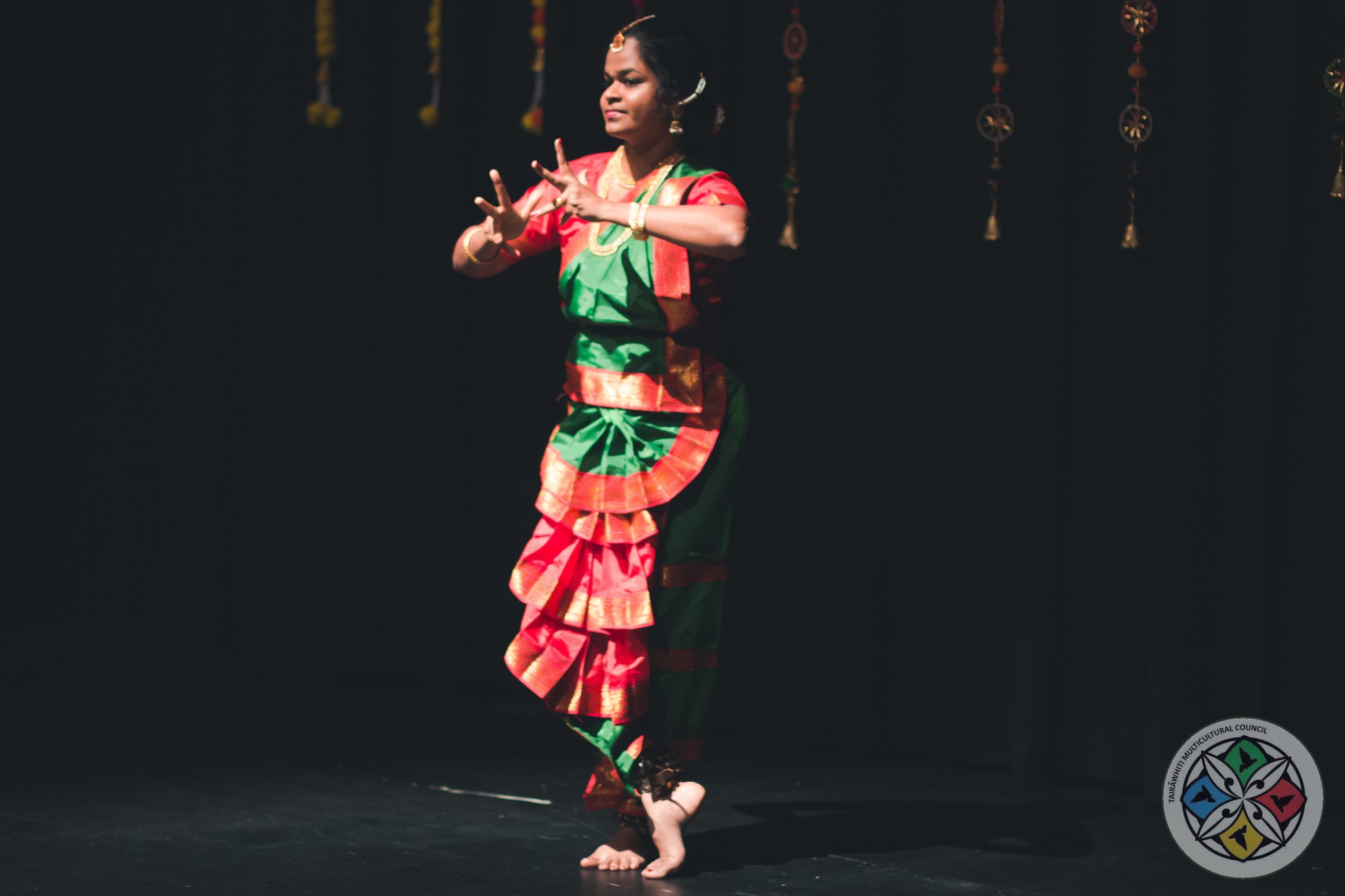
Bharatanatyam — the divine dance of Tamil Nadu — and Carnatic music — the soul-stirring classical tradition of Southern India — have for centuries been vessels of spiritual expression, storytelling, and cultural identity.
Today, thousands of kilometres away from their birthplace, amidst the lush landscapes of New Zealand, these ancient art forms are quietly but determinedly taking root once more. In dance studios, community halls, and temple precincts across Aotearoa, a new generation is embracing this heritage with reverence and innovation.
A New Generation of Disciples
When early Indian migrants arrived in New Zealand during the 20th century, preserving cultural traditions was a personal endeavour. Now, as the Indian community flourishes — forming one of the country’s fastest-growing ethnic groups — there is a collective movement to institutionalise and celebrate classical arts.
Young students, often second or third-generation Kiwis, are now learning adavus (basic steps), mudras (hand gestures), and the intricate rhythmic patterns of tala under the guidance of dedicated gurus based in cities like Auckland, Wellington, and Christchurch.
Carnatic vocal concerts, once rare, are now regular features of cultural festivals and temple events, with visiting maestros from Chennai and Bengaluru collaborating with local talents.
Key Developments Across New Zealand
- Formal Academies
Institutions such as the “Nataraja School of Classical Dance” in Auckland and the “Shruthi Carnatic Academy” in Wellington are setting high standards, offering certified programmes, annual performances, and even online classes to reach rural students. - Arangetrams and Public Performances
The traditional Arangetram — the dancer’s solo debut — is now a grand event in New Zealand’s Indian community, celebrated with the same devotion as back in India. Public recitals are often held in iconic venues like the Auckland Town Hall and the Michael Fowler Centre. - Fusion and Innovation
Some artists are experimenting by blending Bharatanatyam with Māori kapa haka movements or fusing Carnatic ragas with Western jazz — respectful experiments that seek to build bridges between cultures. - Temple Hubs
Temples like the Sri Venkateswara Temple in Mangere and the Bharatiya Mandir have become epicentres for cultural nurturing, hosting weekly dance classes, music workshops, and seasonal festivals.
Discussion: Challenges on the Path
While the resurgence is heartening, practitioners face several challenges:
- Time Pressures: Modern academic and social demands often make sustained practice difficult for young students.
- Resource Scarcity: Access to high-quality mridangams, veenas, and appropriate costumes can be limited and expensive.
- Retention: Many students drop off after initial enthusiasm wanes, underlining the need for making training both rigorous and inspiring.
Nevertheless, committed teachers, supportive families, and enthusiastic communities are finding creative solutions — including hybrid online classes, cultural scholarships, and exchange programmes with institutions in India.
The Deeper Significance
The revival of Bharatanatyam and Carnatic music in New Zealand is not merely about preserving an ancient aesthetic. It is about nurturing discipline, grace, emotional intelligence, and spiritual awareness in a fast-paced modern world.
Moreover, these art forms offer young Kiwis of Indian heritage a vital sense of identity — a way to connect with ancestral wisdom while contributing to New Zealand’s rich multicultural tapestry.
In the words of the sage Bharata, from the Natya Shastra, “There is no knowledge, no art, no lore, no craft, no device, no action that is not found in Natya.”
Through dance and music, New Zealanders are not merely performing art — they are performing life itself.
Summary
In a world increasingly enamoured with speed and superficiality, New Zealand’s quiet revival of Bharatanatyam and Carnatic music stands as a luminous reminder: that true artistry demands patience, humility, and devotion.
As the mridangam beats and ankle bells echo across the shores of Aotearoa, they do more than entertain — they heal, they unite, and they sanctify.
Indeed, ancient rhythms are finding a new heartbeat, one that pulses proudly across oceans, across cultures, and across generations.