 Vinay Karanam
 By Vinay Karanam, Hindu, Multicultural, Community, Technology, Science, and Defence Articles Specialist, New Zealand Bharat News (NZB News)
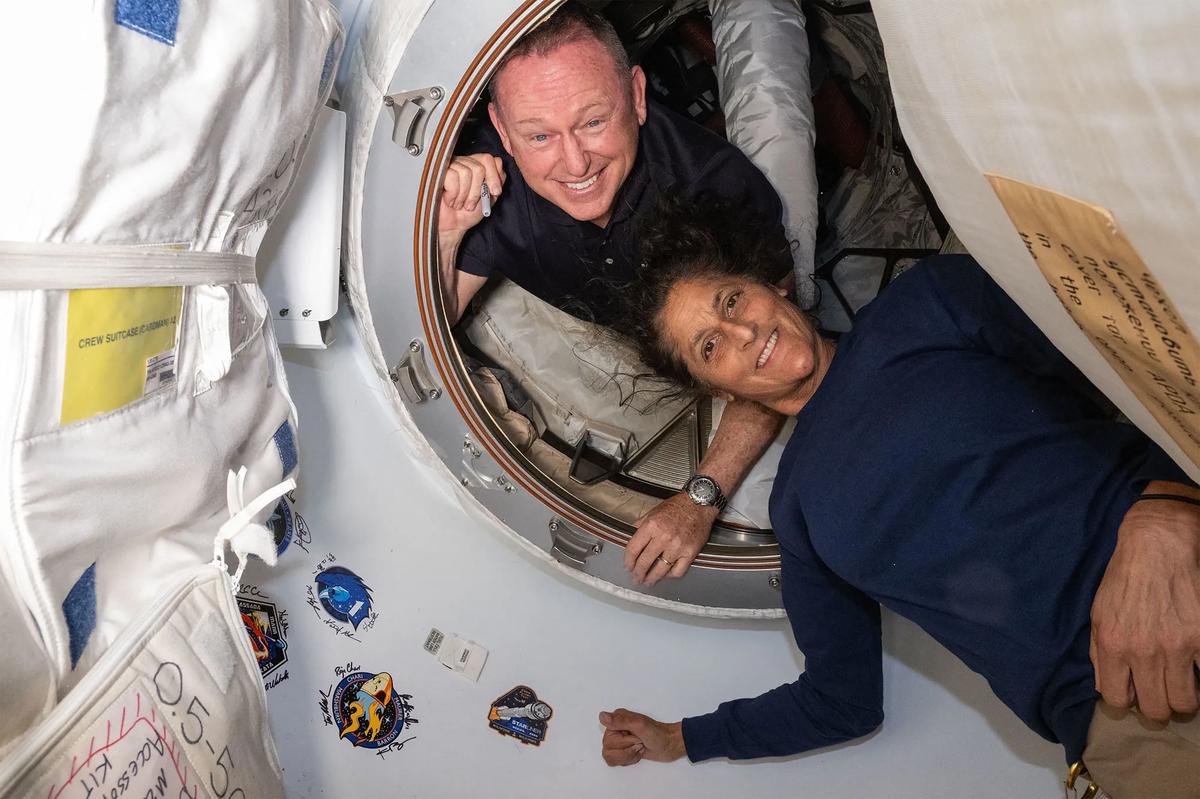
Auckland, New Zealand – On March 18, 2025, NASA astronaut Sunita Williams, alongside her crewmate Butch Wilmore, made a triumphant return to Earth after an unexpected nine-month stay aboard the International Space Station (ISS). Their journey, originally planned as an eight-day test flight, turned into a historic mission that showcased human resilience, international collaboration, and the relentless pursuit of scientific advancement. Landing in the Gulf of Mexico, Williams’ return marks a significant milestone in space exploration, offering valuable lessons for future missions and reinforcing humanity’s aspirations to reach beyond our planet. This article provides a detailed account of her arrival, the mission’s objectives and technical specifications, Williams’ professional history and background, the mission’s criticality, its broader significance for mankind, lessons learned, comparisons with similar missions, and a look at India’s upcoming space endeavors, while critically examining the establishment narrative of a flawless success.
Details of Sunita Williams’ Arrival
Sunita Williams and Butch Wilmore, along with NASA astronaut Nick Hague and Roscosmos cosmonaut Aleksandr Gorbunov, returned to Earth on March 18, 2025, aboard a SpaceX Crew Dragon spacecraft as part of NASA’s SpaceX Crew-9 mission. The spacecraft undocked from the ISS on March 17, with the hatch sealed at 11:05 p.m. ET, followed by the crew donning flight suits, strapping into their seats, and completing leak checks. The Crew Dragon capsule splashed down off the coast of Florida’s Tallahassee in the Panhandle region of the Gulf of Mexico at approximately 5:57 p.m. ET on March 18. Recovery teams swiftly retrieved the spacecraft, and within an hour, both Williams and Wilmore emerged, waving and smiling at cameras, their energy high despite the extended mission.
As per standard SpaceX protocol, the astronauts were carried out on stretchers—a precautionary measure due to the effects of prolonged weightlessness on the human body—before being flown to Houston for medical evaluations at NASA’s Johnson Space Center. Williams, who had spent 286 days in space during this mission, appeared in good health, a testament to her physical resilience and NASA’s rigorous astronaut training. The Times of India reported that her family believes her contributions will leave a lasting impact, while Prime Minister Narendra Modi, in a post on X, praised the Crew-9 team’s “grit, courage, and boundless human spirit,” highlighting Williams’ perseverance.

The Mission: Objectives and Challenges
Williams and Wilmore launched on June 5, 2024, aboard Boeing’s Starliner spacecraft for its first crewed flight, the Boeing Crew Flight Test (CFT), arriving at the ISS on June 6. The mission’s primary objective was to certify the Starliner for regular crewed missions to the ISS under NASA’s Commercial Crew Program, a critical step to provide an alternative to SpaceX’s Crew Dragon. The Starliner, developed with over $4 billion in U.S. federal funding, aimed to demonstrate its capability to transport astronauts safely to and from the ISS, joining SpaceX in reducing NASA’s reliance on Russia’s Soyuz spacecraft post-Space Shuttle Program retirement in 2011.
However, the mission faced significant challenges. Shortly after docking, the Starliner encountered propulsion issues, including helium leaks and thruster malfunctions, which NASA deemed too risky for a crewed return. The spacecraft returned uncrewed in September 2024, leaving Williams and Wilmore stranded on the ISS. NASA rescheduled their return, initially planned for February 2025, using a SpaceX Crew-9 mission with two vacant seats. Further delays due to battery issues in a new Dragon capsule in December 2024 led NASA to use a refurbished Dragon, “Endurance,” which had completed three prior missions, including Crew-7. Williams and Wilmore joined Expedition 71/72, with Williams taking command of the ISS in September 2024—her second time as commander—before handing over to Roscosmos cosmonaut Aleksey Ovchinin on March 7, 2025.
During their extended stay, the astronauts contributed to over 200 scientific experiments, including the BioNutrients project to generate fresh nutrients using bacteria, research on fluid systems in microgravity, and plant growth studies in space. Williams also set a new record for the most spacewalking hours by a female astronaut, totaling 62 hours and 6 minutes across nine spacewalks, the fourth most overall in NASA history.

Technical Specifications of the Mission
The Boeing Starliner, officially the CST-100, is a reusable spacecraft designed to carry up to seven astronauts, though it typically seats four for ISS missions. Key specs include:
- Dimensions: 4.56 meters in diameter, 5 meters in height (including service module).
- Propulsion: Aerojet Rocketdyne thrusters (28 on the service module) for orbital maneuvering, with hydrazine and nitrogen tetroxide propellants.
- Power: Solar arrays generating up to 2,900 watts, supplemented by lithium-ion batteries.
- Safety Features: Autonomous docking, a pusher abort system for emergency separation, and a heat shield for re-entry.
- Landing: Airbag-cushioned touchdown on land, though the uncrewed return in September 2024 landed at White Sands Space Harbor.
The return journey utilized SpaceX’s Crew Dragon “Endurance,” a proven spacecraft with:
- Dimensions: 4 meters in diameter, 8.1 meters in height.
- Propulsion: 16 Draco thrusters for maneuvering, with SuperDraco engines for abort scenarios.
- Power: Solar panels on the trunk, providing 2,000 watts.
- Re-entry and Landing: Heat shield with PICA-X material, four parachutes for splashdown, as seen in the Gulf of Mexico landing.
- Capacity: Up to seven astronauts, though Crew-9 carried four, including two seats for Williams and Wilmore.
The Starliner’s failure highlighted its developmental challenges compared to the Crew Dragon’s reliability, which has completed multiple crewed missions since 2020, underscoring SpaceX’s lead in the Commercial Crew Program.
Professional History and Background of Sunita Williams
Sunita Lyn Williams (née Pandya), born on September 19, 1965, in Euclid, Ohio, to Indian-American neuroanatomist Deepak Pandya and Slovene-American Bonnie Pandya, grew up in Needham, Massachusetts. Her father hails from Gujarat, India, and her multicultural heritage has deeply influenced her identity—she brought a Bhagavad Gita, samosas, and a Lord Ganesha idol to the ISS, reflecting her Indian roots. Williams graduated from Needham High School in 1983, earned a Bachelor of Science in Physical Science from the U.S. Naval Academy in 1987, and a Master of Science in Engineering Management from the Florida Institute of Technology in 1995.
Williams joined the U.S. Navy in 1987, becoming a naval aviator and serving in helicopter support squadrons during the Persian Gulf War preparations, no-fly zone operations in Iraq, and Hurricane Andrew relief in Miami in 1992. Selected by NASA in 1998, she underwent rigorous astronaut training, including T-38 flight training, water and wilderness survival, and ISS systems instruction. Her first spaceflight, Expedition 14/15 (December 2006 to June 2007), saw her as a flight engineer, setting a then-record for female spacewalk time at 29 hours. She ran the Boston Marathon on the ISS treadmill in 2007, a first for an astronaut. Her second mission, Expedition 32/33 (2012), included commanding Expedition 33, with a total of 322 days in space across her first two flights.
This third mission brought her cumulative time in space to 608 days, the second most by a NASA astronaut after Peggy Whitson (675 days). Williams’ nine spacewalks and 62 hours of EVA time make her the most experienced female spacewalker. Her accolades include the Padma Bhushan, an Honorary Doctorate from Gujarat Technological University, and inclusion in the BBC’s 100 Women list in 2024. She is a member of the Society of Experimental Test Pilots and the American Helicopter Association, and in 2017, Needham named an elementary school after her.
Criticality of the Mission
The Boeing Crew Flight Test was critical for NASA’s Commercial Crew Program, aiming to certify a second U.S. spacecraft for ISS missions, enhancing redundancy and reducing dependency on Russia’s Soyuz. The Starliner’s failure to safely return its crew exposed significant technical and programmatic risks, delaying its certification and costing Boeing additional resources—already over $1.5 billion in overruns. For Williams and Wilmore, the extended stay tested their adaptability, providing NASA with invaluable data on long-duration spaceflight effects, crucial for future lunar and Mars missions under the Artemis program.
Williams’ leadership as ISS commander during this period ensured operational continuity, while her scientific contributions, like the BioNutrients project, advanced technologies for deep-space missions. The mission’s criticality lies in its dual role: a test of new technology and an unplanned experiment in human endurance, both of which are essential for humanity’s expansion into space.
A Win for Mankind
Williams’ return is a win for mankind on multiple fronts. Scientifically, her 286-day mission yielded data on microgravity’s effects on the human body, fluid systems, and plant growth, directly supporting NASA’s goals for Mars exploration. The BioNutrients project, which she contributed to, could revolutionize space nutrition, enabling sustainable food production for long-duration missions. Her record-breaking spacewalks advanced ISS maintenance, ensuring its functionality as a platform for international research.
Culturally, Williams’ journey resonates globally, particularly in India, where her heritage inspires millions. Her resilience in the face of adversity—stranded for nine months yet maintaining high spirits—embodies the human spirit’s capacity to overcome challenges, a universal narrative of hope. The mission also highlighted the power of international collaboration, with NASA, SpaceX, and Roscosmos working together to ensure a safe return, reinforcing the idea that space exploration transcends national boundaries.
However, the establishment narrative of a seamless triumph overlooks Boeing’s setbacks. The Starliner’s failure, while a setback for the company, indirectly strengthened SpaceX’s position, showcasing the Crew Dragon’s reliability and affirming the Commercial Crew Program’s competitive model as a driver of innovation—a broader win for humanity’s spacefaring future.
Lessons Learned
The mission offers several lessons:
- Redundancy is Crucial: The Starliner’s issues underscore the need for multiple reliable spacecraft. SpaceX’s Crew Dragon proved its worth as a backup, highlighting the importance of redundancy in spaceflight.
- Adaptability Matters: Williams and Wilmore’s ability to adapt to an extended mission, taking on new roles and conducting additional research, demonstrates the importance of astronaut versatility.
- Technical Rigor is Non-Negotiable: Boeing’s propulsion issues reveal gaps in pre-flight testing, a reminder that rigorous validation is essential for crewed missions.
- Human Resilience is Key: The astronauts’ physical and mental endurance after nine months in space provides insights into managing long-duration missions, critical for Artemis and Mars goals.
- International Cooperation Works: The seamless coordination between NASA, SpaceX, and Roscosmos for the return mission reinforces the value of global partnerships in space.
The establishment narrative often glosses over Boeing’s failure, framing the mission as a success due to the safe return. However, the delay exposed vulnerabilities in NASA’s reliance on commercial partners, suggesting a need for stricter oversight and contingency planning.
Similar Previous Missions
Williams’ extended stay is not unprecedented. Soviet cosmonaut Valeri Polyakov holds the record for the longest single spaceflight, spending 438 days on the Mir space station from January 1994 to March 1995. U.S. astronaut Frank Rubio completed 371 days on the ISS between September 2022 and September 2023, also due to spacecraft issues (a coolant leak in his Soyuz). Peggy Whitson, with 675 days across three missions, holds the record for the longest cumulative time by a female astronaut. Russia’s Oleg Kononenko, with 1,111 days over five missions, returned in 2024 after 374 days.
These missions, like Williams’, provided critical data on long-duration spaceflight, though hers uniquely involved a commercial spacecraft’s failure, highlighting the risks of privatized spaceflight. The Mir missions, predating the ISS, faced similar technical challenges, but lacked the commercial dynamics of today’s space landscape, making Williams’ experience a modern case study in managing such setbacks.
India’s Upcoming Space Missions
India’s space program, led by the Indian Space Research Organisation (ISRO), is poised for significant milestones. The Gaganyaan mission, India’s first crewed spaceflight, is targeted for late 2025 or early 2026. It will send three astronauts to a 400-kilometer orbit for three days, using the GSLV Mk III rocket and a human-rated crew module. Four Indian Air Force pilots—Prashanth Balakrishnan Nair, Ajit Krishnan, Angad Pratap, and Subhanshu Shukla—have completed training in Russia and Bengaluru, with two expected to fly. The mission, costing ₹90 billion, aims to demonstrate India’s human spaceflight capability, a precursor to a planned space station by 2035.
ISRO’s Chandrayaan-4, a lunar sample return mission, is slated for 2027, building on Chandrayaan-3’s 2023 south pole landing. The Shukrayaan-1 Venus orbiter, planned for 2028, will study the planet’s atmosphere, while the Mangalyaan-2 Mars mission, also in development, aims to deploy a rover. These missions reflect India’s growing ambitions, with Williams’ journey serving as an inspiration for Indian astronauts, particularly given her Gujarati heritage. However, ISRO faces challenges like funding constraints and delays, which could impact timelines, a reality often downplayed in nationalistic narratives.
Critical Examination
The establishment narrative frames Williams’ return as a flawless victory for NASA and SpaceX, emphasizing her safe landing and scientific contributions. While these are undeniable achievements, the mission’s challenges reveal systemic issues. Boeing’s Starliner failure, after significant investment, questions the Commercial Crew Program’s oversight and Boeing’s readiness, potentially delaying future missions. The reliance on SpaceX as a fallback, while effective, highlights an imbalance in the program, with SpaceX shouldering disproportionate responsibility.
Moreover, the narrative of Williams’ resilience, while inspiring, risks overshadowing the human toll of such missions. Nine months in microgravity poses health risks—bone density loss, muscle atrophy, and psychological strain—yet post-flight medical data is often underreported in favor of celebratory rhetoric. The focus on commercial success also sidelines the broader goal of space exploration: international cooperation and scientific discovery, which were the true drivers of this mission’s ultimate success.
Summary
Sunita Williams’ return on March 18, 2025, after a 286-day mission, marks a historic chapter in space exploration. Her journey, from a planned eight-day test flight to an extended ISS stay, showcased her resilience, leadership, and scientific contributions, adding 608 days to her spaceflight record. The mission, despite the Starliner’s failure, advanced technologies for future deep-space travel and reinforced the importance of international collaboration. Williams’ background, from her multicultural roots to her naval and astronaut career, makes her a global icon, particularly for India, where ISRO’s upcoming Gaganyaan mission draws inspiration. As NZB News champions “technology for everyone, empowerment for all,” this mission’s lessons—on redundancy, adaptability, and cooperation—pave the way for humanity’s next steps into the cosmos, urging a balanced view beyond the hype.
Excerpt: Sunita Williams returned on March 18, 2025, after a nine-month ISS mission, overcoming Starliner’s failure with a SpaceX Crew-9 splashdown. Her 608 days in space, record spacewalks, and scientific contributions mark a win for mankind, offering lessons for India’s Gaganyaan and beyond.