


 Swamy Gitananda
 A Daily Exploration of Dharma, Jnana, and Relevance to Modernity
By Swami Gitananda
Published on New Zealand Bharat (NZB) News, April 20, 2025
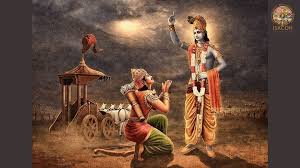
Om Shri Saraswatyai Namaha. Salutations to Saraswati, the goddess of vidya (knowledge) and viveka (discernment), as we delve deeper into the Bhagavad Gita, the Yoga-Sangita (song of yoga) that transforms Kurukshetra into a dharmakshetra of eternal truth. Yesterday, Arjuna, consumed by vishada-yoga (yoga of despondency), renounced victory (vijaya), kingdom (rajya), pleasures (sukha), and life (jivita), questioning their worth if gained through slaying svajanam (kin). Today, in Shlokas 33-34, he elaborates, naming teachers, fathers, sons, and more as those for whom samsara’s rewards are futile, anchoring his refusal to fight in sneha (affection), priming the Gita for Krishna’s upadesha.
This series is a daily sadhana (spiritual practice), offering one or more shlokas at a time—their direct meaning, a profound exploration of their tattva (essence), insights from sampradayas (spiritual traditions), and their resonance with modern fields like quantum science, leadership, and svasthya (wellbeing). Given their continuity, we combine Shlokas 33-34 here, immersing ourselves in Arjuna’s heartfelt plea as Kurukshetra mirrors the jiva’s karmic binds.
The Shlokas
येषामर्थे काङ्क्षितं नो राज्यं भोगाः सुखानि च।
त इमेऽवस्थिता युद्धे प्राणांस्त्यक्त्वा धनानि च॥३३॥
Yeshamarthe kankshitam no rajyam bhogah sukhani cha,
Ta ime’vasthita yuddhe pranantyaktva dhanani cha. [33]
आचार्याः पितरः पुत्रास्तथैव च पितामहाः।
मातुलाः श्वशुराः पौत्राः श्यालाः सम्बन्धिनस्तथा॥३४॥
Acharyah pitarah putrastathaiva cha pitamahah,
Matulah shvashurah pautrah shyalah sambandhinastatha. [34]
Direct Meaning
Shloka 33: “For whose sake (yeshamarthe) we desired (kankshitam) kingdom (rajyam), enjoyments (bhogah), and pleasures (sukhani cha), those very ones (ta ime) stand here (avasthita) in battle (yuddhe), having forsaken life (pranantyaktva) and wealth (dhanani cha).”
Shloka 34: “Teachers (acharyah), fathers (pitarah), sons (putrah), and also grandfathers (tathaiva cha pitamahah), maternal uncles (matulah), fathers-in-law (shvashurah), grandsons (pautrah), brothers-in-law (shyalah), and other relatives too (sambandhinastatha).”
In these verses, Arjuna explains that the kin—teachers, fathers, sons, and more—for whom he sought rajya, bhoga, and sukha now stand ready to die in Kurukshetra, rendering war’s rewards meaningless, deepening his vishada and refusal to fight.
Explanation of the Shlokas
These shlokas extend Arjuna’s vishada-yoga from Shloka 32, grounding his renunciation of samsara’s fruits in the sneha (affection) for specific kin—acharyah, pitarah, putrah, and more. His lament, a litany of familial bonds, transforms Kurukshetra into a manas-kshetra (field of mind), where dharma’s call clashes with krup (pity). Krishna, the silent Govinda, listens as Partha’s buddhi (intellect) falters, poised to guide him to jnana. Let us explore their layers with viveka (discernment) and bhakti (devotion).
- Yeshamarthe Kankshitam No: For Whose Sake We Desired
- Yeshamarthe: “For whose sake,” points to svajanam—kin like Bhishma, Drona, and sons—for whom Arjuna fought to reclaim rajya.
- Kankshitam No: “We desired,” no (we) includes the Pandavas, kankshitam (desired) tying Shloka 32’s na kankshme (I do not desire) to past motives—rajya for kin’s welfare.
This phrase reveals vishada’s irony: war’s purpose (kin’s prosperity) negates itself, as kin now face death, a samsaric paradox.
- Rajyam Bhogah Sukhani Cha: Kingdom, Enjoyments, and Pleasures
- Rajyam: “Kingdom,” the Pandavas’ rightful claim, sought for dharma and kin.
- Bhogah: “Enjoyments,” sensory wealth tied to rule.
- Sukhani Cha: “Pleasures too,” emotional and material joys, now futile in vishada’s lens.
Echoing Shloka 32, this triad—rajyam, bhogah, sukhani—is samsara’s lure, rejected as anitya (impermanent) when kin are at stake, a moha-driven vairagya Krishna will refine.
- Ta Ime’vasthita Yuddhe: Those Very Ones Stand Here in Battle
- Ta Ime: “Those very ones,” the kin for whom rajya was sought—Bhishma, Drona, sons—now ime (these), vivid in Arjuna’s drishti (vision).
- Avasthita: “Stand here,” recalls avasthitan (Shlokas 26-27), kin poised in vyudham (formation), a karmic tableau.
- Yuddhe: “In battle,” Kurukshetra’s rana (war), where dharma and adharma collide, kin as foes intensifying krup.
- Pranantyaktva Dhanani Cha: Having Forsaken Life and Wealth
- Pranantyaktva: “Having forsaken life,” kin ready to die, prana (life-force) offered to war’s fire, a kshatriya’s tyaga (sacrifice) Arjuna cannot bear.
- Dhanani Cha: “And wealth too,” material stakes—land, riches—surrendered for yuddha, amplifying vishada’s tragedy.
This phrase seals Kurukshetra’s cost: svajanam’s prana and dhana, rendering rajya hollow, a samsaric loss Krishna will reframe.
- Acharyah Pitarah Putrah: Teachers, Fathers, Sons
- Acharyah: “Teachers,” Drona, Arjuna’s Guru in dhanurveda (archery), evoking shraddha (reverence).
- Pitarah: “Fathers,” elders like Drupada or symbolic patriarchs, tied to sneha (affection).
- Putrah: “Sons,” Abhimanyu or Draupadi’s sons, Arjuna’s future, now at risk.
This triad—acharyah, pitarah, putrah—spans generations, sneha binding manas to moha (delusion), paralyzing svadharma.
- Tathaiva Cha Pitamahah: And Also Grandfathers
- Pitamahah: “Grandfathers,” Bhishma, the Kuru patriarch, revered yet a Kaurava ally by oath.
- Tathaiva Cha: “And also too,” extends the litany, vishada piling bond upon bond.
Bhishma’s presence deepens krup, his death a dharma-violation in Arjuna’s manas, a knot Krishna will untie.
- Matulah Shvashurah Pautrah Shyalah Sambandhinastatha: Uncles, In-Laws, Grandsons, Brothers-in-Law, and Relatives
- Matulah: “Maternal uncles,” like Shalya (Madri’s brother, a Kaurava ally).
- Shvashurah: “Fathers-in-law,” like Drupada (Draupadi’s father).
- Pautrah: “Grandsons,” symbolic of lineage’s future.
- Shyalah: “Brothers-in-law,” allies or kin by marriage.
- Sambandhinastatha: “Relatives too,” a catch-all for bandhutva (kinship), tatha (too) sealing the exhaustive list.
This cascade mirrors Shlokas 26-27, sneha overwhelming buddhi, Kurukshetra a samsara of bonds.
- The Heart of Vishada-Yoga
Arjuna’s naming of kin—acharyah to sambandhinah—grounds vishada in sneha, rajya and sukha worthless against svajanam’s loss. His manas rejects svadharma, seeing only adharma in war. The Gita’s question persists: Can jnana free the jiva from moha? Krishna, the Sarathi, waits to answer with sankhya-yoga.
This combined shloka, then, is Arjuna’s plea—a kshatriya’s vishada rooted in sneha, renouncing samsara for kin’s sake, crying for Krishna’s kripa (grace). It invites us to ask: Do we, like Arjuna, cling to bonds over duty, and can we seek Govinda to guide our drishti (vision)?
Spiritual Wisdom from Authoritative Voices
The Bhagavad Gita’s divya-artha (divine meaning) shines through the bhashyas of acharyas, each illuminating its eternal truth. Let us draw from their insights.
- Adi Shankaracharya (Advaita Vedanta)
Shankaracharya sees Arjuna’s yeshamarthe as maya’s snare—acharyah to sambandhinah veiling atman’s unity. Pranantyaktva reflects avidya’s grief. This shloka urges viveka—to see Brahman beyond kin, a truth Krishna will unveil in Adhyaya 11. - Ramanujacharya (Vishishtadvaita)
Ramanuja interprets Arjuna’s sneha as the jiva’s tenderness, ripe for prapatti (surrender). Acharyah and putrah evoke bhakti’s pain. The shloka hints at Narayana’s kripa, guiding vishada to dharma through divine love. - Madhvacharya (Dvaita)
Madhvacharya views Arjuna’s vishada as Vishnu-bhakta’s test—pitarah and putrah as karmic snares. Yeshamarthe shows tamasic lapse. This shloka underscores daiva-shakti, Krishna steadying Partha’s nishtha (steadfastness) for duty. - Swami Vivekananda (Neo-Vedanta)
Vivekananda reads this as love’s burden. “Arjuna fights for kin, yet cannot kill them,” he writes. Sneha halts dharma. He urges us to awaken shakti in our karmakshetra, balancing krup with duty—a lesson the Gita unfolds.
These voices weave a jnana-sutra (thread of wisdom), guiding us toward moksha.
Relevance to Today’s Context
The Bhagavad Gita is a jivan-shastra (manual for life), its wisdom vibrant today. Let us explore how these shlokas resonate with quantum science, leadership, and svasthya.
- Quantum Science and Cosmology
Arjuna’s yeshamarthe mirrors quantum entanglement—acharyah to sambandhinah as interconnected fields, vishada collapsing intent. Govinda’s silence evokes ekatva (oneness), transcending bonds. These shlokas suggest a dharmakshetra cosmos, where buddhi shapes karma, a quest science pursues. - Leadership and Business
In the corporate Kurukshetra, Arjuna’s pranantyaktva reflects a leader’s crisis—rajyam as success, putrah as teams, sacrificed in conflict. Govinda’s kripa offers a path: lead with purpose, not attachment, fostering drishti (vision) beyond loss. - Svasthya (Wellbeing)
Arjuna’s sneha mirrors modern loyalty—chitta-vikshepa from loved ones’ strife—while yeshamarthe suggests purpose’s weight. Practices inspired by these shlokas—pranayama and dhyana (meditation)—nurture shanti, freeing manas from moha’s grip.
Conclusion: The Weight of Sneha
These thirty-third and thirty-fourth shlokas deepen Arjuna’s vishada-yoga, sneha for acharyah to sambandhinah nullifying rajya and sukha, the Gita’s heart poised for Krishna’s jnana. They mirror samsara’s ties, dharma veiled by krup. Each day, we unveil another shloka of this divya-gita, seeking satyam (truth) and sundaram (beauty).
Tomorrow, Arjuna will refuse to slay kin, fearing sin (papa), his vishada seeking moral ground. Let us approach with bhakti and vichar, chanting: “Krishnam vande jagadgurum”—to Krishna, the world’s Guru. May His kripa guide us onward.
Hari Om Tat Sat.