






 Dr. Rukumangada Acharya
A Dvaita Vedānta Exploration – Article 23: Vaiśeṣyāt Tu Tad-vākya-śeṣāt
By Dr. Rukumangada Acharya
In the boundless realm of Sanātana Dharma, where the quest for tattva-jñāna (knowledge of ultimate reality) pierces the ephemeral veil of saṃsāra, the Brahmasutras stand as a divine monument, authored by Śrī Vedavyāsa, the incarnation of Śrī Nārāyaṇa Himself. Within the Dvaita Vedānta sampradāya, as illuminated by the revered Āchārya Śrī Madhvāchārya, these 564 sūtras—enumerated thus in this tradition due to specific textual divisions—are not mere philosophical treatises but sacred revelations of eternal truths. They proclaim the unassailable supremacy of Śrī Hari as Parabrahman, the Sarvottama (supreme among all), affirm the reality of the jagat as His creation, and establish the pañca-bheda (fivefold difference) that eternally distinguishes jīva (individual soul), jagat (world), and Īśvara (the Supreme Lord), as well as the differences among jīvas and between jīvas and jagat.
This series, launched under the aegis of New Zealand Bharat News (NZB News), embarks on a transformative odyssey to unravel the profound spiritual and esoteric secrets of the Brahmasutras, guided by the authoritative bhāṣyas of Śrī Madhvāchārya, Śrī Jayatīrtha (Tikāchārya), and Śrī Rāghavendra Tīrtha. Each article provides a direct translation of the sūtras from their pristine Sanskrit, a meticulous exploration of their multilayered meanings, and a seamless integration with the Vedas, Upanishads, Itihāsas, and Purāṇas. The Dvaita perspective, anchored in the principle of bheda (difference), unequivocally rejects the illusory unity of Advaita and the qualified unity of Viśiṣṭādvaita, asserting instead the eternal distinction and absolute dependence of the jīva upon Śrī Hari.
Having kindled the spark of inquiry with “Athāto Brahma-jijñāsā,” identified Śrī Viṣṇu as the jagat’s cause in “Janmādy asya yataḥ,” established the śāstras as His revelation in “Śāstra-yonitvāt,” harmonized them in “Tat tu samanvayāt,” affirmed His sentient causation in “Īkṣater nāśabdam,” clarified His primacy in “Gaunaś cen nātma-śabdāt,” rooted it in śruti with “Yat tat śruteḥ,” opened meditative realization in “Api ca samrādhane pratyakṣānumānābhyām,” affirmed His control over prakṛti in “Prakṛtiś ca pratijñā-dṛṣṭānta-anuparodhāt,” designated Him as the ruler of souls in “Abhimānivyapadeśas tu viśeṣānugatibhyām,” confirmed His substantial nature in “Dravyavattvāt,” validated it through inference in “Anumānāc ca,” affirmed the jagat’s dependence in “Tad-ananyatvam ārambhaṇa-śabdādibhyaḥ,” specified His causation of elements in “Kāraṇatvena cākāśādiṣu yathāvyapadiṣṭokteḥ,” reinforced it with śruti in “Śrutatvāc ca,” declared Him the sole object of knowledge in “Jñānena tu tadeva,” distinguished Him from the jīva in “Nātmā śruteḥ,” affirmed His eternality in “Nityatvāc ca tābhyaḥ,” declared Him the supreme knower in “Jño’ta eva,” clarified His non-departure in “Utkramati na tu tat,” affirmed His inner control in “Antaryāmyadhidaivādisthāneṣu hi tathā hi darśayati,” and highlighted His transcendent qualities in “Adṛśyatvādiguṇako dharmokteḥ,” we now turn to the twenty-third sūtra, “Vaiśeṣyāt tu tad-vākya-śeṣāt”—a sacred pronouncement that Śrī Hari’s distinct supremacy is established through specific śāstric declarations and their contextual complements.
The Brahmasutras, as the nyāya-prasthāna, form the logical cornerstone of Vedānta, complementing the śruti-prasthāna (Upanishads) and smṛti-prasthāna (Bhagavad Gītā). In Dvaita, their purpose transcends mere debate: they establish Śrī Hari’s paratva (supremacy) and the jīva’s sēṣatva (servitude), dismantling erroneous doctrines of rival schools. Śrī Madhvāchārya’s Brahmasūtra-bhāṣya, enriched by Śrī Jayatīrtha’s Nyāya-sudhā and Śrī Rāghavendra Tīrtha’s Tātparya-chandrikā, serves as the guiding light of this series, ensuring fidelity to the paramparā while unveiling the sūtras’ timeless relevance. This sūtra refines the Samanvaya Adhyāya’s exploration, emphasizing Śrī Viṣṇu’s unparalleled distinction through the precise lens of śāstric exegesis, guiding the jīva toward His lotus feet through śāstra, bhakti, and aparokṣa-jñāna.
The Twenty-Third Sūtra: Text and Translation
The twenty-third sūtra, “Vaiśeṣyāt tu tad-vākya-śeṣāt” (Brahmasutra 1.1.23), translates as “But from the specific distinction, from the remainder of that statement.” Its concise phrasing underscores the precision of śāstric hermeneutics. In Sanskrit, the sūtra reads:
वैशेष्यात् तु तद्वाक्यशेषात्
- वैशेष्यात् (Vaiśeṣyāt): From the specific distinction (unique attributes or designation).
- तु (Tu): But (indicating emphasis or clarification).
- तद्वाक्यशेषात् (Tad-vākya-śeṣāt): From the remainder of that statement (complementary śāstric context).
Śrī Madhvāchārya interprets this sūtra as a powerful affirmation that Śrī Viṣṇu’s distinct supremacy—His unique guṇas, lordship, and transcendence—is established by specific śāstric declarations and their contextual complements, which clarify His distinction from devas, jīvas, or other entities. In Dvaita, this sūtra reinforces Śrī Hari’s svatantratva (independence) as the sole Parabrahman, whose qualities and status are unparalleled, guiding the jīva to recognize His matchless sovereignty through the meticulous study of śāstra.
Detailed Analysis: Dissecting the Sūtra
The sūtra’s compact structure belies its profound implications, serving as a capstone to the Samanvaya Adhyāya’s efforts to establish Śrī Viṣṇu’s singular identity. Let us unpack its components with care, drawing on the Dvaita paramparā’s insights to illuminate its depth.
Vaiśeṣyāt: From the Specific Distinction
The term “vaiśeṣyāt,” derived from viśeṣa (distinction or specificity), points to the unique attributes or designations that set Śrī Viṣṇu apart from all other entities, including devas (like Indra or Agni), jīvas, or even abstract principles like prakṛti. Śrī Madhvāchārya, in his Brahmasūtra-bhāṣya, emphasizes that śāstra employs specific terms and descriptions to single out Śrī Viṣṇu as Parabrahman. He cites the Taittirīya Upanishad (2.1.1): “Satyam jñānam anantam Brahma” (Brahman is truth, knowledge, infinite), where the adjectives satyam, jñānam, and anantam exclusively denote Śrī Viṣṇu’s infinite, sentient, and eternal nature, unattainable by limited beings.
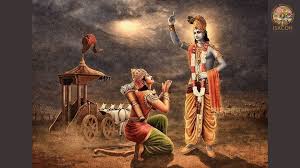
Śrī Jayatīrtha, in his Nyāya-sudhā, elaborates that “vaiśeṣyāt” connects to the previous sūtra, “Adṛśyatvādiguṇako dharmokteḥ,” where Śrī Viṣṇu’s transcendent qualities (adṛśyatva, sarvajñatva, etc.) already distinguish Him. He employs tarka to argue that śāstric terms like “ananta” or “sarvajña” are not generic but viśeṣa-lakṣaṇas (specific qualifiers) that apply only to Śrī Hari, excluding devas or jīvas, whose knowledge and power are finite. Śrī Rāghavendra Tīrtha, in his Tātparya-chandrikā, illustrates this with Śrī Kṛṣṇa’s viśvarūpa-darśana in the Gītā (11.9–14), where Arjuna beholds Śrī Hari’s unique majesty, unseen in any deva or jīva, affirming His distinct lordship.
For the sādhaka, “vaiśeṣyāt” is a call to meditate on Śrī Hari’s unparalleled guṇas. By chanting “Viśeṣa-rūpa” (Distinct form) during dhyāna, the devotee internalizes Śrī Viṣṇu’s uniqueness, fostering humility and awe. This specificity also underscores Dvaita’s emphasis on bheda: Śrī Hari is not merely “superior” but categorically distinct, a truth that transforms the jīva’s worldview from self-centeredness to Hari-centered devotion.
Tu: The Clarifying Emphasis
The particle “tu,” meaning “but,” serves as a logical pivot, emphasizing that Śrī Viṣṇu’s supremacy is not a general claim but a precise, śāstrically grounded truth that excludes alternatives. Śrī Madhvāchārya connects this to “Antaryāmyadhidaivādisthāneṣu” (1.1.21), where Śrī Viṣṇu’s inner control over devas and others negates their independence. He cites the Gītā (10.2): “Na me viduḥ suragaṇāḥ prabhavaṃ na maharṣayaḥ” (Neither devas nor sages know My origin), where Śrī Kṛṣṇa asserts His transcendence over all, even exalted beings. The “tu” clarifies that while devas like Indra may appear powerful, their attributes are derivative, unlike Śrī Hari’s inherent supremacy.
Śrī Jayatīrtha’s Nyāya-sudhā employs tarka to sharpen this point: if devas or jīvas were supreme, śāstra would not need specific qualifiers like “ananta” or “antaryāmī” for Śrī Viṣṇu. He references “Nātmā śruteḥ” (1.1.17), where the jīva’s claim to supremacy was negated, extending the logic to devas. Śrī Rāghavendra Tīrtha enriches this with a narrative lens, citing Śrī Rāma’s unique valor in the Rāmāyaṇa (Yuddha-kāṇḍa, 6.117), where even mighty allies like Sugrīva and Vibhīṣaṇa pale before Śrī Rāma’s distinct power, a śāstric dṛṣṭānta of “tu.”
For the sādhaka, “tu” is a reminder to focus solely on Śrī Hari, avoiding distractions from lesser deities or ego. Chanting “Tuṣṭi-kartā” (Sole satisfier) during japa reinforces this exclusivity, aligning the jīva’s heart with Śrī Viṣṇu’s singular lordship. Philosophically, “tu” underscores Dvaita’s rejection of any shared or distributed supremacy, a cornerstone of its ontology.
Tad-vākya-śeṣāt: From the Remainder of That Statement
The phrase “tad-vākya-śeṣāt,” meaning “from the remainder of that statement,” refers to the complementary śāstric context that completes and clarifies the specific designation of Śrī Viṣṇu. Śrī Madhvāchārya explains that śāstric statements are not isolated; their full meaning emerges from their vākya-śeṣa (contextual complements). He cites the Śvetāśvatara Upanishad (6.8): “Na tasya kaścit patir asti loke” (No one is His lord in the world), followed by “Na ca tasya liṅgaṃ sa kāraṇam” (He has no sign, He is the cause), where the vākya-śeṣa clarifies Śrī Viṣṇu’s transcendence and causation, excluding others.
Śrī Jayatīrtha, in Nyāya-sudhā, invokes the principle of śāstra-samanvaya (textual harmony), linking this to “Tat tu samanvayāt” (1.1.4). He argues that śāstric statements like “Satyam jñānam” are amplified by their context, such as the Taittirīya’s subsequent descriptions of Śrī Viṣṇu’s creative acts (2.6.1: “So’kāmayata”). This contextual depth ensures that Śrī Hari’s viśeṣa is not misapplied to others. Śrī Rāghavendra Tīrtha illustrates this with Śrī Narasiṃha’s manifestation in the Bhāgavata Purāṇa (7.8), where śāstra’s primary statement of His power is completed by descriptions of His unique protection of Śrī Prahlāda, a vākya-śeṣa affirming His supremacy.
For the sādhaka, “tad-vākya-śeṣāt” emphasizes the importance of studying śāstra holistically. Chanting “Vākya-sāra” (Essence of statements) during svādhyāya encourages deep engagement with śruti and smṛti, revealing Śrī Hari’s full glory. This also reflects Dvaita’s hermeneutic rigor, where every śāstric word is a thread in the tapestry of Śrī Viṣṇu’s revelation.
Śāstric Connections: The Vedic Tapestry
The sūtra weaves a rich tapestry of śāstric references, affirming Śrī Viṣṇu’s distinct supremacy. The Chāndogya Upanishad (6.2.1), “Sad eva somya idam agra āsīt” (Existence alone was in the beginning), specifies Śrī Viṣṇu as the sole cause, with its vākya-śeṣa (6.2.3: “Tad aikṣata”) detailing His sentient will. The Gītā (7.7), “Mattaḥ parataram nānyat kiñcid asti” (There is nothing higher than Me), is complemented by verses like 10.8, “Aham sarvasya prabhavaḥ” (I am the origin of all), forming a contextual whole.
The Viṣṇu Purāṇa (1.2.14), “Viṣṇuḥ eva paraḥ puruṣaḥ” (Viṣṇu alone is the supreme person), is amplified by its descriptions of His guṇas (1.2.15: “Sarvajñaḥ sarvagovindaḥ”). The Ṛgveda (1.22.20), “Tad viṣṇoḥ paramam padam” (Viṣṇu’s supreme abode), gains depth from hymns like 1.154, detailing His cosmic strides. The Rāmāyaṇa (Bāla-kāṇḍa, 1.15) presents Śrī Rāma as the unmatched protector, with later kāṇḍas (e.g., Yuddha-kāṇḍa, 6.117) elaborating His divine feats. The Bhāgavata Purāṇa (10.33) showcases Śrī Kṛṣṇa’s unique rāsa-līlā, complemented by His cosmic viśvarūpa (11.9–14), a śāstric śeṣa of distinction.
These connections reflect Dvaita’s śāstra-vichāra, where Śrī Viṣṇu’s viśeṣa is a symphony of śruti, smṛti, and itihāsa-purāṇa, guiding the jīva to His singular truth.
Hidden Secrets: Cosmology and the Jīva’s Purpose
The sūtra unveils profound cosmological and soteriological secrets. Śrī Madhvāchārya’s concept of viśeṣa (inherent distinction) reveals that Śrī Hari’s svatantratva is not merely a quality but His very essence, distinguishing Him ontologically from the jagat and jīvas. His guṇas—sarvajñatva, anantatva, antaryāmitva—are not accidental but intrinsic, forming the bedrock of creation. Śrī Rāghavendra Tīrtha interprets this as Śrī Hari’s eternal līlā, where His distinct supremacy manifests across kalpas, as seen in His avatāras like Śrī Matsya or Śrī Kūrma, each uniquely revealing His lordship.
The jagat’s satyatva (reality) is a reflection of Śrī Hari’s viśeṣa, its order and beauty dependent on His unmatched will. The jīva, bound by saṃsāra, finds its purpose in recognizing this distinction, moving from ahaṅkāra (ego) to sēṣatva (servitude). Śrī Hanumān’s devotion in the Rāmāyaṇa exemplifies this: his recognition of Śrī Rāma’s unique glory (Sundara-kāṇḍa, 5.35) led to sāyujya, a state of eternal proximity to Śrī Hari. The sādhaka, by meditating on “vaiśeṣyāt,” internalizes this truth, chanting “Viśeṣa-nātha” to align with Śrī Hari’s distinct will.
This secret transforms bhakti into a dynamic journey, where Śrī Hari’s uniqueness is not just a theological fact but a personal invitation to surrender, resonating with the jīva’s innate longing for its eternal Lord.
Refutation of Pūrva-pakṣa
The sūtra serves as a robust defense against rival philosophies, with Śrī Madhvāchārya leading the charge. Advaita posits a non-distinct Brahman, claiming all differences are illusory. Śrī Madhvāchārya counters with “Na tasya kaścit” (Śvetāśvatara 6.8), where śruti’s specific designation of Śrī Viṣṇu’s supremacy negates identity with jīvas or devas. The vākya-śeṣa, detailing His causation, further dismantles Advaita’s nirguṇa premise.
Sāṅkhya’s dualism, with its independent pradhāna, falters under “vaiśeṣyāt,” as pradhāna lacks the sentient, distinct guṇas of Śrī Viṣṇu, per “Īkṣater nāśabdam” (1.1.5). Viśiṣṭādvaita’s view of Brahman as a composite of jīvas and jagat dilutes Śrī Hari’s unique supremacy, contradicted by “Mattaḥ parataram” (Gītā 7.7), where the vākya-śeṣa excludes shared lordship. Śrī Jayatīrtha’s tarka refutes any parity, arguing that śāstra’s specific qualifiers (e.g., “ananta”) apply only to Śrī Viṣṇu. Śrī Rāghavendra Tīrtha’s bhakti lens seals this, citing Śrī Narasiṃha’s unique act as śāstrically distinct, beyond devas or jīvas.
This refutation strengthens the sādhaka’s conviction, ensuring unwavering focus on Śrī Hari alone.
Practical Applications for the Sādhaka
The sūtra offers practical guidance for spiritual practice:
- Śāstra-svādhyāya: Study śruti and smṛti holistically, noting vākya-śeṣa to grasp Śrī Hari’s viśeṣa, as Śrī Madhvāchārya modeled in his Anuvyākhyāna.
- Viśeṣa-dhyāna: Meditate on Śrī Viṣṇu’s unique guṇas (e.g., chanting “Satyam jñānam anantam”), visualizing His distinct forms like Śrī Narasiṃha or Śrī Kṛṣṇa.
- Bheda-bhakti: Cultivate devotion rooted in bheda, recognizing Śrī Hari’s supremacy over all, as Śrī Hanumān did, fostering humility.
- Tarka-vichāra: Engage in logical reflection, as Śrī Jayatīrtha did, to internalize why only Śrī Viṣṇu is Parabrahman, strengthening faith.
These practices transform the sūtra into a living reality, guiding the jīva to Śrī Hari’s lotus feet.
The Path Ahead
“Vaiśeṣyāt tu tad-vākya-śeṣāt” establishes Śrī Hari as the uniquely supreme Parabrahman, deepening the Samanvaya Adhyāya’s mission to reveal His singular truth. This series will continue to unfold His infinite distinction, exploring subsequent sūtras that further illuminate His guṇas, līlās, and lordship. The journey ahead beckons the jīva to immerse in śāstra, bhakti, and jñāna, ever closer to Śrī Hari’s eternal embrace. “Om Namo Nārāyaṇāya.”