


 Swamy Gitananda
 A Daily Exploration of Dharma, Jnana, and Relevance to Modernity
By Swami Gitananda
Published on New Zealand Bharat (NZB) News, April 17, 2025
Om Shri Vishnave Namaha. Salutations to Vishnu, the sustainer of dharma and shanti (peace), as we journey deeper into the Bhagavad Gita, the Yoga-Shastra that unveils the path from samsara (worldly bondage) to moksha (liberation). Yesterday, Arjuna voiced his krup (pity) for svajanam (kin), his vishada-yoga (yoga of despondency) cresting as he saw loved ones poised to fight. Today, across Shlokas 29-30, his vishada engulfs body and mind—limbs trembling, Gandiva slipping, manas burning with despair—a kshatriya’s collapse before Krishna, priming the Gita for jnana’s dawn.
This series is a daily sadhana (spiritual practice), offering one or more shlokas at a time—their direct meaning, a profound exploration of their tattva (essence), insights from sampradayas (spiritual traditions), and their resonance with modern fields like quantum science, leadership, and svasthya (wellbeing). Given their continuity, we combine Shlokas 29-30 here, immersing ourselves in Arjuna’s unraveling as Kurukshetra mirrors the jiva’s turmoil.
The Shlokas
सीदन्ति मम गात्राणि मुखं च परिशुष्यति।
वेपथुश्च शरीरे मे रोमहर्षश्च जायते॥२९॥
Sidanti mama gatrani mukham cha parishushyati,
Vepathushcha sharire me romaharshashcha jayate. [29]
गाण्डीवं स्रंसते हस्तात् त्वक्चैव परिदह्यते।
न च शक्नोम्यवस्थातुं भ्रमतीव च मे मनः॥३०॥
Gandivam sramsate hastat tvakchaiva paridahyate,
Na cha shaknomyavasthatum bhramativa cha me manah. [30]
Direct Meaning
Shloka 29: “My limbs fail me (sidanti mama gatrani), my mouth dries up (mukham cha parishushyati), my body trembles (vepathushcha sharire me), and my hairs stand on end (romaharshashcha jayate).”
Shloka 30: “The Gandiva slips from my hand (gandivam sramsate hastat), my skin burns (tvakchaiva paridahyate), I cannot stand steady (na cha shaknomyavasthatum), and my mind reels as if whirling (bhramativa cha me manah).”
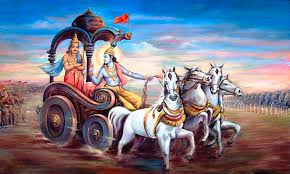
In these verses, Arjuna describes his physical and mental collapse—body failing, Gandiva falling, manas spiraling—overwhelmed by vishada at the sight of kin, his kshatriya resolve shattered before Krishna.
Explanation of the Shlokas
These shlokas form a vivid portrait of Arjuna’s vishada-yoga, his krup (Shloka 28) now manifesting as physical and mental breakdown. From trembling limbs to a reeling manas, Kurukshetra becomes a manas-kshetra (field of mind), where dharma’s weight crushes shakti (strength). Krishna, the silent Hrishikesha, witnesses this unraveling, poised to guide Partha to jnana. Let us explore their layers with viveka (discernment) and bhakti (devotion).
- Sidanti Mama Gatrani: My Limbs Fail Me
- Sidanti: “Fail,” suggests collapse, Arjuna’s gatrani (limbs) losing shakti—a kshatriya’s body betraying its dhanurveda (archery) prowess.
- Mama: “My,” personalizes the anguish, vishada seizing Arjuna’s very form.
This physical surrender mirrors tamas overtaking sattva, a jiva buckling under samsara’s duhkha (grief).
- Mukham Cha Parishushyati: My Mouth Dries Up
- Mukham: “Mouth,” vital for speech and sustenance, now parishushyati (dries up), a visceral sign of bhaya (fear) and krup (pity).
- Cha: “And,” links symptoms, piling despair upon despair.
This drying reflects prana’s disruption, Arjuna’s manas unable to command even breath, a yogic imbalance Krishna will address.
- Vepathushcha Sharire Me: My Body Trembles
- Vepathuh: “Trembling,” sharire me (in my body), a quaking born of vishada’s intensity, shaking Arjuna’s kshatriya frame.
- Cha: “And,” continues the cascade, each symptom a wave of klesha (affliction).
Trembling evokes chitta-vikshepa (mental agitation), a jiva’s sharira (body) echoing manas’ turmoil, a state Krishna will rebalance with yoga.
- Romaharshashcha Jayate: My Hairs Stand on End
- Romaharshah: “Hairs standing on end,” a primal response—harsha here not joy but awe-tinged dread at kin’s fate.
- Jayate: “Arises,” spontaneous and uncontrollable, vishada’s grip on Arjuna’s deha (body).
This visceral sign blends bhaya and karuna, samsara’s grip tightening, priming Krishna’s Adhyaya 2 counsel: “Na tvam shochitum arhasi”—“You should not grieve.”
- Gandivam Sramsate Hastat: The Gandiva Slips from My Hand
- Gandivam: Arjuna’s divine bow, gifted by Agni, symbol of his kshatriya shakti and svadharma (duty).
- Sramsate Hastat: “Slips from my hand,” a devastating image—Dhananjaya (conqueror of wealth) losing his weapon, vishada sapping sankalpa (resolve).
The falling Gandiva is dharma’s pause, Arjuna’s manas rejecting war, a surrender Krishna will counter with nishkama karma (selfless action).
- Tvakchaiva Paridahyate: My Skin Burns
- Tvak: “Skin,” paridahyate (burns), a fiery sensation of manas’ distress radiating outward.
- Chaiva: “And too,” intensifies the litany, vishada consuming body and soul.
This burning reflects pitta’s imbalance in Ayurveda, krup igniting sharira, a jiva scorched by samsara’s heat, awaiting Krishna’s shanti (peace).
- Na Cha Shaknomyavasthatum: I Cannot Stand Steady
- Na Cha Shaknomi: “I cannot,” Arjuna’s admission of powerlessness, a kshatriya’s shakti drained by vishada.
- Avasthatum: “Stand steady,” physical and mental instability—legs failing, resolve crumbling before svajanam.
This unsteadiness mirrors chitta’s unrest, a jiva adrift in samsara, needing Krishna’s sthita-prajna (steady wisdom) (Adhyaya 2).
- Bhramativa Cha Me Manah: My Mind Reels as if Whirling
- Bhramativa: “As if whirling,” bhramati (reeling) likens Arjuna’s manas to a spinning vortex, vishada’s chaos.
- Me Manah: “My mind,” personalizes the spiral, manas—seat of buddhi (intellect)—lost to moha (delusion).
This mental collapse seals vishada-yoga, Arjuna’s jiva trapped in kleshas (raga, dvesha), a state Krishna will lift with dhyana-yoga.
- The Crescendo of Vishada
These shlokas paint Arjuna’s unraveling—body (gatrani, tvak) and mind (manah) succumbing to vishada. Gandiva’s fall symbolizes dharma’s lapse, Kurukshetra a manas-kshetra where sneha (affection) battles svadharma. The Gita’s question sharpens: Can jnana restore shakti? Krishna, the Yogeshvara, waits to answer.
This combined shloka, then, is Arjuna’s breaking point—a kshatriya’s vishada consuming body and manas, crying for Krishna’s kripa (grace). It invites us to ask: Do we, like Arjuna, falter in life’s battles, and can we seek Hrishikesha to steady us?
Spiritual Wisdom from Authoritative Voices
The Bhagavad Gita’s divya-tattva (divine essence) shines through the bhashyas of acharyas, each illuminating its eternal truth. Let us draw from their insights.
- Adi Shankaracharya (Advaita Vedanta)
Shankaracharya sees Arjuna’s collapse as maya’s peak—gandivam sramsate reflecting avidya (ignorance) binding atman. Bhramati manah is samsara’s whirl. This shloka urges viveka—to see Brahman beyond forms, a truth Krishna will unveil in Adhyaya 11. - Ramanujacharya (Vishishtadvaita)
Ramanuja interprets Arjuna’s vishada as the jiva’s surrender, krup opening prapatti (surrender). Krishna’s silence is kripa, preparing Partha for bhakti. The shloka hints at Narayana’s guidance, lifting moha to dharma. - Madhvacharya (Dvaita)
Madhvacharya views Arjuna’s trembling as Vishnu-bhakta’s trial—manah bhramati as tamasic weakness. Gandiva’s fall tests nishtha (steadfastness). This shloka underscores daiva-shakti, Krishna steadying the jiva for duty. - Swami Vivekananda (Neo-Vedanta)
Vivekananda reads this as courage’s pause. “Arjuna’s bow falls, his mind spins,” he writes. Humanity falters, yet divinity guides. He urges us to awaken shakti in our karmakshetra, steadied by dharma—a lesson the Gita unfolds.
These voices weave a jnana-mala (garland of wisdom), guiding us toward moksha.
Relevance to Today’s Context
The Bhagavad Gita is a jivan-shastra (manual for life), its wisdom vibrant today. Let us explore how these shlokas resonate with quantum science, leadership, and svasthya.
- Quantum Science and Cosmology
Arjuna’s bhramati manah mirrors quantum uncertainty—vishada collapsing shakti into chaos. Gandiva’s fall is intent unraveling. Krishna’s presence evokes ekatva (oneness), restoring order. These shlokas suggest a dharmakshetra cosmos, where awareness heals entropy, a quest science pursues. - Leadership and Business
In the corporate Kurukshetra, Arjuna’s collapse reflects a leader’s crisis—gatrani sidanti as burnout, gandivam sramsate as lost vision. Krishna’s kripa offers a path: lead with resilience, balancing empathy and resolve, fostering drishti (vision) amid turmoil. - Svasthya (Wellbeing)
Arjuna’s vepathuh and manah bhramati mirror modern anxiety—chitta-vikshepa from conflict’s weight. Practices inspired by these shlokas—pranayama, asana, and dhyana (meditation)—nurture shanti, grounding sharira and manas under Hrishikesha’s calm.
Conclusion: The Fall of Gandiva
These twenty-ninth and thirtieth shlokas crown Arjuna’s vishada-yoga, sharira and manas crumbling, Gandiva fallen, the Gita’s heart open for Krishna’s jnana. They mirror samsara’s chaos, dharma stalled by moha. Each day, we unveil another shloka of this divya-gita, seeking satyam (truth) and sundaram (beauty).
Tomorrow, Arjuna will voice omens of doom, his vishada seeking reason. Let us approach with bhakti and vichar, chanting: “Yatra yogeshvarah krishno” (Gita 18.78)—where Krishna is, victory follows. May His kripa guide us onward.
Hari Om Tat Sat.