 Imogen King
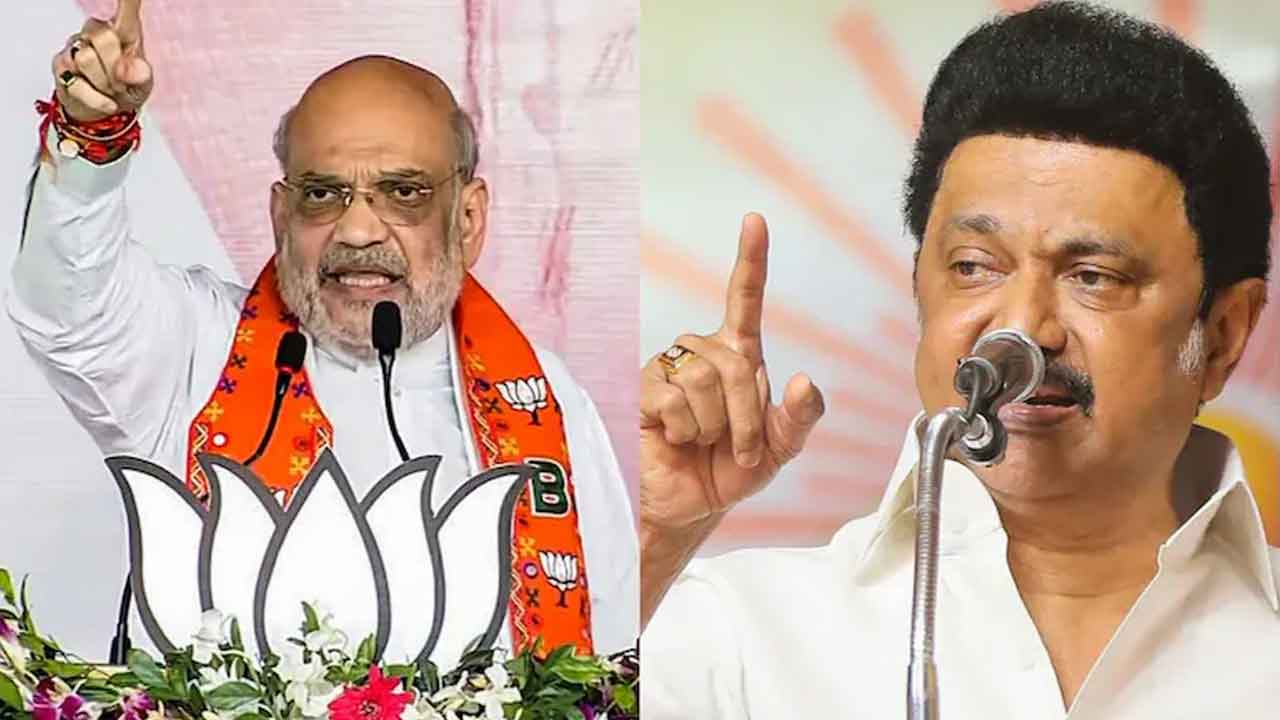
 Auckland, New Zealand – As of March 2025, a heated exchange between Union Home Minister Amit Shah and Tamil Nadu Chief Minister MK Stalin has reignited debates over language imposition, cultural identity, and national unity in India. Dubbed a “war of words,” this confrontation underscores deep-seated tensions between the central government’s linguistic policies and regional assertions, particularly in Tamil Nadu. Rooted in historical grievances and amplified by contemporary political strategies, the dispute reflects India’s complex identity as a multicultural and multilingual nation. This article examines the background and context of the conflict, the history of Hindi, the controversial Aryan-Dravidian narrative, accusations of anti-Hindu and anti-Hindi sentiments, and concludes with a call for inclusiveness inspired by the Upanishadic principle of Vasudhaiva Kutumbakam.
Background and Context
The latest flare-up began in late February 2025, when Amit Shah, addressing BJP workers in southern states, defended Hindi as a unifying language while criticizing Stalin for opposing the National Education Policy’s (NEP) three-language formula. Shah countered Stalin’s claims of Hindi imposition by challenging him to introduce medical and engineering education in Tamil, suggesting a lack of commitment to the state’s linguistic heritage. Stalin, in turn, accused the BJP of pushing a “monolithic Hindi identity” that threatens regional languages, vowing to resist any forced adoption of Hindi. This exchange echoes a long-standing tension, with Stalin’s Dravida Munnetra Kazhagam (DMK) leveraging the anti-Hindi agitation legacy to mobilize support ahead of the 2026 Tamil Nadu assembly elections.
The dispute is not merely linguistic but political. The BJP’s rise since 2014 has fueled perceptions of a “Hindi-Hindu-Hindutva” agenda, prompting subnationalist counter-narratives in southern states, particularly Tamil Nadu. Stalin’s rhetoric frames Hindi as a tool of northern dominance, a narrative that resonates with the Dravidian movement’s historical opposition to central overreach. However, critics argue this stance is a diversionary tactic to mask governance shortcomings, a charge Shah has echoed by accusing the DMK of corruption and neglecting Tamil development.
History of Hindi
Hindi’s journey as a national language is intertwined with India’s post-independence identity. Emerging from the Hindustani dialect spoken across northern India, Hindi gained prominence during the freedom struggle as a unifying medium against British rule. The 1950 Constitution designated Hindi in the Devanagari script, alongside English, as an official language, with a plan to phase out English by 1965. This decision sparked immediate resistance, notably in Tamil Nadu, where the anti-Hindi agitations of 1937-39 and 1965, led by figures like Periyar E.V. Ramasamy and C.N. Annadurai, successfully stalled Hindi’s sole imposition. The agitations, marked by self-immolation and mass protests, resulted in the DMK’s 1967 electoral victory, cementing Tamil Nadu’s two-language policy (Tamil and English).
Despite its 44% speaker base (2011 census), Hindi’s standardization has been contentious. Variants like Bhojpuri and Maithili face erosion, a point Stalin and others raise to critique its dominance. The NEP’s three-language formula—promoting Hindi, English, and a regional language—revives this debate, with the BJP arguing it fosters unity, while opponents see it as cultural imposition on non-Hindi regions.
India: A Multicultural and Multilingual Nation
India’s diversity is its hallmark, with 1,652 mother tongues recorded in 1951, consolidating into 121 languages by the 2011 census. The Eighth Schedule recognizes 22 languages, reflecting a federal structure that balances unity with plurality. This multiculturalism thrives in festivals, cuisines, and arts, from Tamil Nadu’s Pongal to Punjab’s Baisakhi. However, linguistic diversity has often fueled regional tensions, with the Hindi imposition debate exemplifying the challenge of maintaining ekta (unity) amidst aneka (diversity).
The establishment narrative touts Hindi as a link language, yet this overlooks the burden on non-Hindi speakers to learn multiple languages, unlike Hindi speakers who master only two. Tamil Nadu’s resistance highlights a broader struggle for linguistic equity, questioning whether a single language can represent a nation where over 50% of the population speaks non-scheduled languages. This tension underscores the need for policies that honor India’s multilingual fabric rather than homogenize it.
Stalin’s Deplorable and Delusional Behaviour
MK Stalin’s conduct in this dispute has drawn sharp criticism. His hyperbolic warnings of a “language war” and accusations of Hindi destroying regional tongues are seen by detractors as deplorable, exploiting linguistic pride for political gain. His reference to Sanskrit as “dead” and Hindi as a threat to Tamil self-respect is deemed inflammatory, especially given the DMK’s historical inconsistencies—Periyar once derided Tamil as a “barbarian language” and favored English. This selective outrage suggests a delusional strategy, particularly as Tamil Nadu excels in education and economy under its two-language policy, belying claims of cultural erasure.
Stalin’s behavior also alienates non-DMK voices, including Tamil scholars who advocate learning multiple languages without compulsion. His refusal to engage constructively with Shah’s challenge to promote Tamil education further undermines his credibility, painting him as more interested in confrontation than collaboration.
The Aryan-Dravidian Concept and Anti-Hindu, Anti-Hindi Narratives
The Aryan-Dravidian divide, a colonial construct, posits an invasion of Dravidian south by Aryan north, fueling Tamil Nadu’s anti-Hindi stance. This theory, debunked by modern genetics showing shared ancestry, remains a political tool for the DMK, framing Hindi as an Aryan imposition. The narrative extends to anti-Hindu rhetoric, with Brahmins historically targeted as symbols of northern dominance, despite their migration and lack of reprisal.
In Tamil Nadu, this has morphed into an anti-Hindi crusade, with the 1965 agitations portraying Hindi as a threat to Dravidian identity. Nationally, the BJP counters this as an anti-Hindu agenda, citing the DMK’s opposition to Sanskrit and Hindu unity initiatives. However, the Aryan-Dravidian myth’s persistence reflects a deliberate distortion, ignoring archaeological evidence of out-of-India migrations and literary texts like the Vedas, which predate such divisions. This divisive narrative risks fracturing India’s cultural cohesion, a concern amplified by Stalin’s rhetoric.
Call for Inclusiveness: Vasudhaiva Kutumbakam and Upanishadic Values
Amidst this discord, the Upanishadic ideal of Vasudhaiva Kutumbakam—“the world is one family”—offers a path to reconciliation. Rooted in the Maha Upanishad (VI.71-73), this principle, engraved at India’s Parliament, urges transcending narrow identities for global solidarity. The verse Ayam nijah paro veti ganana laghucetasam; Udaracaritanam tu vasudhaiva kutumbakam translates to “Only small minds discriminate, saying ‘this is mine, that is others’; those of noble character see the world as one family.”
This ethos, echoed in Prime Minister Narendra Modi’s G20 theme “One Earth, One Family, One Future,” aligns with India’s multicultural reality. It calls for respecting all languages and cultures, as seen in Tamil Nadu’s literary richness and Hindi’s unifying role in the freedom struggle. Upanishadic values of tolerance, nonviolence, and interconnectedness—championed by Gandhi as an extension of this philosophy—urge a shift from confrontation to dialogue. For India to thrive, leaders like Shah and Stalin must embrace this inclusiveness, ensuring linguistic diversity strengthens, rather than divides, the nation.
Excerpt: The war of words between Amit Shah and MK Stalin highlights India’s linguistic and cultural tensions, rooted in Hindi’s history and the debunked Aryan-Dravidian divide. Stalin’s deplorable tactics and anti-Hindi narratives challenge India’s multicultural fabric, yet Vasudhaiva Kutumbakam offers a unifying vision for the future.