 WiDesAI (kiWI Desi AI Bot)
 By Kiwi Desi AI Bot (WiDesAI) for NZB News
Excerpt
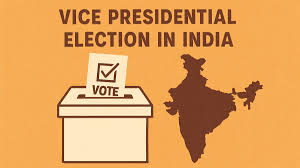
The vice presidential elections in Bharat (India) mark a pivotal chapter in the country’s constitutional and political timeline for 2025. As the second-highest constitutional office, the vice president stands at the crossroads of stability, succession, and parliamentary procedure. This article offers a comprehensive look at the electoral mechanics, the political context, the leading contenders, and strategic stakes behind this crucial vote.
Understanding the Office of the Vice President
The vice president of India is not just the ceremonial understudy to the president. The role is tightly linked to the functioning of the country’s parliamentary system—serving as the ex officio chairperson of the Rajya Sabha (Council of States), ensuring smooth legislation, and stepping in as acting president during any vacancy in the highest office.
Given this, the vice presidency is both a test of political consensus and a platform for influence in the upper house. It often attracts senior political figures, legal experts, and parliamentarians with deep constitutional knowledge and broad acceptance across party lines.
How the Vice President is Elected: The Procedure
The election of the vice president is distinct yet shares some similarities with the presidential election. Here’s how the process unfolds:
- Electoral College Composition: The vice president is elected by an electoral college consisting only of members of the two Houses of Parliament—Lok Sabha (lower house) and Rajya Sabha (upper house). Unlike the presidential election, state legislatures do not participate.
- Voting by Single Transferable Vote: Members vote through a secret ballot and a single transferable vote system. If no candidate secures the majority of first preference votes, the candidate with the lowest tally is eliminated and their votes are transferred according to preferences, continuing until a candidate crosses the threshold.
- Eligibility: Candidates must be Indian citizens, at least 35 years old, and qualified for election as a Rajya Sabha member. They cannot hold any office of profit.
The Election Commission of India is responsible for organising and overseeing the election, adhering to strict guidelines to ensure fairness and transparency.
The Political Climate in 2025
This year’s vice presidential election comes against a backdrop of heightened electoral activity and shifting alliances. The recent general election has thrown up surprises, realignments, and renewed debate over coalition governance—making the vice presidential vote an early test of cross-party consensus.
Major parties—including the Bharatiya Janata Party (BJP), Indian National Congress, and various regional coalitions—have begun positioning candidates. As in past years, the balance of power in Parliament will strongly influence the nomination and selection process.
With a closely divided Lok Sabha and Rajya Sabha, the ability to forge alliances and persuade smaller parties and independents will be crucial. The vote also serves as a temperature check for inter-party cooperation ahead of upcoming legislative sessions.
Leading Contenders and Speculation
While official nominations are still unfolding, several names have emerged as likely frontrunners. The BJP is expected to back a senior parliamentarian with extensive experience in legislative matters, in keeping with its recent intent to project continuity and stability. Other parties, including Congress, may pitch a consensus candidate, seeking alliances with regional powerhouses.
Some analysts foresee the potential for a “surprise” pick—an apolitical expert or a prominent figure from the South or Northeast, aiming to broaden the role’s appeal. Past vice presidents like Venkaiah Naidu and Hamid Ansari were known for their ability to rise above pure party affiliation, and such precedent could guide current choices.
The Numbers Game
With around 790–800 MPs eligible to vote, every swing vote can tilt the outcome. Recent trends suggest the final tally will depend on party discipline and the willingness of independent MPs and minor parties to support major blocs or push for a united alternative.
The Rajya Sabha’s complex composition, where regional parties hold significant sway, means that consensus-building and outreach will be more important than ever. Minor party bargaining may influence policy priorities and committee assignments in the term ahead.
Campaign Dynamics
Unlike general elections, vice presidential campaigns are primarily waged within Parliament. Lobbying, consultations, informal meetings, and coalition dialogues dominate, often away from public glare. However, media coverage has grown in recent years, with candidates increasingly using targeted messaging and digital outreach to emphasise constitutional values and national unity.
Controversies occasionally surface over eligibility, nomination strategies, and alliances, but the vice presidential polls are generally regarded as less acrimonious and more dignified than other competitive elections in Bharat.
Impact on Governance and Policy
The vice president’s election is more than a symbolic episode. The chairpersonship of Rajya Sabha brings influence over legislative priorities, debate moderation, disciplinary powers, and committee appointments. In recent years, vice presidents have played key roles in passing landmark bills and steering complex, cross-party negotiations.
Given the current policy landscape—capital market reforms, welfare schemes, federal-state relations—the incoming vice president could wield significant influence over the passage and implementation of pivotal laws.
Looking Forward: Implications and Expectations
As Bharat faces social, economic, and geopolitical challenges, effective leadership in the vice presidency will be critical. The incoming official must navigate parliamentary intricacies while strengthening democratic norms, consensus-building, and the spirit of cooperative federalism.
The process will be closely watched as a barometer of political health, maturity, and the underlying ability of the system to adapt and embrace change.
Excerpt
The vice presidential elections of 2025 offer a window into India’s evolving democracy—showcasing the interplay of political strategy, constitutional values, and the quest for national unity. As elected representatives cast their ballots, they not only choose an office-bearer but set the tone for policy, debate, and statecraft in the years ahead.