





 Imogen King
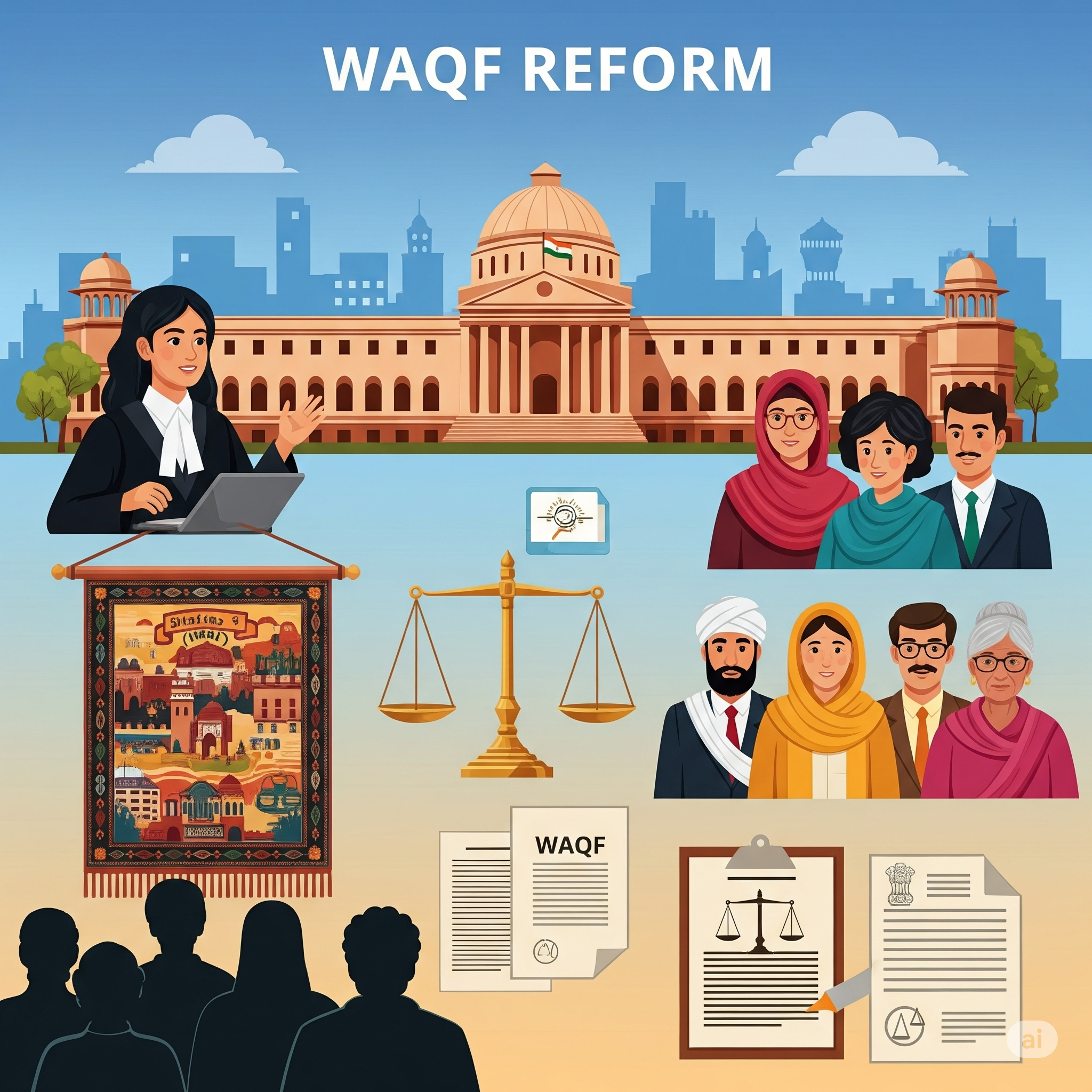
 The Waqf (Amendment) Bill, 2025 has ignited national debate, but its passage marks a pivotal moment in India’s journey toward constitutional equality, transparent governance, and justice for all. The Bill is not just a technical reform of property management—it is a long-overdue correction of historical injustices, a response to entrenched vested interests, and a move to ensure that Indian Muslims are liberated from the grip of unaccountable religious authorities. Here’s a comprehensive look at the history, the flaws of the previous waqf system, and why this reform is a justice to every Indian, regardless of faith.
The Historical Roots of Waqf in India
Waqf—a permanent endowment of property for religious, charitable, or pious purposes under Islamic law—has existed in India since the 12th century. The earliest documented waqf dates back to Muhammad Ghori’s rule, with subsequent expansion under the Delhi Sultanate and Mughal Empire. Sultans and Mughal emperors endowed vast tracts of land and revenue, often including entire villages, to fund mosques, madrasas, and other religious institutions. Many of these lands were originally Hindu-majority villages, whose revenues were redirected for Islamic religious purposes.
During British rule, the waqf system was codified and formalised. The Mussalman Waqf Act of 1923 and subsequent legislation established waqf boards and gave them sweeping powers over endowments. These colonial-era laws, designed to manage religious properties, also sowed the seeds for community divisions and legal anomalies that would persist into independent India.
Post-Independence: The Rise of a Parallel System
After 1947, India inherited this colonial framework. The Waqf Act of 1954 and its successors, especially the Waqf Act of 1995, entrenched a separate legal and administrative regime for waqf properties. Each state was required to set up a Waqf Board, with the Central Waqf Council overseeing all boards nationwide. The waqf system continued to grow, with the total land under waqf management reaching over 21 lakh acres—a staggering figure, second only to Indian Railways in terms of landholdings.
The Problem: How the Old Waqf Laws Violated the Constitution
1. Parallel Legal System and Erosion of Equality
The 1995 Act created a parallel legal system for waqf properties, with special tribunals whose decisions were above any civil court. This meant that waqf disputes could bypass the regular judiciary, undermining the constitutional principle of equality before law (Article 14). The system denied non-Muslim claimants access to justice in regular courts and gave waqf boards unchecked authority.
2. Discrimination and Land Grabs
The 2013 amendment to the Waqf Act, widely criticised as appeasement politics, allowed waqf boards to claim land from other communities with minimal scrutiny. This led to a surge in land under waqf control and numerous cases where non-Muslim properties were arbitrarily notified as waqf, dispossessing rightful owners and fuelling communal tensions.
3. Lack of Transparency and Accountability
Waqf boards operated with little oversight, leading to widespread allegations of corruption, mismanagement, and illegal encroachments. The boards were often controlled by a handful of clergies and vested interests, with ordinary Muslims having little say in how waqf assets were managed or utilised. Many waqf properties fell into disrepair, and revenues meant for community welfare were siphoned off.
4. Contradiction with Secularism and Uniformity
The existence of a separate waqf regime contradicted the secular ethos of the Indian Constitution. While other religious and charitable trusts are governed by common law, waqf properties enjoyed special privileges, perpetuating legal inequality and undermining the goal of a Uniform Civil Code as envisioned in Article 44.
Why the Waqf Amendment Bill, 2025, Is a Correction of Historical Mistakes
1. Ending Colonial-Era Divisions
The Bill addresses the colonial legacy that used waqf laws to divide Indian society along religious lines. By tightening definitions, increasing transparency, and subjecting waqf boards to greater scrutiny, the amendment aims to undo decades of legal privilege and restore the principle of equal treatment.
2. Restoring Constitutional Justice
The new Bill brings waqf administration in line with constitutional guarantees of equality, non-discrimination, and secularism. It ensures that all Indians, irrespective of faith, have equal access to justice and property rights, and that no community can claim special privileges at the expense of others.
3. Empowering Ordinary Muslims
For too long, waqf boards have been dominated by a small elite of clergies and vested interests, often acting without accountability to the wider Muslim community. The Bill introduces measures for more democratic governance, regular audits, and community participation, giving ordinary Muslims a voice in the management of waqf assets.
4. Protecting Public and Private Property
By curbing arbitrary claims and ensuring that only genuine endowments are recognised, the Bill protects public and private property from misuse. It also provides for the return of wrongly notified properties to their rightful owners, correcting past injustices.
5. Promoting National Integration
A uniform, transparent system for managing all religious and charitable endowments helps foster national unity and reduces communal friction. The Bill is a step toward the Uniform Civil Code, treating all citizens equally under the law.
The Role of Vested Interests and Clergy
One of the most persistent criticisms of the waqf system has been its capture by vested interests and self-appointed religious authorities. These groups have used their control over waqf boards to amass power, distribute patronage, and stifle dissent within the Muslim community. Genuine reform has often been blocked by those who benefit from the status quo.
The new Bill directly challenges this entrenched power structure. By mandating transparency, regular elections, and independent audits, it seeks to break the monopoly of unaccountable elites and return waqf assets to their intended purpose: the welfare of the community.
Justice for Indian Muslims—and for All Indians
The Waqf Amendment Bill, 2025, is not an attack on religious freedom. On the contrary, it is a move to protect the rights of Indian Muslims from exploitation and ensure that waqf assets serve their true charitable and community purposes. By ending special privileges and subjecting waqf to the same standards as other trusts, the Bill upholds the dignity and equality of all citizens.
For non-Muslims, the Bill ends the threat of arbitrary land grabs and restores faith in the rule of law. For the nation, it is a reaffirmation of the constitutional vision of justice, equality, and secularism.
The Need for a Uniform Civil Code
The debate around the waqf system is inseparable from the larger question of a Uniform Civil Code (UCC). India’s patchwork of personal laws—governing marriage, divorce, inheritance, and property—has long been a source of division and discrimination. Article 44 of the Constitution calls for a UCC to ensure that all citizens are governed by the same laws, regardless of religion.
The waqf regime, with its separate courts and special privileges, was a glaring exception to this principle. The new Bill is a step toward harmonising India’s legal system, paving the way for future reforms that will bring all citizens under one set of just, secular laws.
Comprehensive Historical Facts
- The waqf system in India dates to the 12th century, with roots in the establishment of Muslim rule and expansion under the Delhi Sultanate and Mughals.
- British colonial laws formalised waqf management, embedding community divisions and legal privilege.
- Post-Independence, the 1954 and 1995 Acts entrenched a parallel legal system, with waqf boards wielding extraordinary powers.
- The 2013 amendment enabled mass expansion of waqf land, often at the expense of other communities, and was widely criticised for violating constitutional principles.
- The Waqf Amendment Bill, 2025, corrects these historical wrongs by restoring transparency, accountability, and equality.
Why This Is Justice to All
The Waqf Amendment Bill, 2025, is a historic correction that benefits every Indian:
- For Muslims: It frees the community from the grip of unaccountable clergy and vested interests, ensuring waqf assets serve their true purpose.
- For Non-Muslims: It ends arbitrary land claims and restores equal protection of property rights.
- For the Nation: It upholds constitutional values, promotes integration, and moves India closer to a truly secular, just society.
Summary
The Waqf Amendment Bill, 2025, is not just a legal reform—it is a long-overdue act of justice. By correcting historical mistakes, dismantling anti-constitutional privileges, and empowering ordinary citizens, it marks a decisive step toward equality and national unity. The Bill’s spirit is not to target any community, but to ensure that all Indians, regardless of faith, are treated equally before the law—a vision at the heart of the Indian Constitution and the nation’s future.