


 Imogen King
 By New Zealand Bharat News | March 29, 2025 | 09:59 AM NZDT
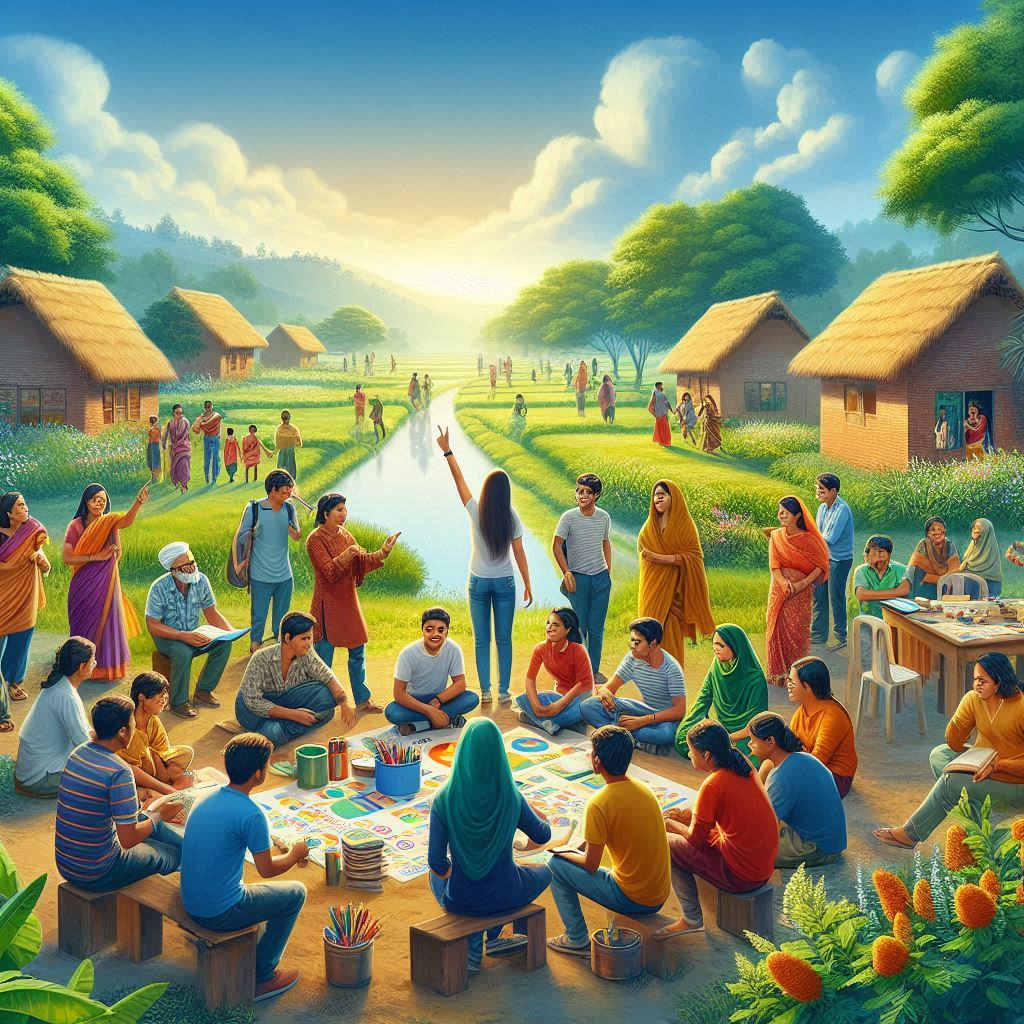
India, home to over 1.4 billion people, stands at a demographic crossroads. With approximately 65% of its population under 35 years old, it boasts one of the world’s largest youth cohorts—an estimated 600 million individuals aged 15-29 as of 2025. A significant portion of this youth resides in rural areas, where 66% of India’s population lives, according to the 2011 Census, a figure only marginally altered by urban migration trends. Empowering this rural youth is not just a national priority but a global imperative, as India’s trajectory could influence economic and social outcomes far beyond its borders. This article explores the historical context, current data analytics, state-wise disparities, demographic insights, challenges, future projections, international comparisons, and the multifaceted impacts of youth empowerment in rural India, offering a detailed roadmap for the next decade.
Background and Historical Context
The concept of youth empowerment in India traces its roots to the post-independence era, when nation-building efforts prioritized education and employment to harness the potential of a young population. The National Youth Policy (NYP) of 1988 marked an early formal attempt to address youth development, followed by updates in 2003, 2014, and 2021, each reflecting evolving priorities. Historically, rural youth were sidelined, with policies favoring urban industrialization. The Green Revolution of the 1960s and 1970s boosted agricultural productivity, yet it did little to empower rural youth beyond subsistence farming, as mechanization reduced labor demand.
The liberalization of India’s economy in 1991 spurred urban growth, widening the rural-urban divide. Rural youth faced limited access to education, skills training, and jobs, perpetuating cycles of poverty. The Digital India Program (2015) and Skill India Mission (2015) marked a turning point, aiming to bridge this gap through technology and vocational training. By 2025, these initiatives have gained traction, yet their penetration into rural hinterlands remains uneven, shaped by historical neglect and structural inequities.
Data Analytics and State-Wise Insights
Demographic Data
India’s youth population (15-29 years) constitutes 27.5% of its total populace, per the NYP 2014 baseline, with rural youth numbering approximately 400 million in 2025, extrapolated from Census 2011 and UN population projections. The median age in rural India is 27, compared to 31 in urban areas, reflecting a younger rural demographic primed for economic contribution. Gender disparities persist, with rural female youth comprising 48% of this cohort but facing higher unemployment and lower literacy rates—62% versus 79% for males, per the National Family Health Survey (NFHS-5, 2019-21).
State-Wise Variations
- Uttar Pradesh (UP): With 50 million rural youth, UP has the largest cohort but ranks low in empowerment metrics. Only 45% of rural youth aged 15-24 are literate, and unemployment stands at 12%, per the Periodic Labour Force Survey (PLFS) 2023-24. The state’s Yuva Udyami Yojana (2024) aims to skill 1 million youth annually but struggles with implementation.
- Kerala: A stark contrast, Kerala boasts a 95% rural youth literacy rate and a 7% unemployment rate. Its robust education system and schemes like the Kerala Youth Leadership Academy (KYLA) have empowered 200,000 youth since 2020.
- Bihar: With 30 million rural youth, Bihar mirrors UP’s challenges—52% literacy and 15% unemployment. The Mukhyamantri Yuva Swavalamban Yojana (2023) targets 500,000 youth for entrepreneurship training by 2027.
- Tamil Nadu: This southern state reports an 85% literacy rate and 8% unemployment among its 20 million rural youth. The Naan Mudhalvan scheme has skilled 300,000 youth in emerging technologies since 2022.
Analytical Insights
The Periodic Labour Force Survey (PLFS) 2023-24 indicates that 40% of rural youth are in the labor force, with 25% engaged in agriculture, 15% in informal sectors, and 5% in formal employment. The National Sample Survey Office (NSSO) highlights a 10% increase in rural youth pursuing higher education since 2018, yet only 20% complete it, reflecting dropout rates driven by economic pressures. Digital adoption has surged, with 60% of rural youth accessing smartphones (TRAI, 2024), though only 30% use them for education or job-seeking, per a 2025 Springer study.
Detailed Analysis: Opportunities and Enablers
Education and Skills
The Right to Education Act (2009) universalized primary education, yet rural secondary enrollment lags at 65% (ASER, 2024). Vocational training under the Skill India Mission has reached 10 million rural youth annually, with 63.5 million skilled since 2015, per government data. Programs like the Pradhan Mantri Kaushal Vikas Yojana (PMKVY) offer courses in solar technology, IT, and healthcare, aligning with market demands.
Digital Inclusion
The Digital India Program has installed 500,000 Common Service Centres (CSCs) in rural areas by 2025, providing digital literacy to 15 million youth. A 2024 Journal of Innovation and Entrepreneurship study in Odisha found that 70% of rural youth aged 18-25 use CSCs, boosting e-governance and entrepreneurial skills.
Entrepreneurship
Self-Help Groups (SHGs) and the Startup India initiative have empowered 5 million rural youth, with 50,000 rural startups registered by 2025. The Stand-Up India scheme has disbursed ₹50,000 crores in loans, with 30% targeting rural youth, fostering micro-enterprises in agriculture and handicrafts.
Challenges Facing Rural Youth Empowerment
Structural Barriers
- Education Gaps: Rural schools lack infrastructure—40% have no electricity, and 30% lack teachers for STEM subjects (ASER, 2024). Dropout rates spike at 35% post-secondary due to financial constraints.
- Unemployment: The PLFS 2023-24 notes a 10% unemployment rate among rural youth, with 20% underemployment in low-skill jobs. Agricultural stagnation, contributing 15% to GDP but employing 40% of youth, limits opportunities.
- Gender Disparity: Rural female youth face a 20% labor force participation rate versus 60% for males (PLFS), constrained by patriarchy and early marriage—30% are married by 19 (NFHS-5).
Socio-Economic Hurdles
- Poverty: 25% of rural youth live below the poverty line (World Bank, 2024), limiting access to training and technology. The Mahatma Gandhi National Rural Employment Guarantee Act (MGNREGA) provides temporary relief but not long-term skills.
- Digital Divide: Despite smartphone penetration, only 35% of rural youth have reliable internet (TRAI, 2024), hampering online learning and job applications.
Policy Implementation
State-level disparities in funding and coordination plague national schemes. UP and Bihar allocate 5% of budgets to youth programs, versus 15% in Tamil Nadu and Kerala, per the 2025 Union Budget. Corruption and bureaucratic delays further erode impact, with only 60% of PMKVY funds reaching beneficiaries, per a 2024 CAG report.
Trajectory: The Next 10 Years
Projections
By 2035, India’s rural youth population will peak at 420 million before declining due to falling fertility rates (UNFPA, 2022). The dependency ratio will drop to 30%, offering a 15-year demographic dividend window. Government targets include skilling 100 million rural youth and achieving 90% literacy by 2030 under the National Education Policy (NEP) 2020. Digital penetration is expected to reach 80%, with 5G rollout enhancing rural connectivity by 2028.
Policy and Technology Drivers
- NEP 2020: Aims to integrate vocational education into schools, targeting 50% of rural youth by 2035. STEM focus will prepare youth for AI and renewable energy sectors.
- Green Jobs: The push for net-zero by 2070 will create 10 million rural jobs in solar, wind, and hydrogen by 2035, per the Ministry of New and Renewable Energy (MNRE).
- AI and Automation: AI-driven agriculture and e-commerce platforms will employ 5 million youth by 2030, with companies like ITC’s e-Choupal scaling outreach.
Challenges to Overcome
Sustaining momentum requires doubling rural education budgets to ₹2 lakh crores annually and increasing female workforce participation to 50%. Climate change poses risks, with 20% of rural youth dependent on rain-fed agriculture facing displacement by 2035 (IPCC, 2024).
Comparison with Other Countries
China
China’s rural youth empowerment focused on urbanization, reducing rural populations from 80% in 1980 to 40% by 2025. Its Digital Village Strategy has connected 98% of rural areas, skilling 50 million youth in tech since 2015 (ScienceDirect, 2025). India lags in infrastructure but excels in grassroots entrepreneurship.
South Korea
South Korea leveraged its demographic dividend in the 1980s, achieving 90% rural literacy and 50% female workforce participation by 2000. Its focus on STEM education contrasts with India’s slower rural rollout, though India’s scale—10 times Korea’s population—offers greater potential.
Brazil
Brazil’s rural youth face similar challenges—40% unemployment and 60% literacy (World Bank, 2024). Its Bolsa Família program mirrors India’s MGNREGA but integrates skills training more effectively, a model India could adopt.
Impacts Across Sectors
Politics
Empowered rural youth are reshaping India’s polity. The 2024 elections saw a 15% rise in rural youth voter turnout (Election Commission), with parties like the Bharatiya Janata Party (BJP) and Indian National Congress (INC) targeting them via skill and job promises. By 2035, youth-led movements could dominate rural panchayats, driving decentralized governance.
Business
Rural youth entrepreneurship will boost India’s $5 trillion economy goal by 2030. The rural startup ecosystem, valued at $50 billion in 2025, could triple, with youth-led MSMEs contributing 20% to GDP. Companies like Reliance and Adani are investing ₹10,000 crores in rural youth training for green industries.
Economy
The International Labour Organization (ILO) predicts that empowering 50% of rural youth could add 2% to India’s GDP growth annually, reaching 9% by 2035. Reduced rural poverty—down 10% since 2015—will spur consumption, with rural markets driving 40% of FMCG sales by 2030.
Sports
Rural youth are emerging as sporting talents, with 60% of India’s 2024 Olympic medalists hailing from villages (Sports Authority of India). Schemes like Khelo India have trained 1 million rural youth since 2018, with potential for 20 medals by the 2036 Olympics if hosted in India.
Science
Rural youth in STEM could bolster India’s innovation index (ranked 40 globally in 2024). ISRO’s rural outreach has inspired 50,000 youth since 2020, with potential breakthroughs in space and biotech by 2035 as NEP scales up science education.
Summary
Youth empowerment in rural India is a complex, evolving narrative rooted in historical disparities and propelled by modern policy and technology. With 400 million rural youth in 2025, India’s demographic dividend hinges on bridging education, employment, and digital gaps. State-wise data reveals stark contrasts—Kerala and Tamil Nadu lead, while UP and Bihar lag—underscoring the need for targeted interventions. Challenges like poverty, gender inequity, and uneven policy execution persist, yet the next decade offers promise: 100 million skilled youth, 90% literacy, and a $5 trillion economy are achievable with sustained effort. Compared to China’s infrastructure focus or South Korea’s education model, India’s scale and diversity present unique opportunities and hurdles. The ripple effects will transform politics, business, the economy, sports, and science, positioning rural youth as architects of a Viksit Bharat by 2047. As New Zealand and India deepen ties, this youth-driven transformation offers lessons and collaboration potential for a sustainable global future.