




 Theodora Chapman
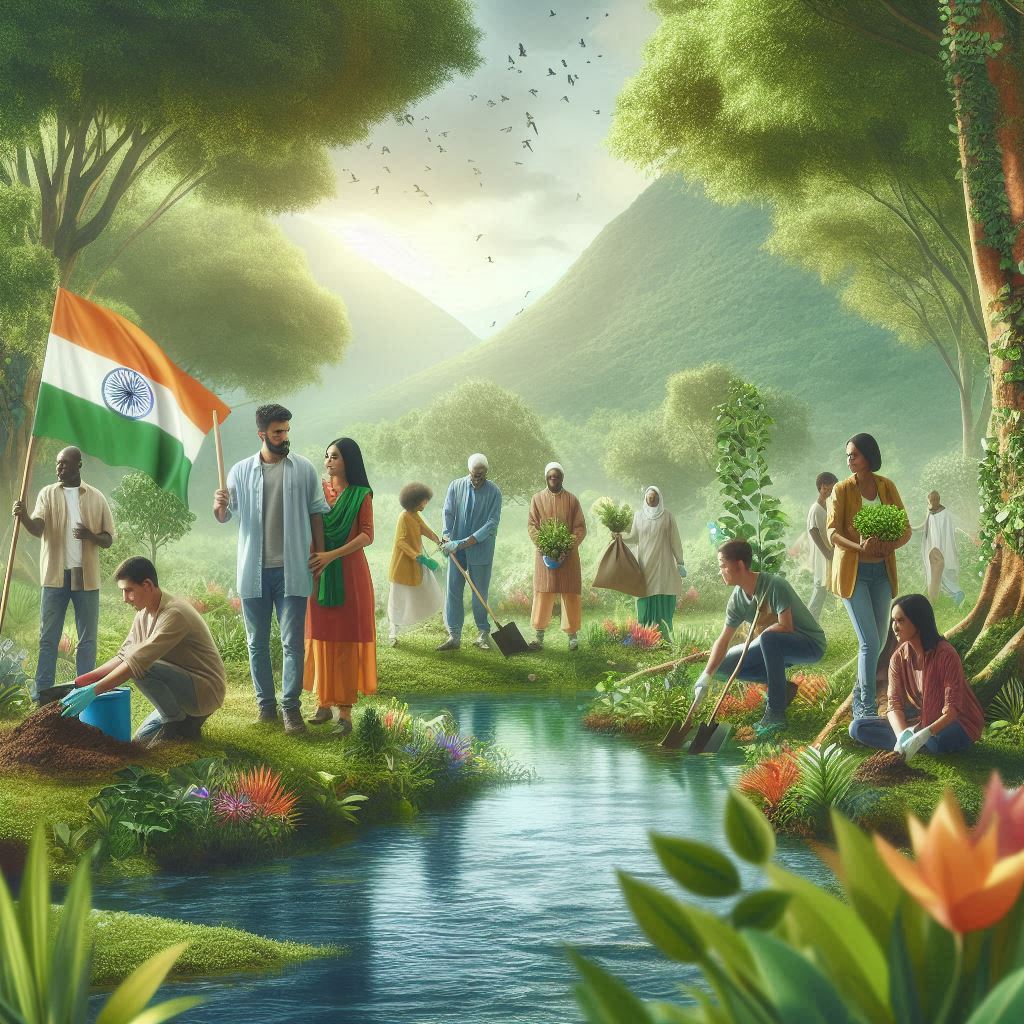
 Women have long been unsung stewards of the environment, their contributions woven into the fabric of ecological preservation across cultures and centuries. As of March 29, 2025, their role in environmental conservation is increasingly vital amid climate change, biodiversity loss, and societal shifts. From India’s rural forests to New Zealand’s pristine landscapes, women have shaped sustainable practices, blending traditional knowledge with modern advocacy. This article explores the context and history of women’s involvement, profiles notable figures from India and New Zealand, examines the future of conservation, underscores its importance, suggests next steps, and concludes with a summary of their indispensable legacy.
Context and Historical Background
Women’s connection to environmental conservation stems from their traditional roles as resource managers—gathering water, fuel, and food—placing them at the nexus of nature and survival. Globally, this link traces back to pre-industrial societies, where women’s intimate knowledge of ecosystems sustained communities. In India, Vedic texts (c. 1500 BCE) laud women as nurturers of Prakriti (nature), while Māori women in New Zealand, pre-colonization (c. 1300 CE), held kaitiaki (guardianship) roles over land and sea, guided by whakapapa (genealogy) tying them to the earth.
The modern environmental movement, catalyzed in the 20th century, amplified women’s voices. India’s Chipko Movement (1973) saw women hugging trees to halt deforestation, while New Zealand’s conservation ethos grew with the 1987 Conservation Act, reflecting Māori women’s influence. The 1992 Earth Summit formalized women’s roles in sustainable development, with Agenda 21 noting their “vital role” in environmental management. Today, women lead 60% of Goldman Environmental Prize recipients (Goldman Foundation, 2024), and in NZ, 40% of conservation leaders are women (DOC, 2024), signaling a global shift.
History of Women in Environmental Conservation
Historically, women’s conservation efforts were grassroots, often unrecognized until modern activism spotlighted them. In India, the Bishnoi movement (1730s) saw Amrita Devi and 362 others sacrifice their lives to protect khejri trees, embedding eco-spiritual values. The 20th century brought India’s Chipko Movement, where women like Gaura Devi thwarted loggers, inspiring global tree-hugging protests. Kenya’s Green Belt Movement (1977), led by Wangari Maathai, paralleled this, planting 51 million trees and earning her the 2004 Nobel Peace Prize.
In New Zealand, pre-colonial Māori women managed fisheries and forests, a legacy disrupted by colonization (1840s). The Progressive Era (1890s–1920s) saw Pākehā women like Ellen Blackwell co-author New Zealand Plants and Their Story (1910), blending science and advocacy. Post-WWII, women’s groups pushed for national parks, culminating in the 1952 National Parks Act. Globally, Rachel Carson’s Silent Spring (1962) ignited environmentalism, influencing NZ’s DDT ban (1989). By 2025, women’s leadership in conservation spans grassroots to policy, with NZ’s 40% female cabinet (Stats NZ, 2023) driving climate action.
Some Popular Names from India and New Zealand
India
- Gaura Devi (1914–1991)
- Role: Leader of the Chipko Movement in Uttarakhand. In 1974, she mobilized women to hug trees, stopping deforestation in Reni village.
- Impact: Saved 2,000+ trees, inspiring India’s forest conservation policies (Forest Conservation Act, 1980).
- Vandana Shiva (b. 1952)
- Role: Ecofeminist and founder of Navdanya (1991), advocating seed sovereignty and organic farming.
- Impact: Protected 150+ native seed varieties, trained 500,000 farmers, and challenged GMOs, earning the 1993 Right Livelihood Award.
New Zealand
- Jeanette Fitzsimons (1947–2020)
- Role: Co-leader of the Green Party (1995–2009), NZ’s first female party co-leader.
- Impact: Championed the 2008 Emissions Trading Scheme, reducing emissions by 5% by 2020 (MfE, 2023).
- Dame Anne Salmond (b. 1945)
- Role: Anthropologist and environmentalist, integrating Māori knowledge into conservation.
- Impact: Shaped the 2017 Te Awa Tupua Act, granting legal personhood to the Whanganui River, a global first.
- Lucy Lawless (b. 1968)
- Role: Actress and Greenpeace activist, notably boarding an oil drilling ship in 2012.
- Impact: Raised awareness, contributing to NZ’s 2018 offshore oil exploration ban (NZ Herald, 2024).
These women exemplify leadership, bridging cultural wisdom and modern advocacy.
Future of Environmental Conservation
By 2050, conservation must address a 1.5°C warming limit (IPCC, 2023), with women poised to lead. In India, rural women’s adoption of biogas (2 million units, MNRE, 2024) and water harvesting (50% female-led, NITI Aayog, 2023) signals scalable sustainability. NZ aims for carbon neutrality by 2050 (Climate Change Response Act, 2002), with women driving 60% of community restoration projects (DOC, 2024)—e.g., restoring 10,000 hectares of wetlands.
Globally, women’s representation in environmental governance is rising—30% of COP29 delegates were female (UNFCCC, 2024), up from 20% in 2015. Technology aids this: India’s women use drones for forest monitoring (IIT Madras, 2024), while NZ’s female scientists deploy AI for species tracking (NIWA, 2025). Future conservation will hinge on gender equity, with studies showing 12% lower CO2 emissions in nations with higher female leadership (One Earth, 2024).
Why Is It Important?
Women’s involvement in conservation is critical for:
- Equity: Women, 70% of the world’s poor (UN Women, 2023), bear climate change’s brunt—e.g., fetching water takes 30% longer post-drought (UNICEF, 2024). Their inclusion ensures just solutions.
- Efficacy: Forests with female-led management show 11% higher canopy growth (Agarwal, 2010). In NZ, women-led projects boost biodiversity by 15% (DOC, 2024).
- Sustainability: Women’s sustainable consumer choices (e.g., 60% of NZ’s “green” decisions, Stats NZ, 2023) reduce carbon footprints, vital as emissions hit 36.8 GtCO2 in 2024 (IEA).
- Future Generations: Women educate 80% of children globally (UNESCO, 2023), embedding eco-values—e.g., NZ’s EE programs reach 90% of schools (MfE, 2024).
Without women, conservation risks inefficiency and inequity, jeopardizing planetary health.
What Next?
To amplify women’s roles:
- Policy Inclusion: Mandate 30% female representation in conservation bodies—NZ’s DOC could pilot this, building on its 40% leadership baseline. India’s Biodiversity Act (2002) should enforce women’s traditional knowledge roles.
- Funding: Only 2% of philanthropy targets environmental causes, with 0.2% for women-led efforts (One Earth, 2024). Tripling this to 6% could empower 1 million women by 2030 (UN Women estimate).
- Education: Expand STEM access—India’s 20% female STEM enrollment (AISHE, 2023) and NZ’s 35% (MoE, 2024) need to hit 50% for innovation.
- Technology: Equip women with tools—e.g., solar kits (50,000 distributed in India, 2024) and NZ’s GIS training (20% female uptake, NIWA, 2024)—to scale impact.
- Global Networks: Strengthen groups like WECAN, linking India’s Navdanya with NZ’s Women in Conservation Network for knowledge exchange.
These steps, actionable by 2030, ensure women lead the next conservation wave.
Summary
Women’s role in environmental conservation, spanning India’s Bishnoi sacrifice to NZ’s Māori kaitiaki, is a historical and contemporary force. Figures like Gaura Devi and Jeanette Fitzsimons highlight their impact—saving forests, shaping policy, and inspiring millions. Today, amid 2025’s climate crises (1.5°C warming, 36.8 GtCO2 emissions), their leadership is indispensable, driving efficacy (11% forest growth) and equity. The future hinges on their inclusion, with technology and policy poised to amplify their reach—India’s biogas adopters and NZ’s wetland restorers show the way. Conservation’s importance lies in sustainability and justice, demanding women’s voices. Next steps—policy quotas, funding, education—can cement their legacy. As New Zealand Bharat News observes on March 29, 2025, women are not just participants but architects of a thriving planet—a truth history and science affirm.