Lara Zijl
Intelligence agencies have identified Saifullah Kasuri, also known as Khalid, a senior commander of the Pakistan-based terror group Lashkar-e-Taiba (LeT), as the mastermind behind the deadly attack in Pahalgam, Jammu and Kashmir, which killed 26 people, including two foreign nationals.
The Attack
The attack, one of the deadliest in Jammu and Kashmir in recent years, occurred on Tuesday afternoon when suspected terrorists opened fire on a group of tourists at the scenic Baisaran meadow in Pahalgam.
Saifullah Kasuri: The Mastermind
Kasuri, operating from the city of Gujranwala in Pakistan, is said to have been frustrated with Pakistan’s strategic shift in Kashmir policy, particularly after India’s 2019 abrogation of Article 370. He has criticized the Pakistani government’s decision to scale back LeT operations in Kashmir, attributing it to escalating violence in regions like Balochistan and Khyber Pakhtunkhwa.
The Attackers
The attackers, believed to be members of The Resistance Front (TRF), an offshoot of the proscribed LeT, reportedly launched the ambush around 2:30 pm, targeting a group of unarmed tourists.

Pakistan’s Response
Pakistan Defence Minister Khwaja Asif claimed that Pakistan had “nothing to do with the attack.” Pakistan FO Spokesperson Shafqat Khan expressed “concern” at the loss of lives, but referred to the region as “Indian Illegally Occupied Jammu and Kashmir.”
India’s Response
The attack has sparked nationwide outrage and mourning. Prime Minister Narendra Modi cut short his diplomatic visit to Saudi Arabia and returned to New Delhi early Wednesday morning. He was briefed by officials upon his return.
Modi is expected to hold a key meeting with the Cabinet Committee on Security (CCS) on Wednesday evening.
Security Operations
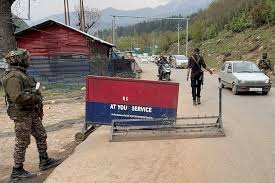
Security forces have launched a massive manhunt in and around the Pahalgam region, with aerial surveillance and ground operations underway to track down the perpetrators. Security agencies have released sketches of three terrorists involved in the attack.
Intelligence and Security Failures
Sources suggest that a few days prior to the incident, a terrorist based in Pakistan-occupied Kashmir made a suggestive remark hinting at the attack, but intelligence agencies and security forces failed to act on it.
The attack was meticulously planned, with international handlers based in PoK and Pakistan reportedly giving directions to the militants in real time. The militants were well-trained in using weapons and provided with detailed reconnaissance reports of areas with less security deployment despite being popular tourist spots.
NIA Joins Probe
A team from the National Investigation Agency (NIA) has reached Pahalgam to assist local police in the investigation.
Amit Shah’s Response
Union Home Minister Amit Shah asserted that the country will not bend to terror and that those responsible for the attack will not be spared. He laid wreaths on the bodies of the victims and met with survivors, assuring them that the perpetrators would be brought to justice.
Kashmir’s Response
People across Kashmir have expressed their anguish and condemned the attack, calling it an attack on the foundation of the valley’s economy. A complete shutdown is being observed in both Kashmir and Jammu regions in protest against the attack.
The Aftermath
The Pahalgam attack highlights the ongoing security challenges in Jammu and Kashmir and underscores the need for continued vigilance and decisive action against terrorist groups. The investigation is ongoing, and authorities are working to apprehend the attackers.