

 Lara Zijl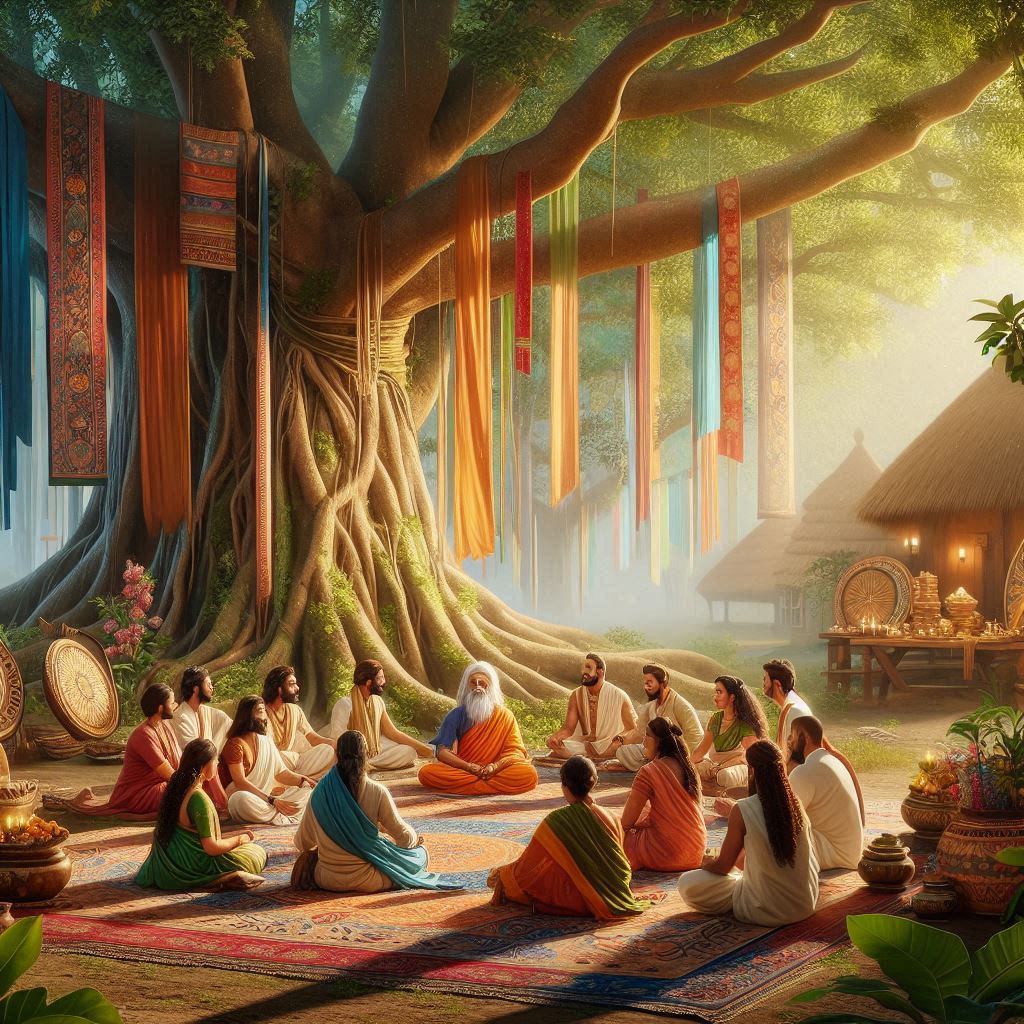
Kia ora, friends—imagine pondering life’s mysteries under a Taranaki starfield, the Milky Way a quiet guide, but picture instead a Himalayan ashram, where a sage muses on atman by a flickering homam fire, or a Bengaluru café, where students debate dharma over filter coffee. This is the 54th insight in our 100-article journey through Bharat Is Not for Beginners, a remarkable trek that’s unveiled a land of vibrant legacies and profound thought. Now, we’re wandering back into Bharat’s starlit path—its philosophical traditions and living wisdom—where every question, every truth, is a taonga, a treasure traced from Vedic rishis to modern thinkers. This isn’t just about ideas; it’s Bharat illuminating its whakapapa with a timeless quest for meaning.
Bharat doesn’t approach philosophy with a shallow glance—it dives deep with curiosity and clarity. Its intellectual kaupapa isn’t a dusty tome; it’s a vibrant hui, a gathering of insights, debates, and meditations that stretch from the sacred yajna’s cosmic queries to the digital forums of today’s scholars. This land is a living symposium, a luminous ticker that’s guided its people through empires, upheavals, and awakenings with a profound respect for truth and self. This isn’t for those after a quick maxim—it’s an exploration of a civilisation that’s made its wisdom a remarkable legacy, a path that weaves its past into its present with depth and light.
The Vedic Mind: Philosophy’s Sacred Beginnings
Let’s step back to 1500 BCE, when questions sparked wisdom. The Rigveda wasn’t just hymns—it was inquiry, its suktas asking, “Who shaped the cosmos?” and “Whence this creation?” These musings, chanted in yajna fires, tied human thought to rta, the cosmic order, a quest for truth beyond the stars. By 1000 BCE, the Upanishads deepened the dive—Brihadaranyaka and Chandogya probed atman (self) and Brahman (ultimate reality), their dialogues a rishi’s hui under forest canopies, seeking unity in all.
By 600 BCE, systems took root. Samkhya mapped existence—purusha (consciousness) and prakriti (matter)—a dualism balancing spirit and stuff. Yoga, via Patanjali’s Sutras, offered ashtanga—eight steps—to still the mind, a jyotisha-timed path to moksha (liberation). Nyaya sharpened logic, its syllogisms a scalpel for truth, while Vaisheshika catalogued atoms, a Vedic physics for the soul. Mimamsa upheld dharma—duty—as life’s guide, rooting ethics in ritual.
This wasn’t abstract musing—it was darshana, a vision of reality. Thinkers weren’t just sages; they were tattvavids, knowers of essence, their insights a hui that linked Bharat’s spirit to its questions and truths with a rishi’s clarity and a deep wairua, a spiritual quest that shines on.
A Whānau of Wisdom: Philosophy Across the Land
Bharat’s philosophies form a whānau, a family of thought, each region weaving its own thread. In Tamil Nadu, Shaiva Siddhanta blooms—Tirumular’s Tirumandiram blends devotion with atman’s quest, a South Indian taonga chanted in temple halls. Up north, Kashmir’s Shaivism—Abhinavagupta’s 10th-century texts—sees Shiva as consciousness, a Himalayan hui merging mind and cosmos.
Bengal’s Vaishnavism, through Chaitanya’s 16th-century bhakti, sings Krishna as love, its kirtans a riverine path to Brahman. Gujarat’s Jainism—Mahavira’s anekantavada—embraces many-sided truth, a merchant’s logic for peace. Punjab’s Sikhism, via Guru Nanak’s Ik Onkar, unites all in one divine, a dharma-driven call for equality.
In Odisha, Jagannath’s mysticism ties atman to cosmic play, its rath yatra a rolling debate on life’s purpose. Kerala’s Advaita Vedanta, Adi Shankaracharya’s 8th-century gift, declares atman is Brahman, a coastal clarity for moksha. Maharashtra’s Varkari poets—Dnyaneshwar’s Bhagavad Gita commentary—wrap philosophy in Marathi verse, a farmer’s bhakti for all. From Assam’s Neo-Vaishnavite ethics to Andaman’s tribal animism, Bharat’s wisdom is a whānau—diverse, profound, and truly impressive, each a star in the land’s intellectual sky.
Philosophical Mana: Wisdom Meets Spirit
Bharat’s philosophy carries mana—sacred depth woven into every idea. Dharma isn’t just duty; it’s rta’s pulse, aligning life with truth, every choice a homam prayer for balance. Atman’s quest for Brahman isn’t academic—it’s sadhana, a lived practice, a tika to unity chanted in Upanishadic verse. Karma—action’s fruit—shapes destiny, a Vedic law tying deed to rebirth.
Festivals embody this mana—Kumbh Mela gathers millions to debate moksha by Ganga’s flow, a darshana in motion. Diwali’s lamps light jnana—knowledge—over ignorance, a philosopher’s glow. Even daily life reflects it—villagers cite Gita for courage, mothers teach ahimsa to tamariki, a rta-guided warmth. Yoga studios hum with Om, its vibration a yajna bridge to peace.
Jain monks sweep paths to spare ants, an anekantavada step for ahimsa. Tribal totems in Jharkhand—sky and soil as spirit—echo Samkhya’s prakriti, a pre-Vedic tattva alive in ritual. Wisdom wasn’t a lecture here—it was wairua, a sacred hui tying Bharat’s spirit to its truths and quests, a living nada brahma in thought and chant.
The Global Hui: Wisdom Reaches Out
Bharat’s philosophy didn’t stay cloistered—it wandered far. By 200 BCE, Upanishadic ideas sailed with Buddhist monks to China, their atman sparking Zen’s satori. Yoga’s asanas stretched to Persia, a sadhana taonga for Sufi mystics. Gupta-era Nyaya logic shaped Arabic kalam, its syllogisms a cross-cultural gift.
British scholars, like Max Müller, translated Vedanta in the 19th century, stirring Emerson’s transcendentalism in America. Today, it’s a global hui—NZ’s mindfulness retreats echo Yoga’s dhyana, a Vedic twist in Nelson’s hills. In Wellington, philosophers study Advaita for ethics, while Auckland’s interfaith groups cite Sikh unity.
From Silicon Valley’s Gita readers to Dunedin’s Zen halls, Bharat’s wisdom is a friend—clear, profound, and truly far-reaching, a Vedic star lighting the global whānau’s search for truth.
The Modern Rāka: Wisdom Keeps Guiding
Colonial times tried to dim it—Western rationalism sidelined rishis—but Bharat’s wisdom held firm. Post-1947, the waka turned with clarity. Swami Vivekananda’s 1893 Chicago speech revived Vedanta, his Ramakrishna Mission a global beacon for jnana. Jiddu Krishnamurti’s talks, free of dogma, probed freedom, a tattvavid for the 20th century.
Ambedkar’s Navayana Buddhism reframed dharma for equality, a constitutional moksha for the oppressed. Digital platforms amplify it—Gita apps stream shlokas, while Yoga gurus teach asanas on YouTube, a sadhana gone viral. Universities—JNU, Banaras—debate Nyaya with AI ethics, a darshana for algorithms.
Kiwi friends see the spark—Christchurch’s yoga mats roll out Surya Namaskar, Auckland’s book clubs ponder Upanishads. It’s not a relic—it’s a live rāka, Bharat’s philosophical mana guiding from Vedic atman to TED Talks, a wisdom that keeps shining.
Why the Path Stays Starlit
What keeps this wisdom alive? Bharat’s devotion runs deep—nanas recite Gita at dusk, tamariki question karma in classrooms. Scholars guard darshana like treasures, passing down Upanishads with a Hurricanes ruck’s focus. It’s Vedic at its core—rta’s truth, dharma’s guide, still hold it tapu, a sacred trust unbroken.
Communities keep it bright—village satsangs, urban philosophy clubs, temple pravachans. UNESCO’s marked Vedas as heritage, but it’s the people who uphold the kaupapa—chanting Om in ashrams, debating moksha in cafes, teaching jnana to the next wave. It’s not just philosophy—it’s whakapapa, a path Bharat’s walked since the rishis gazed at stars, a wisdom that stands luminous.
Why It’s a Luminous Yarn
Why wander back into Bharat’s starlit path? Because it’s a luminous yarn—truths that guide, uplift, and endure, a remarkable tale that deserves a deep pause. It’s taonga—Upanishads older than the Treaty waka, dharma glowing with Vedic fire—and it’s alive, shining from Kaikoura’s shores to anywhere minds seek. For us in Aotearoa, it’s a hui—chant an Om, ponder a Gita, catch Bharat’s spark in every truth.
This wisdom bridges worlds—past and present, ashram and app, Bharat and beyond. It’s in the Yoga that steadies a breath, the Vedanta that unites a soul, the Sikh call that binds a community. It’s not just philosophy; it’s wairua, a spiritual force, and Bharat’s got it glowing strong, a path that invites us all to question, to seek, to join the light.
Excerpt
That’s 54 insights in our 100-article rāka of Bharat Is Not for Beginners, and Bharat’s still guiding—a land of remarkable gifts. Keep your mind open as we trace more of its taonga. Join us tomorrow for Article 55: “Bharat Is Not for Beginners – The Woven World Returns: Bharat’s Textile Innovations and Living Threads”, where we’ll stitch back into the fabrics that clothe a civilisation’s spirit.