




 Col. (retd.) Dinesh Ramaswamy
 India’s journey from a reactive military posture to a doctrine of decisive deterrence marks a watershed in South Asian security. While Pakistan has clung to outdated tactics—terror proxies, nuclear blackmail, and international disinformation—India has transformed itself into a modern, integrated military power. This article exposes Pakistan’s repeated miscalculations, the myth of its deterrence, and how India’s strategic clarity and technological superiority have reset the regional balance.
From Border Defense to Integrated Commands: India’s Military Renaissance
Post-independence, India’s military doctrine was shaped by the need to defend vast borders and manage complex internal security. Early setbacks, especially the 1962 war with China, forced a complete overhaul of strategic thinking. The Sundarji Doctrine, developed in the wake of the 1965 and 1971 wars with Pakistan, emphasized rapid mobilization and deep strikes—designed to punish any Pakistani adventurism without risking protracted conflict.
In recent decades, India’s doctrine has evolved further. The focus is now on integrated commands, joint operations, and technological edge. This shift has allowed India to respond swiftly and proportionally to provocations, as seen in the surgical strikes of 2016 and the Balakot airstrikes of 2019. India’s military is no longer content to merely repel attacks—it now seeks to impose costs and dictate the terms of engagement.
Pakistan’s Delusion: Proxy War and Nuclear Blackmail
Pakistan’s military establishment, unable to match India’s conventional strength, turned to irregular warfare and nuclear brinkmanship. For over three decades, Pakistan has sponsored terrorism in Kashmir, believing its nuclear arsenal would shield it from Indian retaliation.
This strategy has backfired spectacularly. Instead of bleeding India “by a thousand cuts,” Pakistan has isolated itself internationally, empowered uncontrollable jihadist groups, and suffered repeated internal crises. Its nuclear threats, once taken seriously, are now seen as empty bluster in the face of India’s measured but firm responses.
Operation Sindoor: India Calls Pakistan’s Bluff
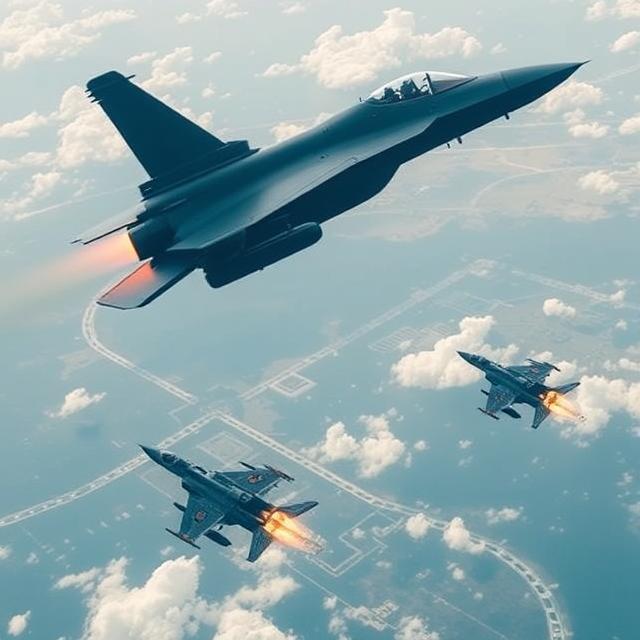
The recent Operation Sindoor marks a turning point. In response to a heinous terror attack in Pahalgam, India launched precision strikes deep inside Pakistan, targeting not just terror infrastructure but also key military assets. For the first time, India directly challenged Pakistan’s nuclear bluff, striking sites previously considered untouchable.
Pakistan’s much-vaunted Chinese-supplied air defenses collapsed. Its military, demoralized and unprepared, was unable to mount a credible response. The world watched as India demonstrated escalation dominance—choosing the time, place, and scale of its operations, while controlling the narrative both domestically and internationally.
India’s restraint in avoiding strikes in Pakistan’s restive provinces, while simultaneously giving a platform to Baloch voices, showcased a sophisticated blend of military precision and information warfare. Pakistan’s attempts at disinformation were swiftly debunked, further eroding its credibility.
The Numbers Don’t Lie: India’s Overwhelming Superiority
India’s military might is not just a matter of perception—it is backed by hard numbers and relentless modernization. With a defense budget exceeding $86 billion, India’s armed forces are equipped with cutting-edge technology, from the indigenous Tejas MkII fighter to advanced missile systems and the formidable S-400 air defense platform.
India’s active military personnel outnumber Pakistan’s by more than two to one. Its air, land, and naval assets are superior in both quality and quantity. Even in the nuclear domain, India has achieved credible minimum deterrence, ensuring security without resorting to reckless threats.
Pakistan’s Strategic Isolation and Internal Decay
Pakistan’s reliance on terror proxies and nuclear threats has not only failed to deter India but has also alienated traditional allies. As India’s global stature rises, Pakistan finds itself increasingly isolated, its economy in shambles, and its military’s credibility at an all-time low.
Repeated failures to provoke or coerce India have led to internal fissures. The Pakistan Army’s popularity has plummeted, sectarian violence is on the rise, and the state’s grip on its own territory is weakening. Every tactical gain has come at the cost of long-term strategic disaster.
India’s Diplomacy: Building Regional Stability, Exposing Pakistan’s Lies
India’s military evolution is matched by its diplomatic acumen. While Pakistan seeks to internationalize the Kashmir issue through lies and staged incidents, India has reframed the narrative—emphasizing security, territorial integrity, and regional cooperation.
India’s economic initiatives, humanitarian outreach, and principled diplomacy have won it friends across the globe. The abrogation of Article 370, once a rallying point for Pakistani propaganda, is now accepted as an internal matter by most of the world. India’s ability to suspend the Indus Waters Treaty obligations without international backlash is testament to its growing influence and Pakistan’s declining leverage.
Conclusion: The New Normal—India’s Era of Decisive Deterrence
The age of Pakistani blackmail and proxy war is over. India’s military and diplomatic transformation has exposed the hollowness of Pakistan’s threats and the bankruptcy of its strategy. Operation Sindoor is not just a military victory—it is a paradigm shift that signals India’s readiness to defend its interests with clarity, precision, and resolve.
As India consolidates these gains, the challenge is to maintain strategic focus, avoid complacency, and continue exposing Pakistan’s duplicity. The world now recognizes India as the anchor of stability in South Asia—while Pakistan, mired in its own failures, is left to reckon with the consequences of decades of deceit.
The next article will explore India’s technological leap in defense, the rise of indigenous innovation, and how these advancements are shaping the future balance of power in the region.
Col. (Retd.) Dinesh Ramaswamy writes exclusively for New Zealand Bharat News (NZB News). Stay tuned for the next installment: “India’s Defense Technology Revolution: Indigenous Power and Regional Supremacy.”