


 Chintapally Suresh
 By Chintapally Suresh, Engineering, Automobile, Science and Mathematics Specialist
NZB News – July 6, 2025
Summary
Japan’s remote Tokara Islands are experiencing an unprecedented seismic crisis with over 1,300 earthquakes recorded since June 21, forcing residents of tiny Akusekijima Island to flee their homes in organised evacuations. The latest tremor, a magnitude 5.4 quake on July 5, has intensified fears amongst the remaining 59 islanders, whilst viral manga predictions of a catastrophic July 5 earthquake have spooked tourists and triggered international travel warnings across Asia.
The Unfolding Seismic Emergency
The situation on Japan’s Tokara Islands has reached critical levels as continuous earthquake swarms continue to batter the remote archipelago. Since seismic activity began escalating on June 21, 2025, the Japan Meteorological Agency (JMA) has recorded an extraordinary 1,300-plus earthquakes in the region, with the most severe measuring magnitude 5.5 and registering lower 6 on Japan’s seven-point seismic intensity scale.
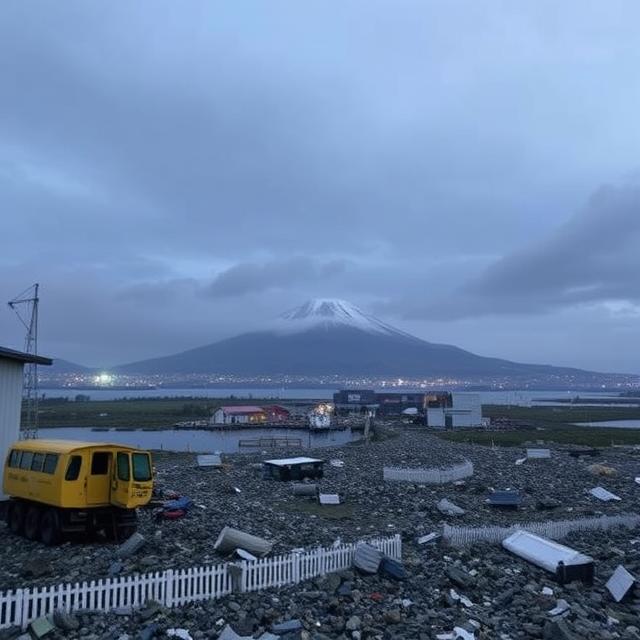
Akusekijima Island, home to approximately 89 residents at the crisis onset, has borne the brunt of this geological assault. The most recent magnitude 5.4 earthquake struck at 6:29 AM on July 5, measuring upper 5 on the intensity scale and prompting additional evacuations from an island community already pushed to its breaking point.
The intensity and frequency of these tremors represents the highest level of seismic activity recorded in the Tokara region since comprehensive monitoring began in 1995. Previous earthquake swarms in December 2021 and September 2023 produced 308 and 346 quakes respectively, but both events subsided within days. The current crisis has now persisted for over two weeks with no signs of abating.
Evacuation Operations and Human Impact
Authorities initiated the first organised evacuation on July 4, when 13 residents voluntarily departed Akusekijima aboard a village-operated ferry bound for Kagoshima City on mainland Kyushu. The evacuees, ranging in age from an infant to an 80-year-old resident, faced a gruelling 10-hour ferry journey to reach safety.
The evacuation process required careful coordination across multiple islands. The ferry departed from Naze Port on Amami Oshima Island, approximately 120 kilometres south of Akusekijima, and made scheduled stops at all seven inhabited islands of Toshima Village before reaching Kagoshima Port. Village authorities arranged temporary accommodation at hotels in Kagoshima, where evacuees are expected to stay for at least one week whilst seismic activity is monitored.
Following the July 5 earthquake, an additional 20 residents requested evacuation, with authorities confirming that the second group would depart on July 6. Toshima Village Mayor Genichiro Kubo stated at a press conference that evacuation operations would continue as long as necessary, based on ongoing seismic assessment and resident safety concerns.
Mika Arikawa, 50, one of the first evacuees, described the psychological toll of the continuous tremors: “I couldn’t sleep at night because of anxiety due to continuing earthquakes on the island. I feel relieved because I seem to be able to sleep well.” Her testimony reflects the broader mental health impact on residents who have endured near-constant ground shaking for more than two weeks.
As of July 5, only two residents had expressed their intention to remain on Akusekijima, highlighting the severity of the crisis and the community’s collective decision to prioritise safety over maintaining their isolated way of life.
Geological Context and Scientific Analysis
The Tokara Islands occupy a particularly volatile position within Japan’s complex tectonic framework. Located in the Ryukyu Arc, the island chain sits where the Philippine Sea Plate subducts beneath the Eurasian Plate, creating intense geological pressure that manifests in frequent seismic activity.
Hiroshi Yakiwara, Associate Professor of Seismology at Kagoshima University, explained that the current earthquake swarm results from the ongoing subduction process on the eastern side of the islands, combined with east-west spreading that characterises this portion of the Ryukyu Arc. The depth of most earthquakes, typically ranging between 10 and 20 kilometres, indicates shallow crustal movement that produces more intense surface shaking.
Ayataka Ebita, head of the JMA’s Earthquake and Tsunami Observation Division, cautioned that the region remains at risk for additional strong earthquakes potentially reaching lower 6 magnitude in the coming days. His warning reflects genuine scientific concern about the continuation of seismic activity rather than speculation about specific timing or intensity.
The geological complexity of the region means that earthquake swarms, whilst not uncommon, can vary dramatically in duration and intensity. The 2000 Izu Islands swarm demonstrated how such events can sometimes lead to progressively stronger earthquakes over extended periods, though most swarms gradually diminish without major incidents.
Government Response and Crisis Management
The Japanese government has responded with characteristic efficiency to the evolving crisis. Following the magnitude 5.5 earthquake on July 3, Prime Minister’s Office established a crisis management centre specifically focused on the Tokara Islands situation.
Chief Cabinet Secretary Yoshimasa Hayashi emphasised the government’s comprehensive approach: “Based on the prime minister’s instructions, we are fully committed to disaster response. That includes assessing damage and conducting life-saving rescue operations. We will work closely with local governments to gather information and urgently carry out relief efforts.”
The JMA has maintained continuous monitoring of the region whilst providing regular public updates about earthquake activity and potential risks. Officials have specifically warned residents about secondary hazards including falling rocks and potential cliff collapses that could result from continued seismic activity.
Emergency protocols have been activated across the broader Kagoshima Prefecture, with authorities coordinating between mainland emergency services and remote island communities. The response demonstrates Japan’s sophisticated disaster management capabilities, developed through decades of experience with natural catastrophes.
The Manga Prophecy Phenomenon
Parallel to the genuine geological crisis, Japan has grappled with widespread public anxiety fuelled by viral predictions from manga artist Ryo Tatsuki. Her work, “The Future I Saw,” first published in 1999 and re-released in 2021, has gained international attention for allegedly predicting the devastating March 2011 Tohoku earthquake and tsunami.
The 2021 edition of Tatsuki’s manga includes a prediction of a catastrophic earthquake occurring on July 5, 2025, potentially generating tsunami waves three times larger than those that devastated Japan’s northeastern coast in 2011. This specific date prediction has created a perfect storm of anxiety, coinciding with the ongoing Tokara Islands crisis.
Social media amplification has transformed Tatsuki’s artistic vision into a viral phenomenon with real-world consequences. A June survey conducted by Sky Perfect JSAT found that 49.4% of Japanese citizens had heard rumours about the manga prediction, with the highest awareness amongst teenage girls (61.4%) and women in their fifties (57.8%).
YouTube emerged as the primary source of information about the prediction (27.7%), followed by television coverage (25.7%) and online news sources (24.1%). The digital spread of these predictions demonstrates how modern communication channels can rapidly amplify speculative content regardless of its scientific validity.
Tatsuki herself has attempted to distance her work from literal interpretation, stating through her publisher that she is “not a prophet” and that her artistic visions should not be construed as scientific predictions. However, this clarification has done little to stem public speculation or its economic impact.
Tourism Industry Devastation
The manga predictions have triggered significant economic consequences for Japan’s vital tourism sector. Hong Kong has experienced the most severe impact, with Bloomberg Intelligence analysis showing weekly arrival bookings from Hong Kong for late June to early July dropping by more than 80% compared to the previous year.
Steve Huen of Hong Kong-based EGL Tours reported that his firm’s Japan-related business had halved due to the viral predictions. Despite introducing discounts and earthquake insurance packages, Huen noted that these measures had only “prevented Japan-bound travel from dropping to zero.”
The impact extends beyond Hong Kong to other regional markets. Airline bookings from Taiwan and South Korea have declined since April, when awareness of the manga predictions began spreading through social media channels. Greater Bay Airlines became the latest casualty, announcing the indefinite suspension of its Tokushima service from September due to persistently low demand.
The timing proves particularly damaging for Japan’s tourism recovery. The Japan National Tourism Organisation reported record-breaking visitor numbers in the first quarter of 2025, with 10.5 million arrivals including 2.36 million mainland Chinese travellers representing a 78% increase from 2024.
Regional tourism operators have struggled to counteract the psychological impact of the manga predictions. Traditional marketing approaches prove inadequate against viral social media content that taps into deep-seated fears about natural disasters in a region still bearing collective memory of the 2011 catastrophe.
Scientific Community Response
Japan’s scientific establishment has responded with measured concern about both the genuine seismic activity and the unfounded predictions gaining public attention. Robert Geller, Professor at the University of Tokyo who has studied seismology since 1971, emphasised the fundamental impossibility of earthquake prediction: “None of the predictions I’ve experienced in my scientific career have come close at all.”
The scientific consensus remains clear that whilst Japan faces measurable seismic risks due to its position on the Pacific Ring of Fire, no method exists for predicting the precise timing, location, or magnitude of earthquakes. The JMA continues to provide probabilistic assessments based on historical data and geological analysis, but these represent statistical likelihoods rather than specific predictions.
Laura Miller, Professor of Japanese Studies at the University of Missouri, placed the manga phenomenon in broader cultural context: “I do not think that the majority of people in Japan ‘believe’ in predictions by popular writers such as Tatsuki. They already know that earthquakes are recurring events, and scientists themselves are always predicting them.”
Miller drew parallels to previous global anxiety events, noting that “international travel suffered a bit in 2012 when people all over the world thought that the ‘Mayan calendar’ predicted an apocalypse.” She suggested that such phenomena might represent “displacement of anxiety about the future” rather than genuine belief in supernatural prediction.
Regional Implications for the Pacific Ring of Fire
The Tokara Islands crisis highlights the broader geological reality facing Pacific Rim nations. Japan’s position at the convergence of four major tectonic plates—the Pacific, Philippine Sea, Eurasian, and North American plates—creates constant seismic pressure that manifests in approximately 1,500 earthquakes annually.
Recent government projections released in late June indicated that marine active faults off Japan’s Kinki western region and Hokuriku central region have a 16-18% probability of triggering magnitude 7 or larger earthquakes within the next 30 years. These assessments follow comprehensive analysis conducted after the devastating January 2024 Noto Peninsula earthquake that highlighted previously underestimated risks.
The Tokara Islands situation demonstrates how remote island communities face particular vulnerabilities during seismic events. Limited transportation options, restricted emergency services, and isolation from mainland resources create unique challenges that require specialised disaster response protocols.
New Zealand, sharing similar geological characteristics as an island nation on the Pacific Ring of Fire, faces comparable risks and maintains close scientific cooperation with Japanese seismologists. The ongoing Tokara crisis provides valuable insights into earthquake swarm behaviour that could inform disaster preparedness strategies across the Pacific region.
Economic and Social Ramifications
Beyond immediate safety concerns, the Tokara Islands crisis illustrates the complex economic calculations facing remote communities during natural disasters. Akusekijima’s population of fewer than 90 residents represents the extreme end of Japan’s rural depopulation crisis, where aging communities struggle to maintain viable local economies.
The evacuation effectively suspends the island’s limited economic activity, including small-scale fishing and agriculture that sustain the community. Extended displacement could accelerate permanent population loss, as residents may choose to remain on the mainland rather than return to an area of ongoing seismic risk.
The psychological impact extends beyond the immediate affected population. Continuous earthquake monitoring and media coverage create sustained anxiety that affects daily decision-making across southern Japan. Schools in Kagoshima Prefecture have conducted additional earthquake drills, whilst local businesses report decreased customer traffic due to generalised concern about seismic activity.
The broader Kagoshima Prefecture, which includes multiple volcanic islands and active geological features, depends heavily on tourism revenue that has declined due to both actual seismic activity and exaggerated fears driven by manga predictions. This economic vulnerability demonstrates how natural disasters in the digital age can have impacts far beyond their immediate geographical scope.
International Diplomatic Considerations
The crisis has prompted responses from regional diplomatic missions, highlighting the interconnected nature of disaster response in an era of international travel and cooperation. The Royal Thai Consulate-General in Fukuoka issued warnings to Thai nationals in the affected region, providing emergency contact information and urging strict adherence to Japanese authorities’ instructions.
Such diplomatic responses reflect the reality that natural disasters no longer affect only local populations. International residents, tourists, and business travellers require coordinated assistance that transcends national boundaries. The Japanese government’s management of both the actual crisis and the perception issues demonstrates sophisticated understanding of how domestic events impact international relationships.
The reduction in regional tourism also affects bilateral economic relationships, particularly with Hong Kong, Taiwan, and South Korea where travel to Japan represents significant economic activity. Japanese diplomatic missions in these locations have worked to provide accurate information about actual conditions whilst countering misinformation from social media sources.
Historical Context and Precedent
The current Tokara Islands crisis fits within Japan’s broader history of earthquake swarm management. Previous notable swarms include the 2000 Izu Islands event that produced over 8,000 earthquakes and prompted evacuations from Miyake Island due to associated volcanic activity.
The 2000 Izu crisis demonstrated how earthquake swarms can escalate into more complex geological events requiring long-term population displacement. Residents of Miyake Island remained evacuated for four years due to volcanic eruptions that followed the initial seismic activity.
However, the Tokara situation also shows significant differences from historical precedents. The current swarm has not been associated with volcanic activity, despite the region’s location within an active volcanic arc. The JMA has not issued volcanic bulletins or elevated alert levels for any Tokara Islands volcanic features.
The duration of the current swarm—already exceeding two weeks—places it amongst the more persistent earthquake sequences recorded in modern Japanese history. Historical analysis suggests that such extended swarms can either gradually diminish or potentially escalate into larger seismic events, though scientific prediction of specific outcomes remains impossible.
Technological Response and Monitoring
Japan’s sophisticated seismic monitoring network has provided unprecedented detailed observation of the Tokara Islands earthquake swarm. The JMA’s real-time earthquake detection system allows for immediate public notification and emergency response coordination that was unavailable during historical seismic events.
Advanced seismographic analysis reveals patterns in the earthquake sequence that provide insights into underlying geological processes. The consistent depth range of 10-20 kilometres and the geographical clustering around Akusekijima suggest a specific fault system responding to tectonic stress rather than random seismic activity.
Digital communication has enabled real-time coordination between island communities and mainland emergency services, facilitating evacuation operations that would have been logistically impossible in previous decades. However, the same digital infrastructure has also enabled rapid spread of unfounded predictions that complicate emergency management.
The integration of seismic monitoring with social media analysis represents a new frontier in disaster management, as authorities must simultaneously respond to actual geological events and counter misinformation that affects public behaviour and economic activity.
Looking Forward: Uncertainties and Preparations
As the Tokara Islands crisis continues, multiple uncertainties cloud future prospects for both the affected communities and broader regional stability. The duration and ultimate resolution of the earthquake swarm remain scientifically unpredictable, though ongoing monitoring provides early warning capabilities for potential escalation.
Residents face difficult decisions about returning to Akusekijima versus permanent relocation to mainland communities. The island’s small population and limited economic base mean that extended evacuation could effectively end its viability as a permanent residential community.
The manga prediction phenomenon, whilst scientifically baseless, demonstrates the vulnerability of modern societies to viral misinformation that can have significant economic and social consequences. The July 5 date has passed without the predicted catastrophe, but social media dynamics suggest that such predictions may simply shift to future dates rather than disappear entirely.
Japan’s response to the dual challenges—managing actual seismic risk whilst countering unfounded predictions—provides a case study for other nations facing similar information management challenges during natural disasters.
Regional Implications for New Zealand
New Zealand’s similar geological setting and demographic patterns create parallels with the Tokara Islands situation that merit careful analysis. Remote island communities in both countries face comparable vulnerabilities during natural disasters, including limited evacuation options and extended emergency response times.
The impact of social media misinformation on tourism represents a particular concern for economies dependent on international visitors. New Zealand’s tourism sector, still recovering from recent global disruptions, faces similar vulnerability to viral predictions or exaggerated disaster reporting that could deter international visitors.
Scientific cooperation between New Zealand and Japanese seismologists provides mutual benefits in understanding earthquake swarm behaviour and developing effective early warning systems. The real-time monitoring capabilities demonstrated during the Tokara crisis offer insights applicable to New Zealand’s own seismic monitoring infrastructure.
The integration of traditional emergency management with digital communication challenges faced by Japanese authorities provides valuable lessons for New Zealand’s own disaster preparedness planning, particularly in managing information flows during crisis situations.
Synthesis
The Tokara Islands earthquake crisis represents a convergence of genuine geological hazard, modern communication dynamics, and traditional disaster management challenges that characterises natural disaster response in the digital age. The unprecedented number of earthquakes battering this remote island community demonstrates the ongoing power of geological forces that shape Pacific Rim nations.
Whilst the immediate focus remains on resident safety and evacuation operations, the broader implications extend to tourism economics, international cooperation, and the management of information during crisis situations. The simultaneous presence of real seismic risk and viral misinformation creates complex challenges that require sophisticated responses balancing scientific accuracy with public communication needs.
Japan’s handling of both the immediate geological crisis and the broader social phenomenon provides insights relevant to all Pacific Rim nations facing similar risks. The combination of advanced monitoring technology, efficient emergency response, and proactive public communication demonstrates best practices whilst highlighting ongoing vulnerabilities in an interconnected world where local events rapidly acquire global significance.
As monitoring continues and evacuation operations proceed, the Tokara Islands crisis serves as a reminder that natural disasters in the modern era extend far beyond their immediate geographical boundaries, affecting international relationships, economic activity, and public perception in ways that require increasingly sophisticated management approaches.