



 Theodora Chapman
 By Theodora Chapman, Wildlife Conservation, Activism, Sustainability and Nature Specialist
NZB News – July 6, 2025
Summary
Catastrophic flooding has devastated the Texas Hill Country, claiming at least 27 lives including nine children, whilst more than two dozen girls from Camp Mystic summer camp remain unaccounted for after the Guadalupe River rose over 20 feet in 90 minutes. The unprecedented deluge, triggered by nearly a foot of rainfall in just hours, has prompted one of the largest search and rescue operations in Texas history, with over 850 people evacuated and rescue efforts continuing around the clock.
The Unfolding Disaster
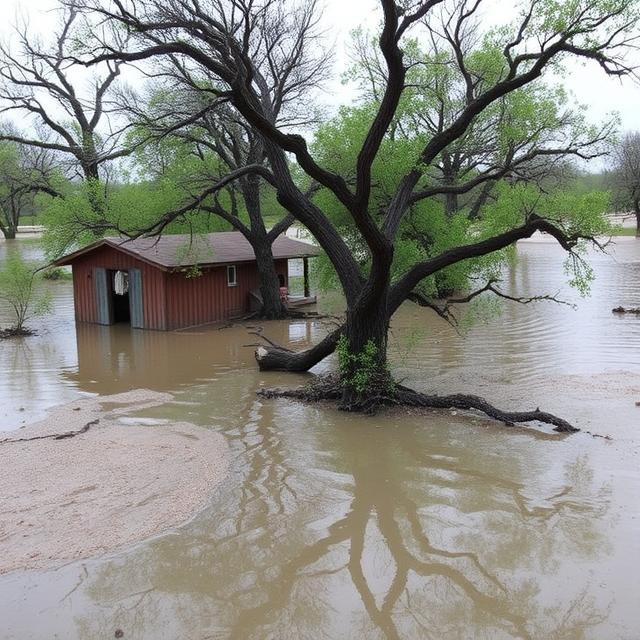
In the pre-dawn hours of July 4, 2025, what began as heavy rainfall quickly transformed into an unprecedented natural catastrophe that would forever alter the landscape and lives of the Texas Hill Country. The Guadalupe River, which normally meanders peacefully through the region’s renowned summer camp corridor, became a raging torrent that swept away homes, vehicles, and tragically, human lives.
The meteorological event that triggered this disaster was as sudden as it was devastating. Between midnight and 6 AM on July 4, the region received nearly 12 inches of rainfall—an amount typically spread across several months compressed into mere hours. The National Weather Service described conditions in Kerr County as experiencing a “1-in-100-year event,” meaning such intensity has only a 1% probability of occurring in any given year.
At approximately 4 AM, the Guadalupe River’s gauge near Hunt registered water levels rising at an alarming rate. Within 90 minutes, the river had surged more than 20 feet above its normal flow, reaching 29 feet—the second-highest level ever recorded at that monitoring station, surpassing even the devastating 1987 flood that had previously served as the benchmark for extreme flooding in the region.
The rapid rise caught residents and campers completely off guard. Unlike typical flooding scenarios where water levels gradually increase over hours or days, providing time for evacuation and preparation, this event unfolded with shocking speed that left little opportunity for escape.
Camp Mystic: A Community’s Worst Nightmare
At the epicentre of this tragedy sits Camp Mystic, a private Christian summer camp for girls that has operated along the banks of the Guadalupe River since 1926. The century-old institution, which prides itself on providing a “wholesome Christian atmosphere” where young girls “develop outstanding personal qualities and self-esteem,” became the focal point of one of Texas’s most heartbreaking natural disasters.
The camp was hosting approximately 750 girls during what should have been a joyful Independence Day celebration. Instead, families across the United States found themselves desperately searching for information about their daughters as floodwaters swept through the camp’s facilities with devastating force.
Between 23 and 25 girls from Camp Mystic remain unaccounted for as of Saturday evening, though authorities stress that “unaccounted for” does not necessarily mean deceased. The challenging communication situation has been compounded by the camp’s technology-free policy, which prohibits campers from carrying mobile phones or other electronic devices—a philosophy designed to encourage outdoor activities and personal connection that now complicates rescue efforts and family communication.
Among the missing is 9-year-old Greta Toranzo, a student at Sinclair Elementary School in Houston, whose parents have requested her photograph be shared widely as search efforts continue. Similarly, 9-year-old Lainey Landry from Houston remains unaccounted for, with her mother joining countless other parents in the agonising wait for news.
The confirmed casualties include eight-year-old Sarah Marsh from Mountain Brook, Alabama, whose grandmother described her as a “beautiful spunky ray of light” who would “live on in our hearts forever.” Eight-year-old Renee Smajstrla has also been confirmed among the deceased, with her uncle from Maryland expressing gratitude for the search efforts whilst mourning the family’s tragic loss.
Thirteen-year-old Elinor Lester, who survived the ordeal, described the terrifying experience: “A raging storm woke up our cabin around 1:30 AM. When rescuers arrived, they tied a rope for us to hold as we walked across a bridge with floodwaters whipping around our calves and knees. The camp was completely destroyed.”
Heroic Rescue Operations
The scale and complexity of the rescue operation launched in response to the flooding represents one of the most significant emergency responses in Texas history. Over 500 personnel from multiple agencies coordinated efforts involving 14 helicopters, 12 drones, and numerous ground-based rescue teams working around the clock to locate survivors and recover victims.
Texas Game Wardens played a crucial role in the rescue efforts, ultimately gaining vehicle access to Camp Mystic on Friday evening after floodwaters had initially made the facility completely inaccessible. Their Facebook post announcing “Have made entry into Camp Mystic with vehicles and are beginning to bring campers out!” provided the first hopeful news for anxious families.
The helicopter rescue operations proved particularly dramatic, with aircraft ferrying dozens of children to safety throughout Friday. Video footage from NBC affiliate WOAI showed the careful coordination required as rescue crews extracted children from trees and elevated areas where they had sought refuge from the rising waters.
By Saturday evening, authorities reported having rescued or evacuated 850 people, including 167 evacuations conducted by helicopter. The scope of these operations extended far beyond Camp Mystic, as flooding affected numerous communities throughout Kerr County and surrounding areas.
Lieutenant Governor Dan Patrick, serving as acting governor whilst Governor Greg Abbott was travelling, coordinated state-level response efforts and emphasised that search and rescue operations would continue “non-stop” until every missing person was located. President Donald Trump also offered federal assistance, with Patrick confirming multiple conversations about additional resources.
The Human Cost and Community Impact
The devastating human toll extends far beyond the immediate casualties and missing persons. Families throughout the region experienced harrowing escapes as floodwaters invaded homes with unprecedented speed and force.
Barry Adelman, 54, described the terrifying experience of being trapped with his family, including his 94-year-old grandmother and 9-year-old grandson, as water forced them into their attic before finally breaking through the attic floor. “I was horrified,” he said. “I was having to look at my grandson in the face and tell him everything was going to be OK, but inside I was scared to death.”
In Ingram, Erin Burgess awoke to thunder and rain at 3:30 AM, only to find water pouring into her home across from the river just 20 minutes later. Such accounts underscore the shocking speed with which conditions deteriorated, giving residents minimal time to react or evacuate.
The broader community impact extends throughout the region known for its concentration of summer camps. The Texas Hill Country has historically served as a premier destination for youth camping experiences, with facilities attracting thousands of children annually from across the United States.
These camps represent significant economic activity for local communities, with a 2018 study by the Hill Country Community Journal indicating that summer camps generate a $32 million annual economic impact for Kerr County alone. Camp tuition fees range from $4,300 at Camp Mystic to over $6,300 for four-week sessions at other facilities, reflecting the premium nature of these experiences.
The flooding has prompted at least one camp to announce delays or potential cancellation of its final summer session, highlighting the broader disruption to an industry that forms a cornerstone of the local economy.
Environmental and Meteorological Factors
The catastrophic nature of this flooding event reflects the complex interplay of meteorological conditions and environmental factors that characterise extreme weather events in central Texas. The region’s geography, situated in the transition zone between the humid subtropical climate of East Texas and the arid conditions of West Texas, creates conditions conducive to sudden, intense precipitation events.
The Guadalupe River system, whilst normally providing recreational opportunities and supporting local ecosystems, demonstrated the destructive potential of rapid water level changes in a confined channel system. The river’s path through the Hill Country involves significant elevation changes and relatively narrow channels that can quickly become overwhelmed during extreme precipitation events.
Climate scientists have noted increasing trends in extreme precipitation events across Texas, with traditional flood management infrastructure designed for historical weather patterns potentially inadequate for emerging climate realities. The “1-in-100-year” designation for this event reflects statistical analysis based on historical data, but such events may become more frequent as climate patterns shift.
The National Weather Service had issued flood watches and warnings for the region, but the unprecedented intensity and rapid development of the flooding exceeded typical forecast parameters. Meteorologist forecasting accuracy for such extreme events remains challenging, particularly when dealing with the complex topography and microclimates characteristic of the Hill Country.
The rapid development of the flooding also highlights the vulnerability of outdoor recreation areas, particularly overnight facilities like summer camps, to sudden weather changes. The early morning timing of the event, when most people were sleeping, compounded the challenges of emergency response and evacuation.
Emergency Management and Policy Implications
The Texas flooding disaster provides important insights into emergency management challenges facing communities in flood-prone areas, particularly those hosting vulnerable populations such as children at summer camps.
Governor Greg Abbott’s declaration of disaster status for 15 counties—including Bandera, Coke, Comal, Concho, Gillespie, Kendall, Kerr, Kimble, Llano, Mason, McCulloch, Menard, Reeves, San Saba, and Tom Green—reflects the regional scope of the disaster and enables federal assistance coordination.
The response has highlighted both strengths and challenges in current emergency management protocols. The rapid deployment of rescue resources and coordination between state and local agencies demonstrated effective disaster response capabilities. However, the communication challenges created by technology-free camp policies raise questions about balancing traditional camping experiences with modern safety requirements.
The establishment of reunification centres at Ingram Elementary School and Arcadia Live in Kerrville provided crucial support for families seeking information about missing loved ones. The American Red Cross activation of missing persons services (1-800-733-2767) created additional resources for affected families.
The scale of helicopter rescue operations required coordination with military and civilian aviation resources, highlighting the importance of pre-positioned emergency assets in regions prone to natural disasters.
Regional and National Implications
The Texas Hill Country flooding extends beyond local impacts to raise broader questions about community preparedness, climate adaptation, and the safety of recreational facilities in flood-prone areas.
The concentration of summer camps along the Guadalupe River reflects decades of land use decisions based on the attractive recreational opportunities provided by the waterway. However, this disaster may prompt reconsideration of siting decisions for facilities hosting vulnerable populations, particularly children who may have limited ability to respond independently to emergency situations.
The event also highlights the challenges facing rural emergency services, which must coordinate responses across large geographical areas with limited infrastructure. The success of the multi-agency response demonstrates the value of mutual aid agreements and pre-positioned resources, but also reveals the massive resource requirements for responding to catastrophic events.
Insurance implications for affected camps and communities may prove significant, particularly given the specialised nature of camp facilities and the seasonal timing of operations. Some facilities may face difficult decisions about rebuilding or relocating operations away from flood-prone areas.
The disaster’s occurrence during a major holiday weekend, when many emergency personnel might typically be unavailable, tested the resilience of emergency response systems. The successful mobilisation of resources despite holiday timing provides valuable lessons for other communities facing similar challenges.
Broader Environmental Context
This flooding event occurs within the broader context of increasing extreme weather events across the United States, raising questions about infrastructure resilience and community preparedness. Texas has experienced numerous significant flooding events in recent years, including Hurricane Harvey in 2017 and various flash flooding incidents that have highlighted the state’s vulnerability to extreme precipitation.
The Hill Country’s unique ecosystem, characterised by limestone geology that creates both scenic landscapes and complex drainage patterns, faces particular challenges during extreme weather events. The region’s porous limestone can absorb significant rainfall under normal conditions but becomes overwhelmed during intense precipitation, leading to rapid runoff and flash flooding.
Conservation efforts in the region have historically focused on maintaining the area’s natural beauty and recreational value whilst managing growth pressures from expanding urban areas. This disaster may prompt renewed examination of land use policies and development patterns that could affect flood risks.
The Guadalupe River serves not only recreational purposes but also provides crucial habitat for numerous species and supports regional water supplies. The ecological impacts of this flooding event, including potential contamination from damaged facilities and debris transport, may have lasting environmental consequences requiring ongoing monitoring and restoration efforts.
Looking Forward: Recovery and Lessons Learned
As search and rescue operations continue, attention inevitably turns to the long-term recovery process and lessons that might prevent similar tragedies in the future. The immediate priority remains locating missing persons and providing support for affected families, but the broader implications of this disaster will likely influence policy and planning decisions for years to come.
The camp industry may face pressure to reconsider policies regarding emergency communication, with the technology-free philosophy potentially requiring modification to ensure rapid communication during emergencies. Similarly, facility siting decisions may require enhanced consideration of flood risks, even for locations with no recent history of extreme flooding.
Emergency management protocols may benefit from enhanced early warning systems specifically designed for rapidly developing flood situations. Traditional flood forecasting, which relies on gradual water level increases, proved inadequate for the extremely rapid development of this event.
Community preparedness initiatives may need to address the specific challenges of protecting vulnerable populations, particularly children in recreational settings who may be unfamiliar with local geography and emergency procedures.
The heroic efforts of first responders and emergency personnel provide examples of effective disaster response, but also highlight the importance of maintaining adequate resources and training for low-probability, high-impact events that can overwhelm normal emergency response capabilities.
International Perspective and New Zealand Connections
From a New Zealand perspective, this Texas tragedy offers sobering reminders of the universal vulnerability of communities to extreme weather events, regardless of preparation levels or historical experience. New Zealand’s own experiences with natural disasters, including earthquakes, floods, and volcanic events, provide context for understanding the challenges facing Texas communities.
The rapid-onset nature of this flooding event shares characteristics with some of New Zealand’s most challenging natural disasters, where traditional warning systems and evacuation procedures may prove inadequate for extremely fast-developing situations.
New Zealand’s outdoor recreation industry, including youth camps and adventure tourism, faces similar challenges in balancing natural experiences with safety requirements. The communication policies that complicated rescue efforts in Texas mirror debates in New Zealand about technology use in educational and recreational settings.
The international nature of summer camp attendance, with children from multiple countries potentially affected, highlights the global connections that characterise modern recreational travel and the international implications of local disasters.
Climate change impacts affecting both Texas and New Zealand include increasing extreme weather events that challenge traditional infrastructure and emergency planning. The lessons learned from this Texas disaster may inform disaster preparedness efforts in other regions facing similar climate vulnerabilities.
Conclusion
The catastrophic flooding that devastated the Texas Hill Country represents more than a local disaster; it serves as a stark reminder of nature’s power to transform peaceful landscapes into scenes of devastation within hours. The tragedy at Camp Mystic, where young girls gathered for summer adventures found themselves fighting for survival, touches hearts across the globe whilst highlighting critical questions about safety, preparedness, and the changing nature of extreme weather events.
As rescue operations continue and communities begin the long process of recovery, the courage displayed by first responders and the resilience shown by survivors provide hope amidst overwhelming grief. The ongoing search for missing children remains the immediate priority, with families worldwide united in prayer for positive outcomes.
This disaster will undoubtedly prompt extensive examination of emergency preparedness protocols, land use policies, and the balance between providing enriching outdoor experiences and ensuring safety. The lessons learned from this tragedy may ultimately contribute to preventing similar disasters in the future, though such knowledge comes at an unconscionable cost.
The Texas Hill Country, renowned for its natural beauty and recreational opportunities, now faces the challenge of rebuilding whilst adapting to new realities about extreme weather risks. The strength of communities in supporting one another during this crisis provides foundation for eventual recovery, even as the scars from this tragedy will remain permanently etched in the collective memory of all those affected.
For families still awaiting news of missing loved ones, each passing hour brings both hope and anguish in equal measure. The dedication of search teams working around the clock offers the possibility of miraculous rescues whilst the harsh realities of flood dynamics temper expectations with sobering realism.
This tragedy serves as a profound reminder that despite all human planning and preparation, nature retains the ultimate power to reshape our world in moments, challenging us to find strength in community, hope in the midst of despair, and wisdom to better protect those we hold most dear.