 Col. (retd.) Dinesh Ramaswamy
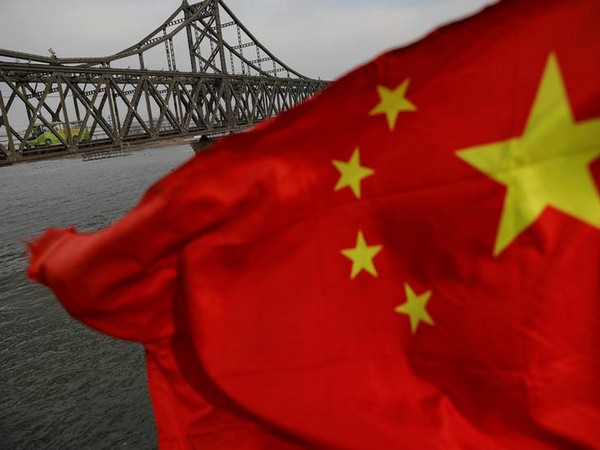
 China has significantly escalated its military activities around Taiwan in recent weeks, intensifying pressure on the self-governed island and raising concerns across the Indo-Pacific region. The latest maneuvers, which include large-scale naval deployments, frequent airspace incursions, and amphibious drills, underscore Beijing’s evolving strategy of sustained military presence and operational dominance rather than mere political signaling.
Major Escalation: Carrier Groups, Warships, and Combat Patrols
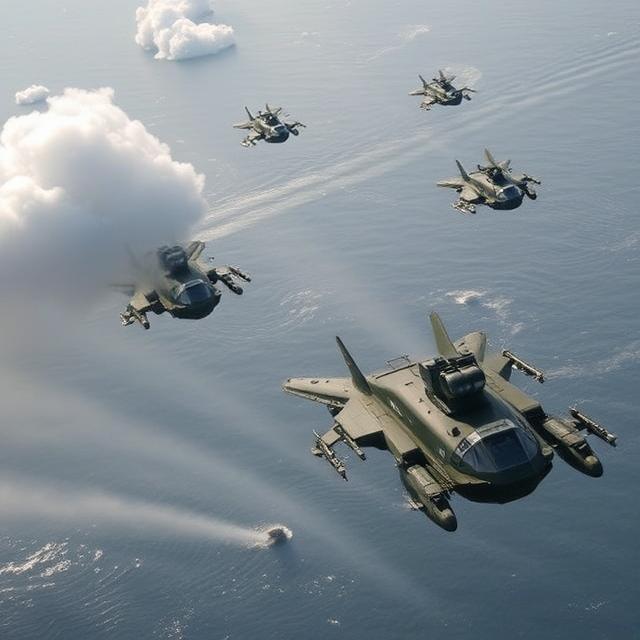
In May and early June 2025, China deployed two aircraft carrier strike groups and numerous warships to waters both north and south of Taiwan, marking one of the largest and most coordinated shows of force in recent years. According to Taiwanese security officials, around 70 Chinese vessels—including naval ships and support craft—were tracked from the Yellow Sea to the South China Sea over a four-week period. These deployments were accompanied by the movement of advanced warplanes, anti-submarine aircraft, and uncrewed aerial vehicles, with coordinated maneuvers designed to encircle and pressure Taiwan from multiple directions.
On Friday, June 6, Taiwan’s Ministry of National Defense publicly accused China of carrying out a “provocative” military patrol involving 21 warplanes and several warships operating in close proximity to the island. The ministry described these actions as attempts to “harass our airspace and waters,” warning that such maneuvers disregard international maritime rights, threaten regional stability, and blatantly disrupt the status quo. This unusually sharp criticism reflects growing alarm in Taipei over the scale and frequency of Chinese operations.
Gray-Zone Tactics and Amphibious Drills
China’s recent activities go beyond traditional military exercises. The People’s Liberation Army (PLA) has ramped up so-called “gray zone” operations—actions that fall below the threshold of open conflict but are designed to exhaust Taiwan’s defenses and normalize a Chinese military presence. These include:
- Repeated Incursions: The China Coast Guard conducted four incursions into restricted waters around Kinmen, a Taiwanese-controlled outlying island, in May 2025.
- Amphibious Exercises: The PLA’s 73rd Group Army carried out an amphibious landing drill in waters southeast of China’s Fujian Province on May 20, signaling preparation for potential cross-strait operations.
- Carrier Operations: The aircraft carrier Liaoning led a naval formation through the Miyako Strait into the East China Sea, conducting carrier-based air operations in the region.
- Drone Encirclements: PLA drone flights have increasingly circled Taiwan, expanding the scope of surveillance and pressure.
These gray-zone tactics are part of a broader strategy to incrementally alter the balance of power and erode Taiwan’s effective control over its territory, especially its vulnerable outlying islands such as Kinmen and Matsu.
A Shift in Beijing’s Military Doctrine
Analysts note that China’s military provocations are no longer simply reactions to political developments in Taipei, such as presidential inaugurations or independence-leaning statements. Instead, the PLA’s operational tempo has increased regardless of the political climate, with joint combat readiness patrols, median-line crossings, and long-range missions now a routine feature.
The sharp increase in incursions since January 2025 signals a fundamental shift in Beijing’s approach—from episodic, politically triggered responses to a sustained, normalized military presence. This reflects an evolving doctrine that prioritizes operational readiness, joint-force integration, and the ability to rapidly transition from exercises to real-world engagements.
Regional and International Implications
China’s actions have heightened tensions not only with Taiwan but also with the United States and its allies in the region. The US Defense Intelligence Agency recently assessed that Beijing may be preparing for limited military operations targeting Taiwan’s outlying islands to test US resolve and gradually erode Taipei’s control. The vulnerability of these islands, located just kilometers from the Chinese coast, poses a strategic dilemma for both Taiwan and its partners.
Diplomatic efforts to de-escalate have so far yielded little. Chinese President Xi Jinping, in a recent call with former US President Trump, urged Washington to “handle the Taiwan question with caution” and warned against allowing “fringe separatists” to draw the two superpowers into conflict. Meanwhile, Taiwan is strengthening its defensive posture and calling for international support, even as it seeks to avoid steps that could be seen as provocative.
Summary
China’s ramped-up military incursions around Taiwan mark a new phase of sustained pressure and operational dominance, with large-scale naval and air deployments, amphibious drills, and gray-zone tactics now the norm. This escalation is driven less by immediate political events and more by Beijing’s long-term strategy to assert control and deter moves toward Taiwanese independence. The situation remains volatile, with the risk of miscalculation or unintended escalation ever-present, as regional and global powers closely monitor developments in the Taiwan Strait.