





 Tracey Wilson
 A towering new dinosaur sculpture in Taupō, dubbed “Boom Boom,” has ignited a fierce debate across New Zealand, dividing locals and drawing national attention to the role of public art, council spending, and community identity.
The Sculpture: “Boom Boom” Arrives in Taupō
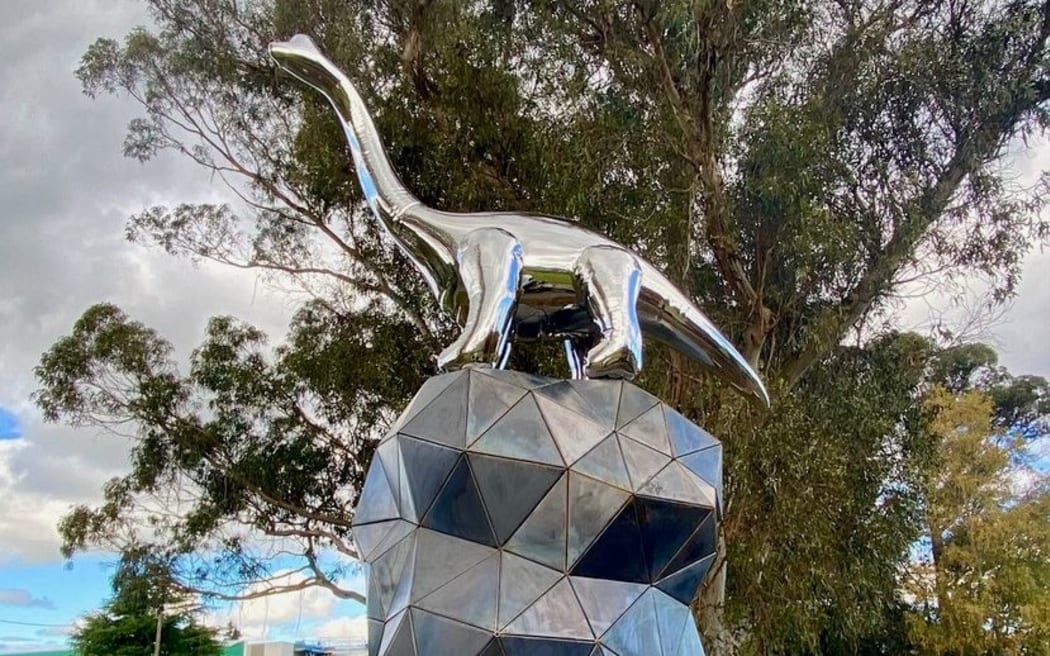
Installed just days ago in Taupō Sculpture Park, “Boom Boom” is a striking seven-metre (nearly 10-metre including its base) stainless steel sauropod perched atop a geometric corten steel rock. Created by Slovenian-born artist Gregor Kregar and commissioned by the Taupō Sculpture Trust, the sculpture was designed to be both playful and reflective—literally, with its mirror-polished surface capturing the changing light and landscape of the region.
Funding and Financial Backlash
The Taupō District Council contributed a one-off $100,000 grant to the project, a decision made several years ago but only now coming under intense scrutiny. The sculpture’s unveiling coincided with news of an 8% rates increase for local residents, fuelling frustration among ratepayers who argue that council money should focus on essential services like roads, water, and waste.
Local government critics have labelled the project “Jurassic pork” and accused councillors of being out of touch with everyday concerns. Some residents have pointed out that the average compound rates increase in Taupō over the last two years has exceeded 17%, questioning the wisdom of funding public art during a cost-of-living crisis.
Artistic Intent and Community Reaction
Artist Gregor Kregar is unfazed by the uproar, noting that public art is meant to provoke discussion and challenge perceptions. “Sculpture sometimes interrupts people’s daily interactions with their surroundings,” he said. “It’s quite difficult to dislike a sculpture of a dinosaur.” Kregar believes that such works eventually become embraced as part of a community’s identity.
Supporters of “Boom Boom” argue that it brings colour, vibrancy, and a sense of fun to the town. They see the sculpture as a catalyst for conversation about art, culture, and what it means to belong to a place like Taupō. Social media has been flooded with both praise and criticism, with some calling the dinosaur “fabulous” and others dismissing it as an “eyesaur.”
Questions of Relevance and Local Identity
A major point of contention is whether the sculpture truly reflects Taupō’s character. Critics claim it lacks a meaningful connection to the area, which is renowned for its natural beauty, volcanic landscapes, and Māori heritage. Some residents feel the dinosaur is out of place, especially given Taupō’s recent accolade as New Zealand’s most beautiful town.
However, the sculpture’s supporters and creators point to its base, which is inspired by the region’s volcanic history. Lake Taupō itself is a massive caldera formed by a volcanic eruption nearly 1,800 years ago. Kregar also notes that sauropods—the dinosaur group that inspired “Boom Boom”—are among the few types of dinosaurs believed to have roamed prehistoric New Zealand, connecting the artwork to the land’s ancient past.
Council and Trust Perspectives
Taupō Mayor David Trewavas has acknowledged the controversy but stands by the decision to support the arts community. He notes that the project was committed to years ago and that the council’s role is to foster a vibrant, inclusive town for both residents and visitors. “The poor old arts community, they haven’t had much over the years to be fair, and this is our way of demonstrating to them that we support those guys as well,” Trewavas said.
Kim Gillies, secretary of the Taupō Sculpture Trust, emphasises that the decision to commission “Boom Boom” was not made lightly. The trust wanted something bold to help put Taupō on the map and believes that “playing it safe can be rather dull.” The aim was to create a landmark that would draw visitors and spark discussion, even if it meant courting controversy.
The Role of Public Art
The debate over “Boom Boom” highlights broader questions about the role of public art in New Zealand communities. Should councils invest in projects that challenge and provoke, or focus solely on essentials? Is it possible for a single artwork to represent a diverse and evolving town? And how should communities balance heritage, innovation, and fiscal responsibility?
For many, the answer lies in the conversation itself. As one supporter put it, “Fantastic! It’s getting people engaged in discussions about art and expanding the conversation.” For others, the issue is less about art and more about priorities and accountability.
Looking Ahead: Will “Boom Boom” Win Hearts?
History suggests that controversial public artworks often become beloved landmarks over time. Kregar himself is optimistic that initial scepticism will give way to affection and pride, as the sculpture becomes woven into Taupō’s identity. Already, families from outside the region are planning visits to see the dinosaur, and local businesses hope the attention will boost tourism.
Whether “Boom Boom” will ultimately be seen as a bold investment in Taupō’s cultural future or a costly misstep remains to be seen. For now, the sculpture stands as a gleaming symbol of the ongoing debate over art, community, and what it means to belong in modern New Zealand.
Summary
The installation of “Boom Boom,” a giant dinosaur sculpture in Taupō, has sparked a national debate about public art, council spending, and local identity. While some residents see it as a waste of ratepayer money during tough economic times, others celebrate its boldness and potential to put Taupō on the cultural map. As the conversation continues, “Boom Boom” has already succeeded in its primary aim: getting New Zealanders talking about the value and meaning of art in public spaces.