




 Vincent Mathews
 By Vincent Mathews, Techie, Science and Gaming Enthusiast
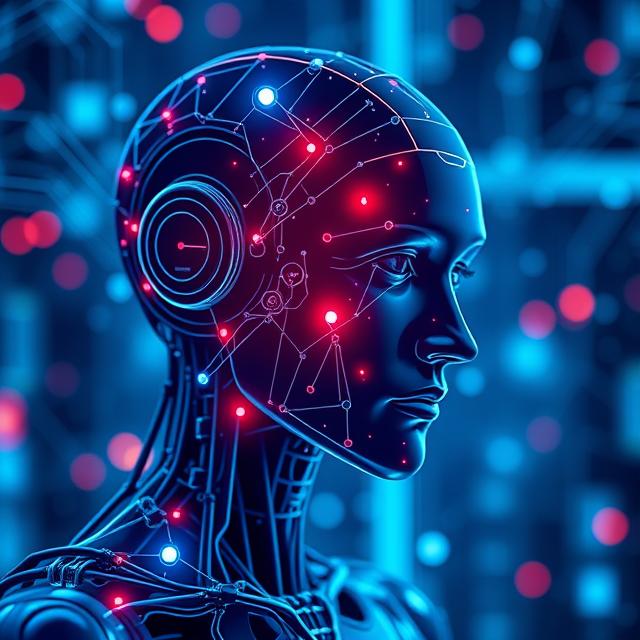
In a landmark move reflecting the urgency of governing rapidly advancing technologies, the United Nations has convened an intergovernmental panel to draft the world’s first comprehensive Artificial Intelligence Treaty. As of April 2025, over 120 countries are engaged in negotiations at the UN Office for Digital and Emerging Technologies in Geneva, aiming to establish binding global standards for AI development, deployment, and accountability—amid growing fears of unregulated systems undermining democracy, human rights, and global security.
The proposed treaty, officially titled the Framework Convention on Artificial Intelligence, draws inspiration from earlier international accords such as the Paris Climate Agreement and the Chemical Weapons Convention. However, unlike those treaties, it must contend with a technology that evolves faster than legislation can be drafted, operates across borders in milliseconds, and is largely controlled by private corporations rather than states.
At the heart of the debate is a fundamental question: How can the world regulate a tool that powers everything from medical diagnostics and climate modelling to autonomous weapons and mass surveillance—without stifling innovation or entrenching digital colonialism?
Leading the negotiations is UN Special Envoy Dr. Amina Rostami, a computer scientist and ethicist formerly with UNESCO’s AI ethics programme. “We are not trying to stop progress,” she stated in a recent address. “We are trying to ensure that AI serves humanity—not the other way around. This treaty is about setting red lines, enforcing transparency, and protecting the vulnerable.”
Key proposals in the draft include a global ban on AI systems designed for social scoring, mass biometric surveillance, and lethal autonomous weapons (often called “killer robots”). The treaty would also mandate that high-risk AI applications—such as those used in hiring, policing, healthcare, and judicial decision-making—undergo third-party audits, maintain human oversight, and provide explainability for their outputs.
One of the most contentious issues is the regulation of foundation models—the massive AI systems like GPT, Gemini, and Qwen that underpin much of today’s generative technology. The draft calls for “model provenance tracking,” requiring developers to disclose training data sources, energy consumption, and potential biases. It also proposes a global registry for models above a certain computational threshold, similar to nuclear material monitoring.
Support for the treaty is broad but uneven. The European Union, which already enforces the AI Act, has welcomed the initiative as a way to extend its regulatory influence globally. Canada, Japan, and New Zealand have expressed strong backing, particularly on provisions protecting democratic processes from AI-driven disinformation.
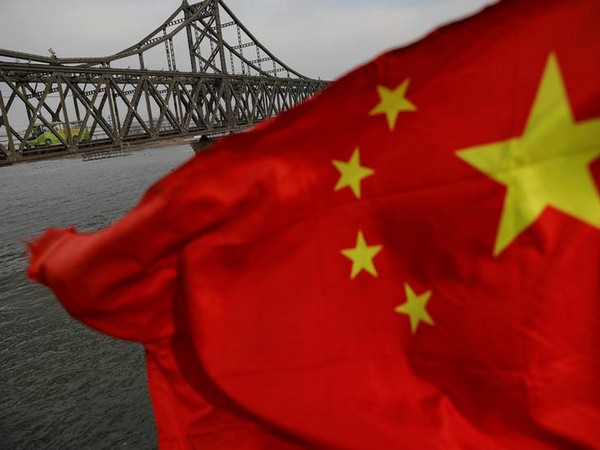
However, major tech powers remain cautious. The United States insists that any treaty must not hinder American innovation or national security capabilities. While supporting voluntary guidelines, Washington has resisted legally binding restrictions on military AI. China, meanwhile, supports a ban on autonomous weapons but opposes rules it sees as infringing on state sovereignty, particularly around surveillance and data governance.
India has emerged as a pivotal player, advocating for a “development-first” approach. “AI must not become a tool that widens the gap between the Global North and South,” said India’s digital envoy during a recent plenary session. The country is pushing for technology transfer clauses, capacity-building funds, and exceptions for developing nations to deploy AI in public service delivery without facing disproportionate compliance burdens.
Smaller nations, particularly in Africa and the Pacific, are demanding equitable access to AI infrastructure. Many lack the computing power, data centres, or skilled workforce to develop or even safely deploy advanced AI. The draft includes a proposed Global AI Equity Fund, to be financed by contributions from tech giants and wealthy nations, aimed at building regional AI hubs and training programmes.
Private sector involvement is another flashpoint. While companies like Microsoft, Google DeepMind, and Anthropic have sent observers to the talks, others—including several prominent Chinese and American AI startups—have refused to participate. Critics warn that without corporate buy-in, enforcement will be nearly impossible.
Still, momentum is building. In February 2025, a coalition of 40 civil society organisations launched the “AI Watch” initiative, a real-time monitoring platform tracking AI-related harms worldwide—from algorithmic discrimination in loan applications to deepfake-fuelled violence in conflict zones. The data is being used to pressure negotiators to strengthen accountability mechanisms.
New Zealand, though not a primary negotiator, has played a quiet but influential role through its support for multilateralism and digital rights. The Ministry of Foreign Affairs and Trade has funded research on AI governance in the Pacific, while local tech firms like Soul Machines and PatchAI have endorsed transparency standards. In March 2025, the University of Auckland hosted a regional dialogue on Māori data sovereignty and AI, emphasising the need to protect indigenous knowledge systems from exploitation.
Experts warn that even if a treaty is finalised by late 2025, implementation will be a decades-long challenge. For the first time, nations are treating AI not as a corporate product or national asset, but as a shared global concern—akin to climate change or pandemics.
Yet, the mere act of global negotiation signals a turning point. For the first time, nations are treating AI not as a corporate product or national asset, but as a shared global concern—akin to climate change or pandemics.
As AI systems grow more autonomous and integrated into critical infrastructure, the stakes could not be higher. A malfunctioning algorithm in a power grid, a biased facial recognition system leading to wrongful arrest, or an uncontrolled AI-driven financial trade could trigger cascading crises.
The treaty may not prevent all risks, but it represents a collective recognition: in the age of artificial intelligence, humanity must act as one to preserve its future.
Excerpt: With AI reshaping every facet of modern life, the UN’s push for a global treaty marks a historic effort to place guardrails on one of the most powerful technologies in human history—balancing innovation with ethics, security, and equity on a planetary scale.