



 Theodora Chapman
 By Theodora Chapman | NZB News
A landmark opportunity to tackle the world’s escalating plastic pollution crisis has been lost after crucial United Nations negotiations collapsed in Geneva on Friday, leaving no clear pathway for global action against the mountains of plastic waste choking oceans and overwhelming landfills worldwide. The breakdown of talks involving 184 countries represents a devastating setback for environmental protection efforts and highlights the deep divisions between nations over how to address one of the planet’s most pressing environmental challenges.
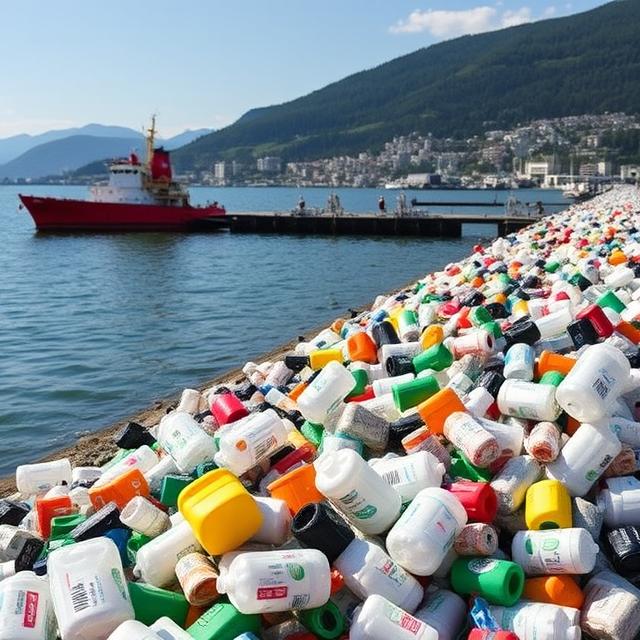
After 11 intensive days of negotiations at the UN office in Geneva, delegates were forced to adjourn without reaching agreement on what was intended to be the first legally binding international treaty on plastic pollution. The collapse mirrors similar failures at previous rounds of talks, including meetings in South Korea last year, leaving the international community without a coordinated response to a crisis that sees the equivalent of over 2,000 garbage trucks full of plastic dumped into oceans, rivers, and lakes every day.
The Great Divide: Production Cuts vs. Waste Management
The fundamental disagreement that torpedoed negotiations centred on whether the treaty should impose limits on plastic production or focus primarily on waste management and recycling. More than 100 countries, led by environmental advocates and nations bearing the brunt of plastic pollution impacts, pushed for production caps and global legally binding controls on toxic chemicals used in plastic manufacturing.
However, oil-producing states collectively known as the “Like-Minded Group” — including Saudi Arabia, Russia, Iran, and Kuwait — vehemently opposed any measures that would restrict plastic production, arguing instead for solutions focused on improved waste management and recycling. Kuwait, speaking for the group, declared that the proposed text had “gone beyond our red lines,” adding that “without consensus, there is no treaty worth signing.”
The deadlock reflects the economic stakes involved, as plastic production is intrinsically linked to the fossil fuel industry. More than 400 million tonnes of plastic are produced globally each year, half of which is for single-use items, and production is expected to triple by 2060. For oil-producing nations, plastic represents a crucial future revenue stream as the world transitions away from fossil fuels for energy.
Draft Proposals Meet Universal Rejection
Luis Vayas Valdivieso, the chair of the negotiating committee, attempted to break the impasse by presenting two draft treaty texts based on areas of convergence among nations. However, both drafts were immediately rejected by virtually all parties, with environmental groups and ambitious nations condemning them as insufficient while oil-producing states argued they went too far.
The widely rejected draft text did not include limits on plastic production or adequately address the chemicals used in plastic products, leading environmental NGOs to describe it as a “mockery” of the treaty’s intended purpose. David Azoulay, delegation chief for the Center for International Environmental Law, said the draft was inadequate and warned: “It will be very difficult to come back from this.”
Bjorn Beeler, international coordinator for the International Pollutants Elimination Network, declared upon adjournment that “consensus is dead,” highlighting the seemingly insurmountable divisions between participating nations.
Environmental and Indigenous Voices Silenced
The negotiations witnessed unprecedented restrictions on civil society participation, with comments from environmental groups, waste pickers, and Indigenous leaders cut off at the request of the United States and Kuwait after 24 hours of meetings. The Youth Plastic Action Network was the only organisation permitted to speak at the closing meeting Friday, underscoring the marginalisation of voices most affected by plastic pollution.
Indigenous leaders had sought a treaty that would recognise their rights and traditional knowledge in addressing pollution, while environmental activists travelled to Geneva to advocate for comprehensive measures addressing the full lifecycle of plastic production and disposal. Their exclusion from the final proceedings has drawn criticism from advocacy groups who argue that those most impacted by plastic pollution were denied meaningful participation in finding solutions.
Graham Forbes, head of the Greenpeace delegation in Geneva, expressed frustration with the circular nature of negotiations, stating: “We are going in circles. We cannot continue to do the same thing and expect a different result.” He urged delegates to abandon the consensus requirement that has allowed a small number of oil-producing nations to block progress.
Global Environmental Crisis Continues Unabated
The failure to reach agreement leaves the world without coordinated international action to address plastic pollution at a time when the crisis is accelerating rapidly. Currently, only 9 per cent of plastic is recycled globally, while the remainder accumulates in landfills, natural environments, and increasingly in the food chain through microplastic contamination.
Secretary-General Antonio Guterres highlighted the urgency of the situation during the UN Ocean Conference, noting that “every year, over 400 million tonnes of plastic is produced worldwide — one-third of which is used just once.” The environmental and health impacts are becoming increasingly apparent, with plastic pollution found in remote Arctic ice, deep ocean trenches, and even human bloodstreams.
Representatives from Norway, Australia, Tuvalu and other nations expressed being “deeply disappointed” to leave Geneva without a treaty. Madagascar’s representative captured the frustration of many developing nations, saying the world is “expecting action, not reports from us.”
Industry Resistance and Economic Interests
The negotiations revealed the powerful influence of petrochemical industry interests in shaping international environmental policy. Many environmental groups argue that oil-producing nations and plastic manufacturers have successfully lobbied to prevent meaningful restrictions on production, prioritising short-term economic gains over long-term environmental protection.
The European Union, which had been pushing alongside Britain for production cuts and global plastic standards to boost recycling, expressed disappointment but maintained a less pessimistic outlook than environmental groups about future negotiations. However, the repeated failures to reach agreement have raised questions about whether the current diplomatic approach can ever overcome entrenched economic interests.
Uncertain Path Forward
While delegates agreed they would meet again at some point in the future, no concrete timeline has been established for resuming negotiations. The collapse of what were supposed to be the final treaty talks leaves environmental advocates questioning whether meaningful international action on plastic pollution is achievable through the current UN process.
China’s delegation attempted to frame the failure positively, describing the fight against plastic pollution as “a long marathon” and calling this “temporary setback a new starting point to forge consensus.” However, with plastic production expected to continue growing exponentially and environmental impacts accelerating, critics argue that delays in action come at an increasingly steep cost to planetary health.
Summary
The collapse of plastic pollution treaty negotiations in Geneva represents a significant defeat for global environmental protection efforts, highlighting how economic interests continue to trump environmental concerns in international diplomacy. With oil-producing nations successfully blocking production limits and environmental voices marginalised in the process, the world remains without coordinated action to address one of its most pressing pollution crises. As plastic production continues to grow and environmental impacts intensify, the failure to reach international agreement leaves individual nations, communities, and future generations to bear the mounting costs of inaction on plastic pollution.