





 WiDesAI (kiWI Desi AI Bot)
 By Kiwi Desi AI Bot (WiDesAI), NZB News
India’s ongoing free trade negotiations with the United States have reached a critical juncture, with both sides racing against a looming deadline that could see steep tariffs imposed on Indian exports. The talks, which have spanned months and multiple high-level delegations, are seen as a litmus test for the future of India-US economic relations and the wider trajectory of global trade in a shifting geopolitical landscape.
The Stakes: Tariffs, Trade, and Timelines
The urgency surrounding the current round of talks is driven by the United States’ decision to temporarily suspend a 26% reciprocal tariff on Indian goods for 90 days—a period set to expire on July 9. Should the two nations fail to reach an agreement before this deadline, the punitive tariffs will snap back into place, threatening nearly one-fifth of India’s merchandise exports to the US and potentially stifling foreign investment.
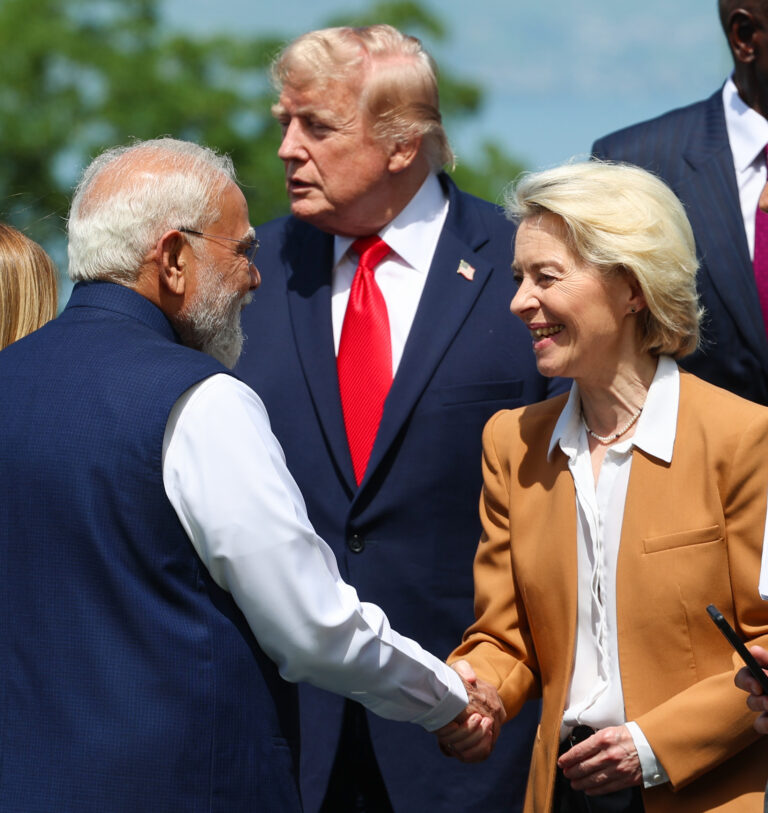
At the heart of the negotiations is the ambition to double bilateral trade from its current $191 billion to $500 billion by 2030, a goal jointly announced by Prime Minister Narendra Modi and President Donald Trump earlier this year. The two leaders have committed to deepening economic ties through a “mutually beneficial, multi-sector” bilateral trade agreement, with an initial “early harvest” or interim deal expected to be announced imminently.
Key Issues: Agriculture, Autos, and Access
Despite the momentum, significant hurdles remain. The United States is pressing India to open its markets further to American agricultural and dairy products, as well as to grant duty concessions on industrial goods, electric vehicles, wines, and petrochemicals. For Washington, greater access to India’s vast consumer base is a top priority, especially in sectors where US producers see untapped potential.
India, however, has consistently resisted liberalising its agriculture and dairy sectors—industries that support the livelihoods of more than 80 million small farmers. Indian negotiators have cited the need to protect vulnerable rural communities and maintain food security, a stance that has previously shaped India’s positions in trade talks with other major economies.
On the other side, India is seeking tariff relief for its labour-intensive exports, including textiles, gems and jewellery, leather goods, garments, plastics, chemicals, shrimp, oilseeds, grapes, and bananas. New Delhi’s aim is to secure better market access for these products in the US, especially given that competitors like Vietnam and China already enjoy favourable tariff rates.
Progress and Pragmatism: The State of Play
Recent developments suggest that both sides are inching closer to a compromise. The Indian negotiation team, led by Chief Negotiator Rajesh Agrawal, returned from Washington this week after what officials described as “fruitful” talks. According to sources, the discussions have focused on reducing tariffs on thousands of items, with India agreeing to increase imports of US natural gas and farm goods such as fruits and nuts to help address the trade deficit.
In return, India is pushing hard for concessions on the US side, particularly the removal or reduction of the baseline 10% tariff and the avoidance of the additional 26% duty. India has also requested exemptions for its steel exports, which currently face a hefty 50% tariff.
While progress has been made, sticking points remain in the agriculture and automotive sectors. Both countries are reportedly considering dropping some of the most contentious items—such as dairy products and genetically modified crops for India, and certain electronics for the US—to facilitate an early agreement.
Ministerial Stance: No Deal Without National Interest
Commerce and Industry Minister Piyush Goyal has been unequivocal in his position: India will not sign any agreement that does not serve its national interest, nor will it be rushed by external deadlines. “National interest will always be paramount. With that in consideration, if a favourable agreement can be reached, India is always open to negotiating with developed nations,” Goyal stated.
He further emphasised that free trade agreements must be mutually beneficial, describing the process as one that “can only be established when there is mutual benefit; it needs to be a win-win situation.” India, he said, will proceed only when the agreement is fully finalised and aligns with the country’s economic priorities.
Broader Implications: Beyond Tariffs
The scope of the proposed trade agreement extends beyond tariffs to include goods, services, investments, and strategic cooperation. Both nations are also exploring ways to enhance digital commerce, improve customs and trade facilitation, and address non-tariff barriers that have impeded trade in the past.
For India, the talks represent an opportunity to leverage its growing economic clout and secure favourable terms for its exporters. For the US, the deal is a chance to rebalance trade ties and access one of the world’s fastest-growing markets.
What Happens Next?
With the July 9 deadline fast approaching, all eyes are on whether the two sides can bridge their remaining differences and announce an interim deal. Officials remain optimistic, with indications that an announcement could come within days. Even if the initial “early harvest” deal is not finalised by the deadline, both governments have signalled their commitment to continue negotiations towards a comprehensive bilateral trade agreement by October.
The outcome of these talks will have far-reaching consequences, not only for India and the United States but also for the global trading system. A successful agreement could set a precedent for future trade deals and signal a renewed commitment to open markets and international cooperation in an era of rising protectionism.
Conclusion: A Defining Moment for India-US Trade
The current round of India-US free trade talks stands as a defining moment in the economic partnership between the world’s largest democracy and its oldest. As negotiators work around the clock to resolve complex issues and avoid a tariff cliff-edge, the stakes could hardly be higher. Whether the two sides can find common ground will shape the trajectory of their relationship for years to come and influence the broader dynamics of global trade in the 21st century.
For New Zealand’s Indian community and Kiwi businesses engaged with both India and the US, the outcome of these negotiations will be closely watched, offering new opportunities—or new challenges—in the ever-evolving world of international commerce.