



 Theodora Chapman
 Ocean microbes, the unseen engines of Earth’s largest ecosystem, are revealing new secrets about how life adapts to a rapidly changing environment. Recent breakthroughs in genomics, experimental biology, and ecological monitoring are showing that these microscopic organisms possess remarkable strategies for resilience-offering hope and guidance for the future of marine ecosystems under climate stress.
Introduction
Marine microbes-bacteria, archaea, viruses, and single-celled eukaryotes-form the foundation of ocean life. They drive essential processes such as oxygen production, carbon cycling, and nutrient recycling, influencing everything from the health of coral reefs to the global climate system. As climate change accelerates, understanding how these tiny organisms adapt and help buffer environmental shocks is emerging as a key scientific frontier.
Recent studies have uncovered how ocean microbes adjust at the genetic, physiological, and community levels to survive extremes of temperature, acidity, and nutrient availability. These discoveries not only deepen our knowledge of marine ecology but also point to new ways to enhance the resilience of vulnerable ecosystems.
The Hidden Power of Marine Microbes
Microbial Diversity and Function
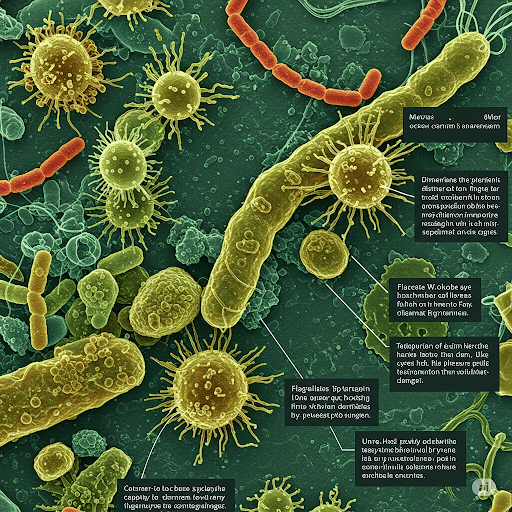
Marine microbes are astonishingly diverse. A single litre of seawater can contain billions of microbial cells representing thousands of species, each with specialised roles. Phytoplankton, for example, are responsible for about 40% of global carbon dioxide fixation, making them critical players in the Earth’s carbon cycle. Other microbes decompose organic matter, recycle nutrients, and help maintain the chemical balance of the oceans.
Microbes and the Carbon Cycle
Through photosynthesis, ocean microbes capture CO₂ and convert it into organic matter. When these organisms die, some sink to the seafloor, sequestering carbon in a process known as the biological carbon pump. This mechanism is a major regulator of atmospheric CO₂ and, by extension, global climate.
However, rising CO₂ levels are also causing ocean acidification, which threatens marine life. Some microbes help buffer these changes by producing calcium carbonate shells or altering local chemistry, while others break down organic matter in ways that can either mitigate or worsen acidification.
Adaptive Strategies: How Microbes Survive Environmental Stress
Genetic Flexibility and Rapid Evolution
Recent research has shown that marine microbes can rapidly adapt to environmental changes through genetic and epigenetic mechanisms. Using advanced gene-editing tools such as CRISPR interference (CRISPRi), scientists have demonstrated that turning certain genes on or off can dramatically improve microbial survival in extreme conditions. For example, experiments with the cyanobacterium Synechococcus revealed that small changes in gene expression allowed these cells to thrive under shifts in temperature and light, conditions that mimic those found at different ocean depths.
This genetic flexibility enables microbes to quickly adjust to new stressors, making them highly resilient to fluctuations in their environment.
Phenotypic Plasticity and Bet-Hedging
Microbes also exhibit phenotypic plasticity-the ability to change their physiology or behaviour in response to environmental cues. This includes:
- Direct Sensing-Response: Immediate adjustments to factors like temperature or nutrient availability.
- Anticipatory Memory: Retaining a “memory” of past conditions to better prepare for future changes.
- Bet-Hedging: Producing dormant or resistant forms (such as spores or cysts) that can survive until conditions improve.
These strategies allow microbial populations to persist through unpredictable events, such as sudden temperature spikes or nutrient shortages.
Community Shifts and Microbiome Dynamics
Environmental stress often triggers shifts in the composition of microbial communities. For example, studies on coral reefs have shown that certain microbes can help corals survive heat stress and bleaching events. Corals hosting beneficial protists or bacteria are more likely to withstand warming waters, while those with less favourable microbiomes may succumb to disease or death.
Researchers have identified specific microbes-such as members of the Chaetomiaceae and Schizophyllum families-that enhance coral resilience, whereas others, like Vibrio and Flavobacteriales, are associated with increased vulnerability. Understanding these relationships is crucial for developing targeted conservation strategies.
Experimental Insights: Microbial Resilience in Action
CRISPRi Experiments with Cyanobacteria
A team at the University of Colorado Boulder and Oak Ridge National Laboratory used CRISPRi to systematically turn down the activity of every gene in the genome of Synechococcus sp. PCC 7002, a common ocean-dwelling cyanobacterium. By exposing these genetically modified cells to different light and temperature regimes, they identified key genes that help the microbes adapt to heat, cold, and drought.
The findings showed that even subtle changes in gene regulation could make the difference between survival and death under environmental stress. These insights not only advance our understanding of microbial ecology but also open the door to engineering microbes for applications such as biofuel production or carbon sequestration.
Coral Microbiome Studies
In the Mediterranean, researchers studied the soft coral Paramuricea clavata to determine how its microbial partners influence resilience to heat stress. They found that corals with higher abundances of certain parasitic protists (Syndiniales) were more likely to survive, while those with more Corallicolids (related to malaria parasites) were more vulnerable.
By sequencing the coral microbiome before and after heat exposure, scientists could predict which individuals would survive, highlighting the importance of the entire microbial community-not just the well-known symbiotic algae-in coral health.
Microbiome Restoration and Ecosystem Recovery
The Case for Microbiome Interventions
As climate change and pollution continue to degrade marine ecosystems, some scientists advocate for microbiome-targeted interventions to restore resilience. This could involve introducing beneficial microbes to stressed environments or manipulating existing communities to favour more robust species.
While such approaches are sometimes seen as drastic, proponents argue that current “natural” microbiomes are already far removed from their pre-industrial states. Restoring or rehabilitating these communities may be essential to prevent further ecosystem decline.
Challenges and Ethical Considerations
Restoring marine microbiomes is not without challenges. The complexity of microbial interactions, the risk of unintended consequences, and the difficulty of monitoring outcomes all require careful consideration. However, as our understanding of microbial ecology deepens, so too does our ability to design effective and responsible interventions.
Broader Implications: Ocean Microbes as Sentinels and Stewards
Predicting Ecosystem Responses
Because microbes respond rapidly to environmental changes, they serve as early warning indicators of ecosystem health. Monitoring shifts in microbial communities can help scientists predict larger-scale impacts on fisheries, coral reefs, and carbon cycling.
Informing Conservation and Climate Policy
Insights from microbial research are increasingly informing conservation strategies and climate policy. For example, identifying which microbes enhance coral resilience can guide the selection of reefs for protection or restoration. Similarly, understanding how microbes mediate carbon sequestration can improve models of global climate change.
Technological Advances
The rise of bioinformatics and high-throughput sequencing is enabling researchers to analyse marine microbial communities at unprecedented depth and scale. These tools are revealing new metabolic pathways, stress response mechanisms, and evolutionary strategies that underpin environmental resilience.
Summary
Ocean microbes are emerging as key players in the story of environmental resilience. Through genetic flexibility, physiological adaptability, and dynamic community interactions, they help marine ecosystems withstand and recover from the stresses of climate change, pollution, and habitat loss. Recent experiments-from gene-editing studies in cyanobacteria to microbiome analyses in corals-are uncovering the mechanisms by which microbes adapt and support the health of the oceans.
As we face an era of unprecedented environmental change, understanding and harnessing the resilience of ocean microbes offers a promising path for safeguarding marine life and the vital services it provides to the planet.