Imogen King
 By NZB News Special Correspondent | May 7, 2025
On April 22, 2025, the world watched in horror as terrorists struck Pahalgam, Jammu and Kashmir, murdering 26 innocent civilians-tourists and locals alike. The attack, traced directly to Pakistan-based terror networks, was not just a massacre but a direct assault on India’s sovereignty and humanity itself. For decades, India has shown restraint, relying on diplomacy and international forums to curb Pakistan’s cross-border terrorism. This time, the nation’s patience snapped.
Prime Minister Narendra Modi, reflecting the mood of a grieving but resolute nation, vowed that justice would be swift and decisive. What followed was not just a military operation but a statement of intent: India will no longer tolerate terror exported from across the border. Thus began Operation Sindoor-a focused, precise, and measured response that has shaken the very foundations of Pakistan’s terror infrastructure.
Planning the Strike: Modi’s Hands-On Leadership
From the outset, Operation Sindoor was different. Prime Minister Modi personally monitored the mission in real time from his official residence, receiving live updates from National Security Advisor Ajit Doval and the top brass of the armed forces. This was not just a military manoeuvre-it was a meticulously planned act of statecraft, blending intelligence, precision, and restraint.
The operation was greenlit after conclusive evidence linked the Pahalgam attack to camps in Pakistan and Pakistan-occupied Kashmir (PoK). The government’s objective was clear: punish the perpetrators, destroy the infrastructure that breeds terror, and send an unambiguous message to Islamabad and the world.

The Execution: Surgical Precision, Calibrated Retaliation
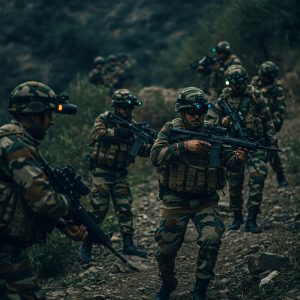
In the early hours of May 7, 2025, Indian armed forces launched a series of air and ground strikes, codenamed Operation Sindoor, targeting nine terrorist camps and infrastructure sites across Pakistan and PoK. The strikes were carried out with surgical precision, ensuring that only terror facilities-not Pakistani military or civilian assets-were hit.
Key Details of Operation Sindoor:
- Nine Targets Neutralised: The strikes focused on camps in Kotli and Muzaffarabad (PoK) and Bahawalpur (Punjab, Pakistan)-all known hubs for terror planning and launch pads for cross-border attacks.
- No Escalation, Only Justice: India’s Defence Ministry emphasised that the operation was “focused, measured, and non-escalatory.” No Pakistani military installations were targeted, reflecting India’s restraint and commitment to avoid unnecessary provocation.
- Intelligence-Driven: The operation was based on hard intelligence, with real-time satellite imagery, drone surveillance, and human intelligence confirming the presence of terrorist leadership and infrastructure at the targeted sites.
- Minimal Collateral Damage: Precision-guided munitions and stand-off weapons were used to ensure minimal collateral damage, underscoring India’s commitment to international norms even while delivering justice.
As the first explosions ripped through terror camps, social media lit up with the Indian Army’s declaration: “Justice is served. Jai Hind!” The message was clear-India had acted, and acted decisively.

Pakistan’s Response: Denial, Bluster, and Empty Threats
As news of the strikes broke, Pakistan’s military scrambled to respond. Army spokesperson Lt Gen Ahmed Sharif Chaudhry admitted that Indian missiles had struck Kotli, Muzaffarabad, and Bahawalpur, but resorted to the familiar rhetoric: “Pakistan will respond at a time and place of its own choosing.” The world, however, has heard these words before-and seen little action beyond diplomatic protests and hollow threats.
Pakistan’s government, already reeling from global isolation after the Pahalgam attack, found itself further cornered. Its attempts to frame the strikes as an act of war fell flat, with the international community largely silent-no country has come forward to support Pakistan’s position or condemn India’s actions. The United Nations Security Council, often used by Islamabad as a stage for grievances, has refused to back Pakistan, signalling a new global consensus: the era of tolerance for cross-border terrorism is over.
The Global Reaction: Silence Speaks Volumes
Unlike previous crises, the world’s response to Operation Sindoor has been measured and, in many cases, supportive of India’s right to self-defence. Major powers have refrained from criticising India, recognising the focused nature of the strikes and the context of the Pahalgam massacre. There have been no calls for “restraint on both sides”-a familiar refrain in the past-nor any rush to equate the victim and the aggressor.
Instead, international observers have noted India’s restraint in avoiding escalation and its clear distinction between terror infrastructure and state assets. The message to Pakistan is unmistakable: the world will no longer shield those who export terror.
Domestic Impact: Modi’s Leadership and a Nation United
Within India, Operation Sindoor has galvanised public opinion. Prime Minister Modi’s direct involvement and the armed forces’ flawless execution have been widely praised. Political parties, civil society, and the media have united in support of the government’s actions, recognising that this was not just about retaliation, but about restoring national honour and security.
The families of the Pahalgam victims, who had demanded justice, now see the first stage of accountability delivered. There is a palpable sense of relief-but also a recognition that this is only the beginning.

Strategic Significance: A New Doctrine of Deterrence
Operation Sindoor marks a turning point in India’s counter-terrorism doctrine. For years, Pakistan’s “plausible deniability” and the international community’s calls for restraint had limited India’s options. By conducting focused, non-escalatory strikes, India has demonstrated that it will no longer be held hostage by the threat of escalation or global opinion.
This new approach is built on several pillars:
- Precision and Restraint: Only terror infrastructure is targeted, minimising the risk of wider conflict.
- Intelligence Dominance: Real-time surveillance and actionable intelligence drive operations.
- Political Will: The government, led by Modi, is willing to take bold decisions and accept the risks inherent in decisive action.
- Diplomatic Clarity: India communicates its objectives clearly to the world, ensuring transparency and legitimacy.
Pakistan’s Dilemma: Isolated and Under Pressure
For Pakistan, Operation Sindoor is a wake-up call. Its traditional playbook-denial, deflection, and appeals to international forums-has failed. The suspension of the Indus Waters Treaty, closure of the Attari border, and the near-total freeze in diplomatic engagement have left Pakistan economically and diplomatically isolated.
Internally, the strikes have exposed the vulnerability of Pakistan’s terror infrastructure and the limits of its military’s ability to shield these assets. The government faces growing pressure from its own citizens, who are increasingly questioning the wisdom of harbouring groups that bring nothing but international censure and domestic instability.
The Road Ahead: Justice Served, But the Reckoning Continues
Operation Sindoor is only the first stage of justice. While the immediate threat has been neutralised, the broader challenge of dismantling Pakistan’s terror ecosystem remains. India’s message is clear: there will be no let-up until cross-border terrorism is eradicated at its source.
Prime Minister Modi has signalled that further measures-economic, diplomatic, and, if necessary, military-are on the table. The world is watching to see if Pakistan will finally act against the groups that operate with impunity on its soil. Until then, India’s campaign will continue, with the support of a united nation and a largely sympathetic international community.
Summary: Modi Rocks, But the Mission Is Far From Over
Operation Sindoor stands as a testament to India’s resolve, capability, and the leadership of Prime Minister Narendra Modi. For the first time in decades, Pakistan has been taught a lesson in its own language-swift, precise, and unambiguous. Justice has been served for the victims of Pahalgam, but true justice will only be achieved when Pakistan is compelled to abandon its policy of exporting terror.
The road ahead is long, and the challenges are many. But with a determined leadership, a united nation, and the world’s tacit support, India has made it clear: those who attack its people will pay a heavy price. Operation Sindoor is just the beginning.
Key Takeaways:
- Operation Sindoor was a focused, non-escalatory strike on terror camps in Pakistan and PoK, in direct response to the Pahalgam massacre.
- Prime Minister Modi personally monitored the operation, reflecting hands-on leadership and resolve.
- The global community has refused to back Pakistan, signalling a shift in attitudes towards cross-border terrorism.
- Justice has been served, but India’s campaign to make Pakistan pay for its actions is far from over.
Jai Hind!