

 Lara Zijl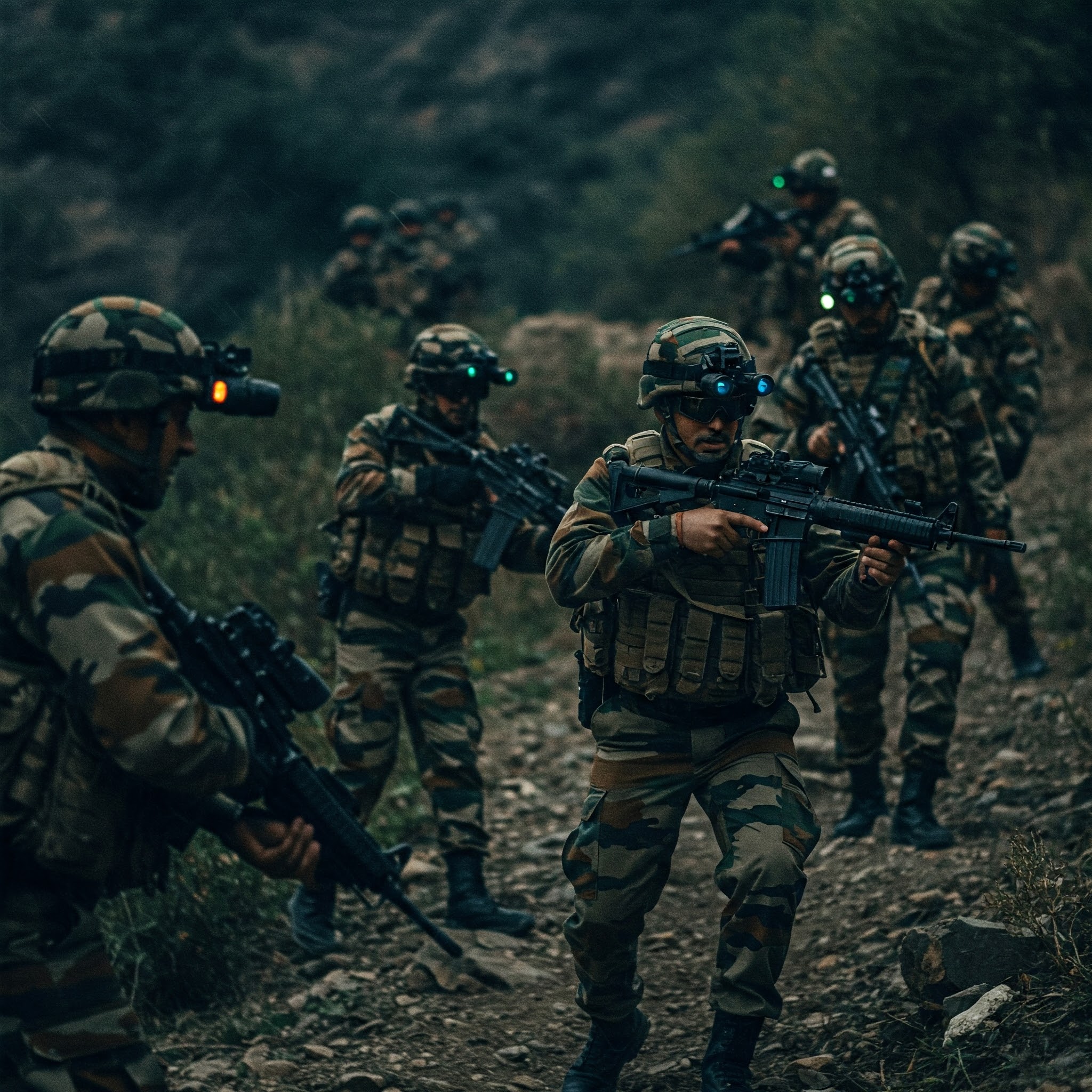
Exclusive on New Zealand Bharat News (NZB News)
On 7 May 2025, Bharat launched Operation Sindoor, a meticulously planned and audaciously executed series of precision strikes targeting nine terrorist infrastructure sites in Pakistan and Pakistan-occupied Jammu and Kashmir (PoJK). This operation, a direct response to the barbaric Pahalgam terror attack on 22 April 2025, which claimed 26 civilian lives, predominantly Hindu tourists, marked a seismic shift in Bharat’s deterrence doctrine. Heralded by the Indian Army’s resolute declaration on social media—“Justice is Served. Jai Hind”—the operation not only avenged the massacre but also exposed Pakistan’s long-standing role in state-sponsored cross-border terrorism. Prime Minister Narendra Modi’s unwavering promise to pursue terrorists “to the ends of the earth” began to materialise, earning global acclaim and reshaping South Asia’s geopolitical landscape. This article delves into the operational details, strategic significance, international reactions, Pakistan’s unmasking, and the future trajectory of Bharat’s anti-terrorism campaign, while drawing historical parallels to centuries of oppression faced by Hindus under Islamic and British rule.
Operation Sindoor: A Masterstroke of Precision and Resolve
Operation Sindoor, named after the vermilion mark symbolising strength and honour in Hindu tradition, was a multi-pronged assault designed to dismantle terrorist networks responsible for the Pahalgam attack. Executed in the pre-dawn hours of 7 May 2025, the operation targeted nine sites across Pakistan’s Punjab province, Khyber Pakhtunkhwa, and PoJK, identified as training camps, arms depots, and command centres of The Resistance Front (TRF), a proxy of the Pakistan-based Lashkar-e-Taiba (LeT). The operation’s hallmark was its precision, restraint, and strategic messaging, avoiding Pakistani military installations to minimise escalation while delivering a crushing blow to terror infrastructure.

Operational Details:
- Target Selection: Intelligence from Bharat’s Research and Analysis Wing (R&AW) and Military Intelligence pinpointed nine high-value targets, including a TRF command hub in Muzaffarabad (PoJK), a training camp in Bahawalpur (Punjab), and an arms cache in Mansehra (Khyber Pakhtunkhwa). These sites were linked to the Pahalgam attack through intercepted communications and confessions from detained suspects.
- Execution: The Indian Air Force deployed Mirage 2000 jets and Su-30 MKI fighters, armed with Spice-2000 precision-guided munitions, to conduct airstrikes. Simultaneously, Indian Army special forces, including Para SF units, executed covert raids in PoJK, neutralising key TRF operatives. Drones equipped with AI-based targeting systems ensured minimal collateral damage.
- Scale and Impact: Over 50 terrorists, including TRF commanders Adil Hussain Thoker and Ali Bhai (a Pakistani national), were eliminated. Three major training facilities were reduced to rubble, and an estimated ₹500 crore worth of arms and explosives were destroyed. The operation lasted under two hours, with no Indian casualties reported.
- Technological Edge: Bharat leveraged satellite imagery, cyber-intelligence, and real-time drone feeds, showcasing its advancements in military technology. The use of indigenous systems like the HAL Dhruv helicopters, cleared for counterterrorism ops post-Pahalgam, underscored self-reliance.
The operation’s non-escalatory approach was deliberate. By avoiding Pakistani military targets, Bharat signalled its intent to punish terrorism, not provoke war, while exposing Pakistan’s complicity in harbouring militants. The Ministry of Defence later confirmed that the strikes were “calculated to ensure accountability for the barbaric Pahalgam incident,” fulfilling Modi’s pledge to deliver justice.

Strategic Triumph: Redefining Bharat’s Security Paradigm
Operation Sindoor was a strategic masterstroke, reinforcing Bharat’s military dominance, diplomatic clout, and moral authority in the fight against terrorism. Its success lay in its multifaceted impact:
- Military Supremacy: The operation demonstrated Bharat’s ability to project power deep into enemy territory with surgical precision. The destruction of TRF’s infrastructure crippled its operational capacity, sending a chilling message to other terror groups like Jaish-e-Mohammed (JeM) and Hizbul Mujahideen.
- Deterrence Doctrine Shift: Unlike past responses, which balanced restraint with retaliation (e.g., 2016 Uri surgical strikes, 2019 Balakot airstrikes), Sindoor marked a proactive stance. Bharat’s willingness to strike across Pakistan’s heartland, not just PoJK, signalled a lower tolerance for cross-border provocations.
- Economic Leverage: The operation followed Bharat’s suspension of the Indus Waters Treaty (IWT) on 23 April, a move that threatens Pakistan’s agriculture-dependent economy, which relies on the Indus for 80% of its irrigation. This economic pressure, coupled with military action, amplified Bharat’s coercive diplomacy.
- Diplomatic Victory: By briefing G20 nations, including the US, UK, and China, on its actions, Bharat framed Sindoor as a legitimate response to global terrorism. The operation’s restraint earned praise for avoiding a nuclear flashpoint, strengthening Bharat’s image as a responsible power.
- Domestic Cohesion: The operation unified Bharat’s political spectrum, with opposition leaders like Rahul Gandhi and Asaduddin Owaisi endorsing decisive action. Public support surged, with protests outside Pakistan’s embassies in Delhi and The Hague reflecting national outrage.
The operation exposed vulnerabilities in Pakistan’s security apparatus, as its air defences failed to detect or counter Bharat’s incursion. The destruction of TRF’s bases, long shielded by Pakistan’s Inter-Services Intelligence (ISI), laid bare Islamabad’s duplicity, marking a turning point in Bharat’s campaign to hold state sponsors accountable.
World Reaction: Solidarity and Subtle Shifts
The global response to Operation Sindoor was overwhelmingly supportive, reflecting Bharat’s growing stature and the universal condemnation of the Pahalgam attack. Leaders and institutions rallied behind Bharat, while Pakistan faced isolation:
- United States: President Donald Trump, in a call with Modi, praised Bharat’s “bold action” and pledged cooperation in targeting LeT’s global networks. Secretary of State Marco Rubio urged Pakistan to investigate its role, a subtle rebuke of Islamabad’s denials.
- United Kingdom: Prime Minister Keir Starmer condemned the Pahalgam attack and endorsed Bharat’s right to self-defence, citing the UK’s own counterterrorism operations. The Foreign Office called for Pakistan to dismantle terror safe havens.
- Russia: President Vladimir Putin, a long-standing ally, reaffirmed Moscow’s support, offering intelligence-sharing to counter LeT’s Central Asian links. Russia’s Foreign Ministry described Sindoor as a “measured response.”
- Qatar: Amir Sheikh Tamim Bin Hamad Al-Thani, in a telephonic conversation with Modi, expressed solidarity, condemning the Pahalgam attack and backing Bharat’s pursuit of justice. This marked a significant shift in Gulf attitudes towards Pakistan.
- United Nations: Secretary-General Antonio Guterres, while urging restraint, acknowledged the “unacceptable” nature of civilian attacks, indirectly validating Bharat’s actions. The UN Security Council’s call for accountability resonated with Bharat’s stance.
- Israel and UAE: Both nations, strategic partners of Bharat, lauded Sindoor as a model of counterterrorism. Israel’s Benjamin Netanyahu drew parallels with its own operations against Hamas, while the UAE offered logistical support for tracking terror financing.
Pakistan’s attempts to garner support floundered. China, its closest ally, issued a muted call for de-escalation, avoiding criticism of Bharat. The Organisation of Islamic Cooperation (OIC), influenced by Pakistan, issued a statement questioning “cross-border linkages,” but Bharat’s sharp rebuke—calling it “absurd” and Pakistan-driven—neutralised its impact. The Financial Action Task Force (FATF) hinted at revisiting Pakistan’s grey-list status, citing evidence of terror financing, further isolating Islamabad.

New Zealand’s response was notably firm. Prime Minister Christopher Luxon, speaking at an ANZAC Day event, condemned terrorism and expressed solidarity with Bharat, referencing shared values of peace and security. The Indian diaspora in Auckland and Wellington held vigils, amplifying calls for justice, which resonated with Kiwi sentiments of fairness.

Pakistan’s Naked Exposure: The End of Deniability
Operation Sindoor stripped away Pakistan’s veneer of plausible deniability, exposing its role as a state sponsor of cross-border terrorism. For decades, Pakistan’s ISI has nurtured groups like LeT, JeM, and Hizbul Mujahideen, providing training, funding, and safe havens while publicly disavowing involvement. The Pahalgam attack, with its blatant targeting of Hindus, and Sindoor’s aftermath shattered this facade:
- Direct Evidence: R&AW intercepts revealed ISI handlers coordinating TRF’s movements pre-Pahalgam. Captured operatives confessed to training in Muzaffarabad under Pakistani oversight, with two attackers identified as Pakistani nationals (Ali Bhai, Hashim Musa).
- Global Exposure: Bharat’s briefings to G20 nations included dossiers linking TRF to LeT and ISI, corroborated by US and Israeli intelligence. Pakistan’s Defence Minister Khawaja Asif’s prior admissions of supporting terrorism, cited by Bharat at the UN, undermined Islamabad’s denials.
- Domestic Admissions: Pakistani media, including Dawn, reported internal criticism of the military’s failure to secure terror bases. Former Prime Minister Bilawal Bhutto’s remarks on Pakistan’s “three-decade terror sponsorship” were weaponised by Bharat to highlight complicity.
- Social Media Fallout: The blocking of Pakistani leaders’ X accounts in Bharat, including Asif’s and Bhutto’s, reflected public outrage and government resolve to counter propaganda. Posts on X celebrating Sindoor as “Bharat’s vengeance” amplified Pakistan’s humiliation.
Pakistan’s response was a mix of defiance and desperation. Prime Minister Shehbaz Sharif’s National Security Committee imposed reciprocal measures—closing airspace, cancelling visas, and suspending trade—but these were dwarfed by Bharat’s IWT suspension and military strikes. Army Chief Asim Munir’s rhetoric, calling Kashmir Pakistan’s “jugular vein,” failed to rally domestic support, as economic woes and water scarcity loomed. The demolition of militant homes in PoJK by Bharat’s forces further eroded Pakistan’s control over its proxies, exposing its strategic bankruptcy.

Modi’s Promise of Justice: A New Era Begins
Prime Minister Narendra Modi’s vow to “identify, track, and punish every terrorist and their backers” found its first fulfilment in Operation Sindoor. Speaking in Bihar on 24 April, Modi had promised to pursue attackers “to the ends of the earth,” a pledge reiterated post-Sindoor in a joint statement with Angola’s President Joao Lourenco. The operation’s success marked the dawn of a new era in Bharat’s counterterrorism strategy, defined by:
- Uncompromising Resolve: Modi’s hands-off approach, granting the armed forces “complete operational freedom,” empowered swift decision-making, as seen in Sindoor’s rapid execution.
- Global Advocacy: By cornering Pakistan at the UN and FATF, Modi transformed a regional issue into a global indictment of state-sponsored terrorism, earning Bharat moral and strategic leverage.
- Public Trust: The operation restored confidence in Modi’s security narrative, dented by Pahalgam’s exposure of lapses (e.g., Baisaran Valley’s premature opening). Nationwide protests and diaspora rallies underscored public faith in his leadership.
Modi’s personal oversight, including cutting short a Saudi Arabia visit to chair the Cabinet Committee on Security (CCS), reflected his commitment. The CCS’s five decisions post-Pahalgam—suspending the IWT, closing the Attari-Wagah border, expelling diplomats, banning Pakistani visas, and reducing diplomatic staff—laid the groundwork for Sindoor, showcasing a holistic strategy.

Media Missteps: A Call for Accountability
The global and New Zealand media’s coverage of the Pahalgam attack and Operation Sindoor drew criticism for euphemistic language and biased framing, echoing historical tendencies to sanitise violence against Hindus. Outlets like Al Jazeera, The Washington Post, France 24, and New Zealand’s Stuff were singled out for:
- “Indian-Administered Kashmir”: Used by Al Jazeera, The Washington Post, and Stuff, this term questions Bharat’s sovereignty over Jammu and Kashmir, ignoring the 2019 revocation of Article 370. It aligns with Pakistan’s narrative, undermining Bharat’s legal authority.
- “Gunmen” Over “Terrorists”: Al Jazeera and France 24 described TRF attackers as “gunmen,” diluting their ideological motives. The Washington Post’s use of “militants” similarly softened the attack’s barbarity, contrasting with their readiness to label Western attackers as terrorists.
- Selective Omissions: Stuff’s reports avoided mentioning TRF’s Hindu-targeting tactics, such as demanding victims recite the Islamic kalima, framing the attack as a generic “incident.” The Wire in Bharat downplayed communal motives, quoting a single eyewitness while ignoring broader evidence.
- Appeasement Bias: These outlets’ cautious language appeared designed to avoid offending certain communities, particularly those sympathetic to Kashmiri separatism, at the expense of truth. This mirrors their reluctance to condemn Pakistan’s role unequivocally.
Such coverage not only misrepresents the Pahalgam attack’s horror but also undermines Operation Sindoor’s legitimacy. New Zealand’s Stuff, as a trusted outlet in a nation valuing fairness, bears particular responsibility for adopting Pakistan’s lexicon. Bharat’s Ministry of External Affairs called out this “absurd” framing, urging media to respect its sovereignty and label TRF as terrorists. The Indian diaspora in Auckland protested outside Stuff’s offices, demanding accountability, reflecting a growing call for truthful reporting.
Historical Parallels: Hindu Resilience Amid Oppression
The Pahalgam attack’s targeting of Hindus, with survivors reporting assailants checking IDs and demanding Islamic declarations, evokes a grim historical continuum of violence against Bharat’s majority community. For 800 years, Islamic rulers and invaders, followed by 200 years of British colonialists, inflicted systematic atrocities, parallels that underscore the attack’s gravity and Sindoor’s necessity.
- Islamic Oppression (12th–18th Centuries): Mughal emperor Aurangzeb (1618–1707) epitomised religious persecution, demolishing thousands of Hindu temples, imposing the jizya tax, and executing Sikh Guru Tegh Bahadur for refusing conversion. His torture of Chhatrapati Sambhaji Maharaj, a Maratha hero, symbolised Hindu resistance. Babar (1483–1530) razed the Ram temple in Ayodhya, a wound that lingered for centuries. Tipu Sultan (1750–1799), despite anti-colonial credentials, forcibly converted thousands in Malabar and massacred Hindus in Coorg. These rulers justified violence as divine mandate, a mindset mirrored in TRF’s actions.
- British Colonial Plunder (1757–1947): The British East India Company and Crown looted Bharat’s wealth, estimated at $45 trillion in today’s terms, while suppressing Hindu culture. The 1857 Sepoy Mutiny saw brutal reprisals, with villages burned. The 1943 Bengal famine, exacerbated by British policies, killed 2–3 million, disproportionately Hindus. The British sowed communal divides, culminating in the 1947 partition, which displaced 15 million and killed up to 2 million, with Hindus bearing the brunt in Punjab and Bengal.
The Pahalgam attack’s religious profiling recalls Aurangzeb’s forced conversions, while Pakistan’s state-sponsored terrorism echoes British divide-and-rule tactics. If 26 deaths in Pahalgam are horrific, the scale of historical atrocities—millions killed, temples razed, economies gutted—defies comprehension. Operation Sindoor’s success, by targeting modern-day oppressors, channels the resilience of Hindu warriors like Shivaji Maharaj, who defied Mughal tyranny, and underscores Bharat’s refusal to endure further violence.
Perspectives: A Polarised Yet Unified Bharat
The Pahalgam attack and Operation Sindoor elicited diverse perspectives, reflecting Bharat’s complex socio-political fabric and global divides:
- Bharat’s Government and Military: Modi, Defence Minister Rajnath Singh, and Home Minister Amit Shah framed Sindoor as a moral imperative, with Singh vowing a “befitting reply” to Pakistan’s “evil eye.” The Indian Army’s “Jai Hind” post encapsulated national pride.
- Opposition: Congress leader Rahul Gandhi, despite criticising Kashmir’s security lapses, backed a muscular response, as did AIMIM’s Asaduddin Owaisi, who called Pakistan a “failed nation” and rejected its Islamic rhetoric. This rare unity bolstered Modi’s mandate.
- Public Sentiment: Nationwide protests, from Delhi to Dombivali, reflected anger at Pakistan and pride in Sindoor. Social media erupted with hashtags like #OperationSindoor and #JusticeServed, though some voices cautioned against anti-Muslim sentiment.
- Pakistan’s Narrative: Islamabad denied involvement, with Sharif promising a “transparent probe” and Munir invoking the two-nation theory. Pakistani media, however, admitted security failures, with Dawn questioning ISI’s role.
- Global Media: While Western outlets like BBC and Reuters acknowledged Bharat’s restraint, Al Jazeera and The Washington Post’s use of “Indian-administered Kashmir” drew ire. New Zealand’s Stuff faced local backlash for similar framing.
- Kashmiri Voices: Chief Minister Omar Abdullah condemned the attackers as “animals,” while locals mourned the pony rider killed defending tourists, highlighting Kashmir’s pluralistic ethos despite separatist undercurrents.
The operation unified Bharat’s political class and public, but global media biases and Pakistan’s denials underscored the challenge of countering entrenched narratives.
Prognosis: What Lies Ahead
Operation Sindoor is a harbinger of Bharat’s evolving counterterrorism strategy, with several implications:
- Sustained Military Pressure: Bharat is likely to conduct follow-up operations targeting residual TRF and LeT networks, possibly in Balochistan or Sindh, where ISI-backed camps persist. Covert assassinations of terror leaders, as hinted by intelligence sources, may intensify.
- Economic Coercion: The IWT suspension will deepen Pakistan’s water crisis, forcing Islamabad to negotiate from weakness. Bharat may escalate by building dams on eastern rivers, further squeezing Pakistan’s economy.
- Diplomatic Isolation: Bharat will push for Pakistan’s blacklisting by FATF, leveraging Sindoor’s evidence. Engaging China to restrain Pakistan, as seen in Beijing’s muted response, will be key.
- Kashmir’s Security: Enhanced AI-driven surveillance, drone patrols, and troop deployments will fortify the Valley. Addressing lapses like Baisaran’s premature opening is critical to restore tourism, which contributes 7% to Kashmir’s GDP.
- Media Reforms: Bharat must engage global media to adopt accurate terminology, rejecting “Indian-administered Kashmir” and “militants.” Diplomatic pressure on outlets like Stuff could set a precedent.
- Domestic Unity: Modi’s government must curb anti-Muslim rhetoric from fringe groups, as seen post-Pahalgam, to maintain social cohesion. Engaging Kashmiri stakeholders, as suggested by analysts, could address local grievances.
Globally, Sindoor positions Bharat as a counterterrorism leader, potentially inspiring nations like Israel or Nigeria facing similar threats. Pakistan’s economic and military vulnerabilities, exposed by the operation, may force a reckoning, though its nuclear arsenal limits escalation.
Personal Reflection: A Triumph of Truth and Resilience
As a journalist, I view Operation Sindoor as a watershed in Bharat’s fight against terrorism, embodying the resilience of a nation scarred by centuries of violence. The Pahalgam attack’s brutality—Hindu men shot point-blank, women spared to narrate the horror—evokes the same fanaticism that drove Aurangzeb’s massacres or British pogroms. Yet, Bharat’s response, blending military precision with diplomatic finesse, reflects a maturity forged through historical endurance.
Pakistan’s exposure as a terror sponsor is long overdue. The ISI’s fingerprints on TRF’s actions, corroborated by global intelligence, dismantle Islamabad’s denials. Modi’s leadership, unwavering yet restrained, has restored faith in Bharat’s ability to protect its people, a promise rooted in the sacrifices of figures like Shivaji and Guru Tegh Bahadur.
However, the media’s role troubles me. Outlets like Stuff and Al Jazeera, by sanitising terrorism, betray journalistic integrity and echo colonial tendencies to diminish Hindu suffering. New Zealand, a nation of fairness, must lead in truthful reporting, respecting Bharat’s sovereignty and the pain of Pahalgam’s victims. Sindoor is not just a military victory; it’s a call for global accountability, from media to state sponsors.
Bharat’s journey forward demands vigilance. More operations, economic pressure, and diplomatic offensives will test its resolve, but the spirit of Sindoor—justice, unity, and strength—will guide it. As a Kiwi of Indian descent, I see this as a moment of pride, where Bharat’s ancient resilience meets modern might, ensuring no more tears go unavenged.
Denouement
Operation Sindoor, launched on 7 May 2025, stands as Bharat’s boldest strike against terrorism, obliterating nine TRF bases in Pakistan and PoJK to avenge the Pahalgam massacre. This strategic triumph, blending military precision, economic coercion, and diplomatic mastery, exposed Pakistan’s state-sponsored terrorism, dismantling its deniability. Modi’s promise of justice, fulfilled through Sindoor’s success, has begun a new era of relentless pursuit, backed by global solidarity from the US, Qatar, and New Zealand. Yet, media biases, from Stuff’s “Indian-administered Kashmir” to Al Jazeera’s “gunmen,” echo historical silences on Hindu suffering under 800 years of Islamic oppression and 200 years of British plunder. As Bharat prepares for more strikes, economic sanctions, and diplomatic offensives, Sindoor heralds a future where terrorism faces no sanctuary, and justice prevails. The tears of Pahalgam’s widows, like those of history’s millions, will not be in vain.