



 Col. (retd.) Dinesh Ramaswamy
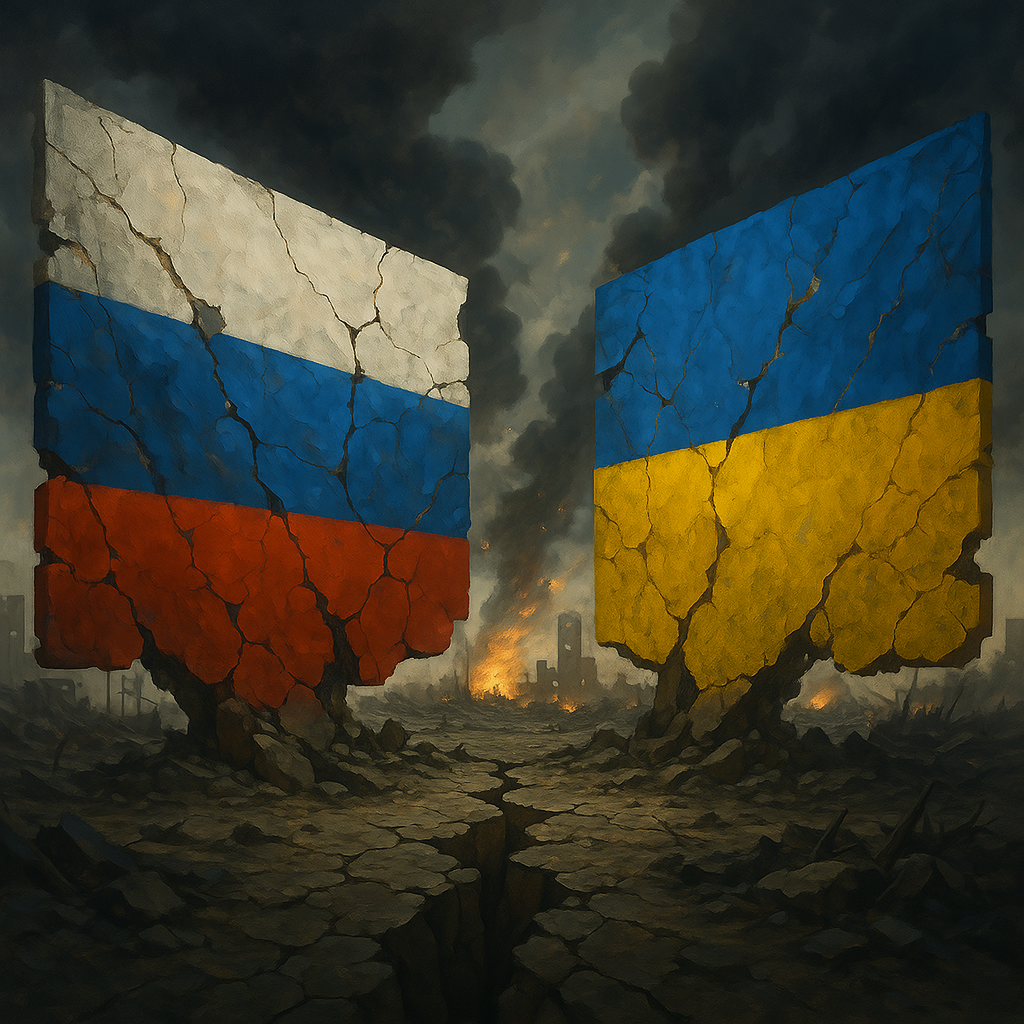
 The Russia-Ukraine war, now in its fourth year, remains a grinding conflict marked by shifting front lines, catastrophic human and economic losses, and a diplomatic process fraught with impasse and acrimony. As of mid-May 2025, the world’s attention is once again focused on Istanbul, where new rounds of peace talks are taking place amid ongoing hostilities and deep skepticism about the possibility of a breakthrough. Here is a detailed, up-to-date analysis of the military situation, the state of negotiations, and the prospects for peace.
The Military Situation: Stalemate with Incremental Gains
Territorial Control and Front Line Dynamics
Russia currently controls about 20% of Ukrainian territory, including most of the Luhansk and Donetsk regions, large swathes of Zaporizhzhia and Kherson in the south, and the Crimean peninsula, which it annexed in 2014. In the past week alone, Russian forces have captured two more settlements in Donetsk, while Ukraine has managed to double its small hold on Russian territory, now totaling 10 square miles. These shifts are incremental, with Russia gaining about 33 square miles per week-a slow advance compared to earlier phases of the war.
The front remains highly dynamic, with both sides launching offensives and counteroffensives. Ukrainian forces have recently made advances near Pokrovsk, while Russian troops have pushed forward near Kupyansk, Toretsk, Kurakhove, and Velyka Novosilka. The fighting is intense, with artillery and airstrikes continuing across the eastern and southern fronts, and neither side showing signs of slowing down.
Casualties and Recruitment
The human cost is staggering. Estimates suggest that more than 790,000 people have been killed or injured since the start of the conflict, with Russia suffering significant casualties in exchange for marginal territorial gains. Despite these losses, Russia claims to be recruiting enough new personnel-reportedly 50,000 to 60,000 per month-to replace its battlefield losses and even gradually increase its force presence in Ukraine. Ukrainian officials acknowledge that Russian troop numbers have risen, with the Russian grouping in Ukraine growing by 20,000 in the first quarter of 2025 alone.
Ukraine, on its part, continues to mobilize and reinforce its military, relying heavily on Western military aid and training. Both sides are adapting tactics, with Russia reportedly using motorcycle and civilian vehicle units in frontal assaults to offset Ukraine’s drone advantages.
The Peace Talks in Istanbul: High Stakes, Low Expectations
The Setting and Participants
The latest peace talks are being held in Istanbul, the site of previous negotiations that quickly collapsed. This time, the Kremlin has sent a second-tier delegation, led by a presidential advisor and including senior defense and intelligence officials. Ukrainian President has personally traveled to Turkey, signaling Kyiv’s willingness to engage, while Russian President has declined to attend in person, fueling criticism that Moscow is not serious about peace.
International observers, including journalists and diplomats, have descended on Istanbul, but confusion and skepticism abound. The Russian side insists it is ready for “serious negotiations,” while accusing Ukraine of trying to create a spectacle. The U.S. president has indicated he may attend if the talks show promise, and European leaders are watching closely, with some publicly accusing Russia of stalling.
Core Issues and Sticking Points
The gulf between the two sides remains vast:
- Russian Demands: Moscow insists on the removal of the current Ukrainian leadership, recognition of Russian sovereignty over occupied territories, Ukrainian neutrality (no NATO membership), and significant reductions in Ukraine’s military capabilities.
- Ukrainian Position: Kyiv categorically rejects territorial concessions and demands an immediate, unconditional 30-day ceasefire as a precondition for talks. The Ukrainian leadership has stated that Ukraine will never recognize the loss of its territories and is seeking security guarantees from global powers.
- Western Role: The U.S. and European allies back Ukraine’s call for a ceasefire and have signaled that any settlement must respect Ukraine’s sovereignty and territorial integrity. However, there is growing pressure on both sides to find a diplomatic solution as the war drags on.
Negotiation Dynamics
The talks have been tense and, at times, descended into name-calling and mutual accusations. Russia has used the negotiations to reinforce its demands and posture for both domestic and international audiences, while Ukraine has sought to rally global support and highlight the costs of continued conflict.
Russia’s negotiating team includes several officials who participated in prior talks, indicating a desire to pick up where those discussions left off. However, the proposals on the table would leave Ukraine at a significant disadvantage, requiring it to accept Russian gains and fundamentally alter its security posture.
Ceasefire Proposals
Ukraine and its European allies have pushed for a full and unconditional 30-day ceasefire, but Russia has ignored these calls, preferring to negotiate the terms of a truce rather than agree to one up front. Russia did declare a 72-hour ceasefire for commemorations, but both sides accused each other of violations.
Political and Social Context
Ukrainian Public Opinion
Polling shows that the majority of Ukrainians continue to support the current leadership as legitimate and oppose holding elections until the war ends, in line with Ukrainian law and the constitution. There is little appetite for territorial compromise, and the public remains resilient despite the immense hardships of war.
Russian Domestic Politics
The Russian government is under pressure from sanctions, which have intensified in recent months. The Kremlin has responded by doubling down on its demands and presenting the war as a necessary defense against Western encroachment. Russian officials have also promoted the economic potential of occupied Ukrainian territories, suggesting that Russia intends to hold onto these lands for the long term.
International Response and the Path Forward
Western Support for Ukraine
The U.S., EU, and other Western allies continue to provide military, financial, and humanitarian aid to Ukraine. Sanctions against Russia are being tightened, with new measures targeting key sectors of the Russian economy. There is, however, growing fatigue in some Western capitals, where leaders are under pressure to push for a negotiated settlement.
China’s Role
China has privately urged Russia to seek peace but has not taken a public stance that would pressure Moscow to compromise. Beijing’s position remains one of cautious engagement, seeking to balance its ties with Russia against its global interests.
Summary: A War Without End?
As of May 2025, the Russia-Ukraine war remains locked in a bloody stalemate. Russia continues to make incremental territorial gains at immense human cost, while Ukraine holds firm on its core demands and seeks greater international support. The peace talks in Istanbul have brought the two sides to the table but exposed the profound differences that make a breakthrough unlikely in the near term.
With both militaries dug in and neither leadership willing to make the concessions required for a lasting peace, the conflict is set to grind on. The world watches anxiously, hoping that diplomacy can eventually prevail over force, but for now, the guns have not fallen silent. The coming weeks will be critical, as the outcome of the Istanbul talks-and the ability of international actors to influence them-will shape the next phase of this devastating war.