 Tracey Beatrice
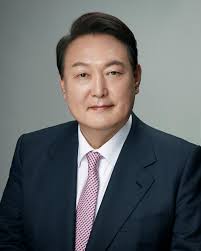
 On April 04, 2025, South Korea’s Constitutional Court unanimously upheld the impeachment of President Yoon Suk Yeol, removing him from office over his December 3, 2024, declaration of martial law—a six-hour fiasco that plunged the nation into its gravest political crisis in decades. Yoon, suspended since December 14, 2024, becomes the second president in South Korea’s democratic history ousted via impeachment, following Park Geun-hye in 2017. For New Zealand observers, including its Indian community, this seismic shift in a key Asia-Pacific ally raises questions about stability, democracy, and regional ripple effects. This article explores Yoon’s removal, tracing its background, detailing the process, capturing stakeholder voices, analysing what worked and faltered, offering a personal perspective, and summarising this historic moment as of April 04, 2025.
Background Information
Yoon Suk Yeol, a former prosecutor general, assumed office on May 10, 2022, after a razor-thin victory (48.6%) over Democratic Party (DPK) rival Lee Jae-myung in the 2022 election (National Election Commission, NEC, 2022). Leading the conservative People Power Party (PPP), Yoon pledged a hardline stance against North Korea, a bolstered US alliance, and domestic reform. His tenure, however, was turbulent—marked by a 2024 parliamentary election loss (PPP won 108 of 300 seats, DPK 175, NEC, April 10, 2024), scandals involving First Lady Kim Keon Hee, and a doctors’ strike (Reuters, March 2024). Approval ratings cratered to 20% by mid-2024 (Gallup Korea), exposing a lame-duck presidency.
The martial law decree on December 3, 2024, was the tipping point. Yoon, alleging “anti-state forces” tied to North Korea and an obstructive DPK-dominated National Assembly, banned political activity and deployed troops to parliament (Yonhap, December 3). Lawmakers defied a cordon, voting 190–0 to reject it within six hours, forcing Yoon to rescind (AP News, December 4). Public outrage erupted—73.6% backed impeachment (Realmeter, December 4)—reviving memories of South Korea’s authoritarian past (pre-1987). The Assembly impeached Yoon on December 14 (204–85, NEC), suspending him, with Prime Minister Han Duck-soo stepping in as acting president (Constitution Article 71).
Yoon’s legal woes compounded: arrested January 15, 2025, on insurrection charges (life imprisonment or death penalty possible), he was detained until a Seoul Central District Court ruling on March 7 deemed his detention procedurally flawed, freeing him (Reuters, March 8). The Constitutional Court’s April 4 verdict—8–0—sealed his fate, triggering a snap election within 60 days (Constitution Article 68). For NZ, a $250 billion NZD economy tied to Asia-Pacific stability (IMF, 2025), this upheaval in a $2.5 trillion NZD economy (IMF) matters.
The Removal Process
The Constitutional Court’s ruling came at 11:00 AM KST (2:00 PM NZDT) on April 04, 2025, broadcast live (Yonhap). Eight justices—down from nine due to vacancies—unanimously upheld the Assembly’s motion, citing Yoon’s martial law order as a “grave violation” of constitutional duty (Court transcript, April 4). The process began December 27, 2024, with preparatory hearings; Yoon’s team, led by Bae Bo-yoon, argued he aimed to “warn,” not seize power, while DPK’s Jung Chung-rae framed it as an attack on democracy (The Guardian, April 4).
Key evidence included ex-Defence Minister Kim Yong-hyun’s testimony (arrested December 8, 2024) that he drafted the decree, yet Yoon authorised it (CNN, February 25, 2025). The court rejected Yoon’s “anti-state” claims as baseless, noting no North Korean threat substantiated his move (NYT, April 4). Deliberations, initially expected by mid-2025 (180-day limit, Constitutional Court Act), accelerated amid public pressure—60% favoured removal (Gallup Korea, March 28, 2025). Han Duck-soo, reinstated as acting president on March 24 after his own impeachment was overturned (Reuters, March 28), remains in charge until June 3, 2025, election day (NEC projection).
What Are Various Stakeholders Saying?
Government and PPP
Han Duck-soo, addressing the nation at 3:00 PM NZDT (AP News, April 4), urged unity: “We must heal and move forward.” PPP leader Han Dong-hoon, who in December 2024 floated Yoon’s early exit (The Korea Times), called the ruling “judicial overreach” on X (April 4), vowing to regroup for the election. Yoon, defiant post-release, framed it as a “fraud” by enemies, rallying supporters outside his Seoul residence (NYT, March 8).
Opposition (DPK)
DPK leader Lee Jae-myung, frontrunner for June’s vote, hailed it as “democracy’s triumph” (Reuters, April 4), urging swift elections. The DPK, which drove weekly impeachment motions post-December 7’s failed vote (Wikipedia, April 2), had accused Yoon of treason (70% public agreement, Realmeter, December 4). On X, Lee pushed for “justice” (April 4), eyeing a liberal resurgence.
Public and Protesters
Seoul saw 55,000 Yoon supporters and 32,500 opponents rally on March 8 (Yonhap), a divide persisting post-ruling. Anti-Yoon protests—some religious groups crawling in solidarity (Korea Times, April 2)—cheered the verdict near Gyeongbok Palace (AP News, April 4). Pro-Yoon camps, waving US and South Korean flags, decried a “coup” (Al Jazeera, March 8), with one self-immolation death in December (Washington Post, March 24).
Experts and Media
Sogang University’s Lim Ji-bong predicted Yoon’s ouster to “unite justices against chaos” (Reuters, March 28). The Chosun Ilbo (right-leaning) warned of a DPK landslide (April 2), while Hankyoreh (left-leaning) saw it as accountability (December 2024). NZ’s AUT professor Patrick Usmar noted to 1News (March 31) that South Korea’s polarisation mirrors global trends, urging Kiwi focus on trade impacts.
What Worked and What Didn’t Work
What Worked
- Democratic Resilience: The Assembly’s rapid reversal of martial law and impeachment vote showcased institutional strength, a model for NZ’s democratic checks (Stats NZ, 2024).
- Judicial Speed: The Court’s four-month ruling—versus six for Park Geun-hye (2017)—met public demand (60% support, Gallup), stabilising governance (NYT, April 4).
- Public Mobilisation: Mass protests (hundreds of thousands weekly, Reuters, April 4) pressured swift action, echoing NZ’s 2020 climate marches (NZ Herald).
What Didn’t Work
- Leadership Vacuum: Han Duck-soo’s brief impeachment (December 27, 2024–March 24, 2025) and Choi Sang-mok’s interim stint exposed succession flaws (Al Jazeera, March 28), rattling markets—the won hit a 2008 low (BBC, January 3, 2025).
- Polarization: Rival rallies and Yoon’s defiance deepened rifts—60% anti-Yoon, 35% pro (Gallup, March 28)—hampering unity, unlike NZ’s post-Covid cohesion (AUT, 2024).
- Policy Paralysis: Yoon’s blocked agenda (e.g., budget cuts, Reuters, December 2024) and the crisis stalled economic reforms, a caution for NZ’s 1.4% GDP growth (IMF, 2025).
Personal Opinion About This Move
Yoon’s removal is a double-edged sword. South Korea’s democracy proved robust—parliament, courts, and citizens quashed an authoritarian lurch in six hours, a feat NZ’s 92% internet-savvy populace (Stats NZ) could emulate via digital activism. The 8–0 ruling, amid 60% public backing (Gallup), signals accountability, vital for trust in a $2.5 trillion NZD economy NZ trades with ($5 billion NZD annually, MFAT, 2024).
Yet, the cost is steep. Yoon’s recklessness—martial law over political gridlock—ignited chaos no nation, including NZ, can afford amid global tensions (e.g., Trump tariffs, Reuters, April 4). The leadership ping-pong (Yoon to Han to Choi back to Han) and a fractured populace (55,000 vs. 32,500 ralliers) weaken South Korea’s US-aligned stance against North Korea, a concern for NZ’s Quad ties (observer status, 2024). I’d argue Yoon’s exit was inevitable—his 20% approval and North Korea gambit (drones, per X posts, December 15, 2024) were delusional—but the PPP must pivot to moderates, not hardliners, for June’s vote. NZ should watch Lee Jae-myung’s neutrality pitch (CSIS, April 10, 2024); a DPK win could shift Seoul’s Pacific role, impacting Kiwi exports.
Summary
On April 04, 2025, South Korea’s Constitutional Court ousted President Yoon Suk Yeol, ending his May 2022–April 2025 tenure over a botched martial law decree on December 3, 2024. Impeached December 14 and removed unanimously (8–0), Yoon—arrested then freed—leaves Han Duck-soo as acting president until a June 3 election. Backgrounded by a lame-duck term (20% approval, Gallup) and a polarising martial law bid, the process saw democracy hold (Assembly’s reversal, Court’s speed) but exposed succession woes and division (60% anti-Yoon, 35% pro). Stakeholders split—PPP cries foul, DPK celebrates, crowds clash—while successes (resilience) and failures (paralysis) emerged. I see a necessary purge but warn of instability; NZ must track this $2.5 trillion NZD ally’s next move. For New Zealand Bharat News, Yoon’s fall on April 04, 2025, is a democratic win with a chaotic price.