




 Imogen King
 The fallout from Te Pāti Māori’s haka protest in Parliament has become one of the most consequential and polarising events in recent New Zealand political history. The unprecedented suspensions recommended for three Māori MPs-Rawiri Waititi, Debbie Ngarewa-Packer, and Hana-Rawhiti Maipi-Clarke-have ignited a nationwide debate about the boundaries of protest, cultural expression, parliamentary order, and the future of Māori representation in Aotearoa’s democracy.
The Incident: Haka as Protest
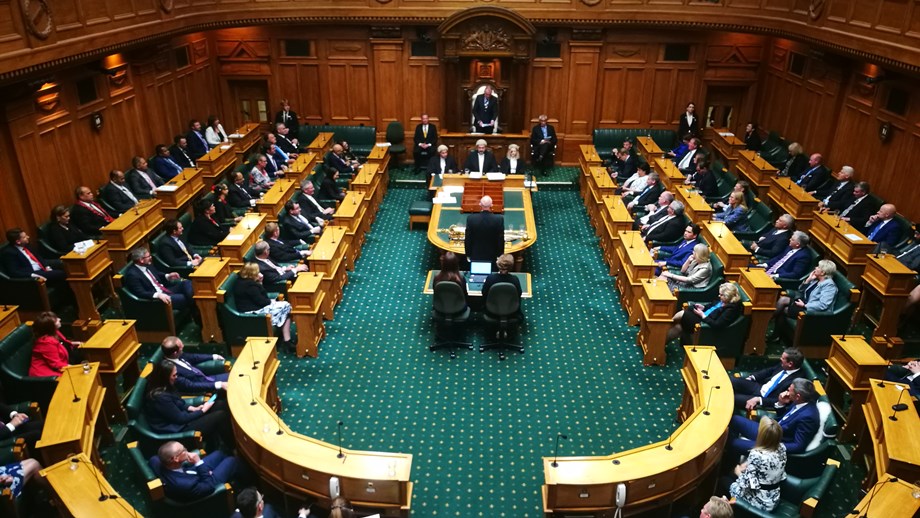
In November 2024, during the first reading of the controversial Treaty Principles Bill, three Te Pāti Māori MPs staged a dramatic protest on the floor of Parliament. Co-leaders Rawiri Waititi and Debbie Ngarewa-Packer, together with the youngest MP, Hana-Rawhiti Maipi-Clarke, crossed the chamber and performed a haka-a traditional Māori dance of challenge-directed at ACT Party MPs, who were sponsoring the bill. The protest was further intensified when Maipi-Clarke tore up a copy of the bill, symbolising Māori opposition to what they saw as an attack on their rights and the foundational principles of Te Tiriti o Waitangi.
The Treaty Principles Bill sought to redefine the legal interpretation of the Treaty of Waitangi, New Zealand’s founding document. Māori leaders and opposition parties widely criticised the bill as an attempt to undermine Māori rights and constitutional protections. The haka was intended as a powerful assertion of rangatiratanga (self-determination) and a direct challenge to the government’s legislative agenda.
The Privileges Committee’s Ruling
The Privileges Committee, a powerful parliamentary body responsible for upholding the rules of the House, launched an inquiry into the protest. After months of deliberation, the committee issued its report in May 2025, recommending the following penalties:
- Rawiri Waititi and Debbie Ngarewa-Packer: 21-day suspension from Parliament, the longest in New Zealand’s history for any MP.
- Hana-Rawhiti Maipi-Clarke: 7-day suspension, reduced after she expressed remorse in a letter to the Speaker.
The committee found that the MPs’ actions amounted to contempt of Parliament. Their behaviour was deemed to have “the effect of intimidating other members” and to have disrupted the voting process-a core function of parliamentary democracy. The report specifically criticised Ngarewa-Packer for appearing to point her finger at ACT MPs in a gesture likened to firing a gun, and all three MPs for physically approaching other members on the debating floor.
While ceremonial dances and songs, including the haka, are not unusual in New Zealand’s Parliament, the committee stressed that prior approval from the Speaker is typically required. The timing and manner of the protest-interrupting a vote and approaching other MPs-were cited as aggravating factors.
The Debate: Disproportionate Punishment or Necessary Order?
The committee’s recommendation has triggered a fierce debate within Parliament and across the country. Supporters of the punishment, including committee chair Judith Collins, argue that the MPs’ actions represented a grave breach of parliamentary order. Collins described the protest as “the worst instance that we have ever seen,” stating that the right to cast a vote without intimidation is fundamental to democracy. She emphasised that the punishment was not about the haka itself, but about the disruption and the potential for intimidation.
Opponents, including Labour, Green, and Māori Party MPs, have condemned the penalties as excessive and unjust. They argue that the suspensions will silence Māori voices during critical parliamentary business, including the Budget debate, and set a dangerous precedent for the treatment of indigenous protest in the House. Green Party co-leader Chlöe Swarbrick called the suspension “utterly ridiculous” and a “gross punishment,” while Māori Party MP Mariameno Kapa-Kingi labelled the process “grossly unjust, unfair, and unwarranted.”
Te Pāti Māori has refused to appear before the committee, claiming they were denied legal representation and unable to appear together. The party has denounced the process as personal and politically motivated, insisting that their actions were a legitimate form of cultural and political expression.
Inconsistencies and Criticisms of the Committee’s Process
The committee’s decision has also come under scrutiny for inconsistencies in its application of sanctions. Notably, Labour MP Peeni Henare, who participated in the haka, was not found guilty of contempt and was only asked to apologise to the House. Critics question why similar actions resulted in vastly different penalties, suggesting a lack of clarity and fairness in the committee’s reasoning.
Further criticism has focused on the committee’s assertion that the haka could be “intimidatory.” Many argue that this reflects a lack of understanding of tikanga Māori (Māori customs and protocols) and reduces the haka to mere shouting and gestures, rather than recognising its significance as a form of communication and protest. The committee explicitly stated that it was not its role to determine the place of tikanga Māori within parliamentary rules, a position that has been widely challenged by Māori leaders and cultural experts.
Wider Impact: Cultural Expression, Democracy, and Māori–Crown Relations
The suspensions have sparked a national conversation about the place of Māori protest and cultural expression in New Zealand’s democracy. Many Māori see the punishment as a warning against indigenous resistance and a signal that expressions of rangatiratanga are unwelcome if they disrupt established parliamentary norms. The decision has been described as a “warning shot” to all who might resist, with Te Pāti Māori stating, “When we resist, powers reach for the maximum penalty.”
Supporters of the MPs point out that haka is regularly used in international diplomacy and national events to showcase New Zealand’s identity, and argue that Parliament should be no different. The committee’s refusal to engage with the meaning and purpose of haka has been seen as a missed opportunity for genuine bicultural dialogue.
The issue has also drawn international attention, with commentators noting the severity of the penalties and the broader implications for indigenous rights and representation in settler democracies.
Political and Legal Ramifications
The suspensions, if confirmed by a parliamentary vote, will mean that Te Pāti Māori’s co-leaders and Maipi-Clarke will be barred from the House for the duration of their penalties and will forfeit their salaries for that period. This will leave Māori constituencies without representation during crucial debates, including the upcoming Budget.
The Speaker of the House has acknowledged the unprecedented nature of the punishment, noting that no MP found guilty of contempt has ever been suspended for more than three days since Parliament first sat in 1854. The decision to recommend such severe penalties was made by a slim majority on the committee, reflecting deep divisions within Parliament.
Legal experts have raised questions about the process, including the denial of legal representation for the MPs and the potential for judicial review of the suspensions. Some have suggested that the case could set important precedents for the rights of MPs and the recognition of cultural expression within parliamentary procedure.
Te Pāti Māori’s Response and Next Steps
Te Pāti Māori has remained defiant in the face of the suspensions, vowing to continue their movement outside Parliament and insisting that their voices-and those of their communities-will not be silenced. The party has called for a national conversation about the role of Māori in New Zealand’s democracy and the need for genuine partnership under Te Tiriti o Waitangi.
The Privileges Committee’s report is set to be debated and voted on by Parliament, with government MPs expected to back the suspensions. The Speaker has emphasised the importance of a fair and open debate, given the significance of the issue.
In the meantime, the Treaty Principles Bill that sparked the protest has been overwhelmingly rejected by Parliament, with only the ACT Party supporting it at its second reading. The bill’s failure has been seen as a victory for Māori opposition and a testament to the power of protest, even as the consequences for the MPs involved remain severe.
National and International Reactions
The haka protest and its aftermath have resonated far beyond Parliament. Māori communities across the country have organised rallies and vigils in support of the suspended MPs, framing the issue as part of a broader struggle for recognition and justice. Civil society organisations, legal scholars, and cultural leaders have weighed in, calling for a more nuanced and respectful approach to Māori protest and cultural expression.
Internationally, the case has been reported as an example of the challenges faced by indigenous legislators in settler democracies, with comparisons drawn to similar incidents in Australia, Canada, and the United States. The severity of the penalties has been noted as a significant development in New Zealand’s political history.
Summary
The Te Pāti Māori haka protest and the unprecedented suspensions recommended by the Privileges Committee have brought to the surface deep questions about the nature of democracy, cultural expression, and indigenous rights in New Zealand. The incident has highlighted tensions between parliamentary order and the right to protest, the place of tikanga Māori in national institutions, and the ongoing challenges of honouring Te Tiriti o Waitangi.
As Parliament prepares to vote on the suspensions, the country is engaged in a profound debate about the future of Māori representation and the meaning of partnership in Aotearoa. The outcome will have lasting implications for the relationship between Māori and the Crown, the rules of political engagement, and the evolving identity of New Zealand as a bicultural nation.