



 Dorothy Brown
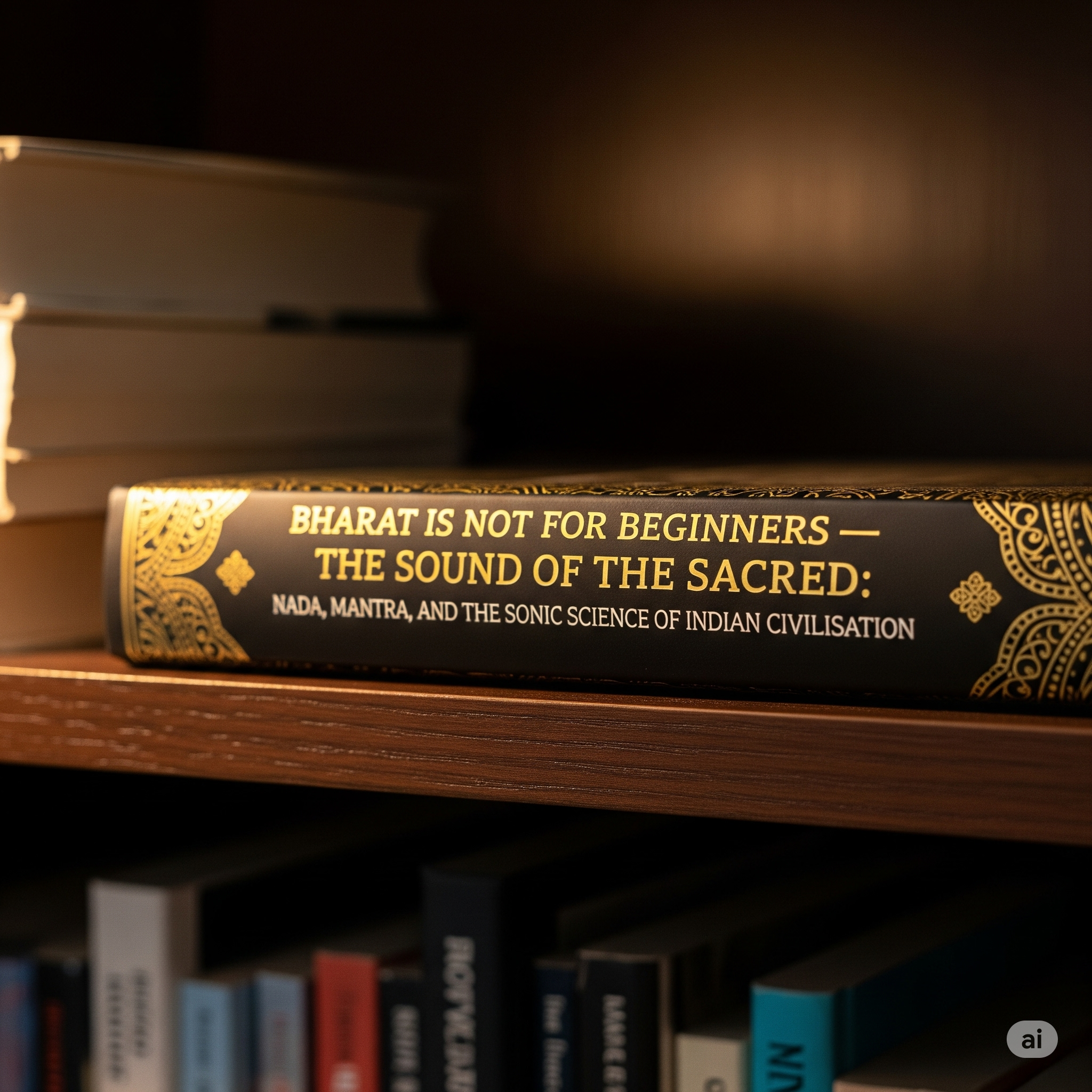
 Welcome to the 72nd instalment of the Bharat Is Not for Beginners series. While the previous article explored the architectural grandeur and sacred geometry of Indian temples, we now move into a subtler, yet even more potent dimension of Bharat’s civilisational essence: sound.
In most cultures, sound is functional—used to communicate, express emotion, or entertain. In Bharat, sound (nāda) is ontological. It is not merely heard; it is beheld, invoked, and entered into. Sound is considered the first vibration, the matrix of the cosmos, the thread that connects the seen and unseen. Here, silence is not the absence of sound—it is its most refined presence.
From primordial mantras to the intricate ragas of classical music, from Vedic recitation to folk chants echoing through the mountains, India’s sonic culture is a living testament to a truth echoed in the Upanishads: Nāda Brahma – “Sound is Brahman”.
Let us now journey into this vast and sacred terrain where music, mantra, and metaphysics meet—and where listening becomes liberation.
I. Nāda Brahma – Sound as the Source
The Philosophy of Sound
The Indian view of sound is cosmological. Sound is not just a sensory input but the first manifestation of the unmanifest absolute (Brahman). According to yogic cosmology, the universe originates in a vibration, known as spanda or nāda.
- Para-nāda – The unstruck, transcendental sound.
- Pashyanti – The visualised sound at the causal level.
- Madhyama – The mental, inner sound.
- Vaikhari – The gross, audible sound.
This fourfold model of sound is also a map of spiritual evolution—from the outer to the inner, from speech to silence, from name to namelessness.
II. The Mantra Tradition – Language as Technology
What Is a Mantra?
A mantra is not merely a word or phrase—it is a vibrational code, engineered to re-tune the consciousness. Each syllable is charged with intention, calibrated in rhythm, tone, and energy.
“Mananāt trāyate iti mantraḥ” – A mantra is that which, when meditated upon, protects and liberates.
Types of Mantras
- Bija Mantras (Seed Sounds): e.g., Om, Hrīm, Krīm, Shreem – potent sounds linked to deities and energy centres.
- Vedic Mantras: Verses from the Vedas, such as the Gayatri Mantra, recited with precise intonation.
- Tantric Mantras: Often encoded formulas aimed at specific goals – healing, protection, awakening.
- Nama Japa: Repetition of divine names – Rama, Krishna, Shiva, Durga – as acts of devotion and purification.
Mantras are not magic spells; they are frequency locks—when correctly pronounced and aligned with intent, they shift the practitioner’s vibrational field.
III. Om – The Primal Sound
Om (or Aum) is regarded as the seed of all sound, the sonic form of the Absolute.
- A: Waking state (Jagrat)
- U: Dreaming state (Swapna)
- M: Deep sleep (Sushupti)
- The silence after Om: Turiya – the transcendental.
In yoga, chanting Om synchronises the breath, mind, and subtle body. In physics, it parallels the primordial sound of the Big Bang. In consciousness science, it signifies the movement from multiplicity to unity.
IV. Shruti, Swara, and Rāga – The Classical Sonic Universe
Shruti: The Eternal Tones
Indian classical music begins with shruti—microtones said to be heard by the rishis in deep meditation. These 22 shrutis form the foundation of all melody, unlike the fixed 12-note system of Western music.
Swara: The Breath of Melody
There are seven main swaras (notes):
- Sa, Re, Ga, Ma, Pa, Dha, Ni – forming the saptak, the basic octave.
- These are not fixed pitches but living vibrations, capable of emotional and energetic transformation.
Rāga: Mood and Medicine
A rāga is not a tune—it is a sonic personality. Each rāga has:
- A specific mood (rasa)
- A time of day or season
- A medicinal or spiritual effect
For example:
- Rāga Bhairavi – Evokes devotion, often played at dawn.
- Rāga Darbari Kanada – Deep and meditative, suitable for night.
- Rāga Malkauns – Used in healing; said to calm the nervous system.
Indian music is not performed—it is invoked. The musician does not ‘entertain’ but becomes a channel for the rāga’s descent.
V. Temple Acoustics and Sacred Sound
Temples are designed not just for visuals but for sound amplification and resonance.
- Granite and gold: Materials chosen for their acoustic properties.
- Shankha (conch), Ghanta (bell): Instruments used to alter the vibration of the space.
- Chanting and singing: Designed to align with the temple’s geometry and cosmic layout.
The Nataraja Temple at Chidambaram, for instance, reverberates with silent sound—Chid-ākāsha, or the space of consciousness—where Shiva dances as the cosmic sound.
VI. Folk, Bhajan, and Kirtan – The Sonic Democracy
India’s sacred soundscape is not confined to elite musicians. Villages, towns, and streets across Bharat throb with spiritual sound in daily life.
Bhajans and Kirtans
- Communal singing of devotional songs, often with call-and-response structure.
- Instruments like harmonium, tabla, cymbals, and ektara are used.
- Transmit spiritual emotion (bhakti) and collective energy.
Kirtans dissolve social hierarchies—everyone becomes both listener and performer, dissolving ego and generating shared vibration.
VII. Sound in Ritual and Healing
Mantra Chikitsa (Sound Therapy)
Ancient texts describe the use of mantras for:
- Healing illnesses (via dosha balancing)
- Mental clarity
- Spiritual protection
Sound and Chakra Activation
Each chakra corresponds to a bīja mantra and musical note. For example:
- Muladhara: Lam, low note
- Anahata: Yam, heartful tones
- Ajna: Om, penetrating high frequencies
Sound is used in yogic and tantric practices to open blocked channels, awaken kundalini, and harmonise the subtle body.
VIII. Sonic Ecology – Sacred Sound and the Environment
Ancient Bharat also understood that sound shapes ecosystems:
- Chanting near rivers enhanced water quality.
- Temple bells kept birds and animals in rhythm.
- Farming and planting were guided by musical calendars.
This is not superstition—it is vibrational ecology. A society in tune with sound is also in tune with nature.
IX. Colonial Erasure and Modern Revival
Under colonial rule, India’s sonic heritage was dismissed as “primitive noise” or reduced to “ethnic entertainment.”
- Vedic chanting was outlawed in some missionary schools.
- Instruments were confiscated.
- Classical music was stripped of its spiritual content.
Today, there is a resurgence:
- UNESCO has recognised Vedic chanting and Koodiyattam as intangible heritage.
- Yoga centres and music schools are reintroducing sound as sadhana.
- Neuroscience and bioacoustics are now validating what rishis intuited millennia ago.
X. Listening as Liberation
In Indian thought, hearing (shravana) is itself a path to moksha. The Upanishads begin with “Shrotavyah”—It must be heard.
This reverence for sound teaches us:
- To listen deeply, not just hear passively.
- To chant not for performance but for resonance.
- That the universe is not made of atoms, but of vibrating energy.
When the outer noise ceases, the inner sound awakens.
Conclusion: The Eternal Soundscape of Bharat
In a world increasingly cluttered with noise, Bharat offers an alternative: a civilisation tuned to sacred silence and meaningful sound.
Every syllable, every beat, every note—when rightly uttered—becomes an invitation to truth. Bharat is not for beginners because here, even silence is audible, and every sound is a doorway to the eternal.
When you chant Om in a quiet Himalayan cave, hum a rāga at dusk in Varanasi, or join in a bhajan at a roadside shrine—you are not merely making sound. You are weaving yourself into the very rhythm of the cosmos.
What’s Next?
In Article 73: Bharat Is Not for Beginners – The Dance of the Divine: Natya, Mudra, and the Sacred Kinetics of Bharat’s Performing Arts, we will move from sound to movement—exploring how classical Indian dance is not mere performance, but a codified system of storytelling, spiritual expression, and cosmic rhythm.